
How to Determine Your Hair Type
How to Determine Your Hair Type
Before choosing extensions, you need to meet the hair already living on your head.
Think of this as your hair’s dating profile;
- Is it fine but plentiful?
- Thick and gloriously stubborn?
- Straight, wavy, curly, or coily?
The right extension system should complement your natural hair—not overpower it.
Hair Type Is More Than a Curl Pattern
For extension purposes, your hair type includes five important characteristics:
 |
1. Strand ThicknessTake one clean strand of hair and gently roll it between your fingers.
|
 |
2. Hair DensityDensity refers to how many strands grow on your scalp—not how thick each strand is. Stand in front of a mirror and examine your hair while it is dry.
|
 |
3. Natural TextureIs your hair naturally straight, wavy, curly, or coily?Your extension texture should either resemble your natural pattern or be styled to match it. Remember that waves and curls visually shorten the hair, so a curled 22-inch extension will not appear as long as a straight 22-inch extension. |
4. Current Length and Haircut
Short or blunt hair usually needs more hair to create a smooth transition. Otherwise, the natural ends may form a visible shelf above the extensions.
Long, layered hair tends to blend more easily because the different lengths help disguise where the natural hair ends and the extensions begin.
5. Hair and Scalp Condition
Before installing a semi-permanent extension method, consider breakage, active shedding, chemical damage, scalp sensitivity, or thinning around the hairline.
Extensions should never feel painfully tight. Repeated or excessive tension can contribute to traction alopecia; a form of hair loss associated with prolonged pulling on the follicles. A professional should adjust any installation that causes pain, headaches, redness, or persistent discomfort.
Your Quick Morado Match
Fine or low-density hair:
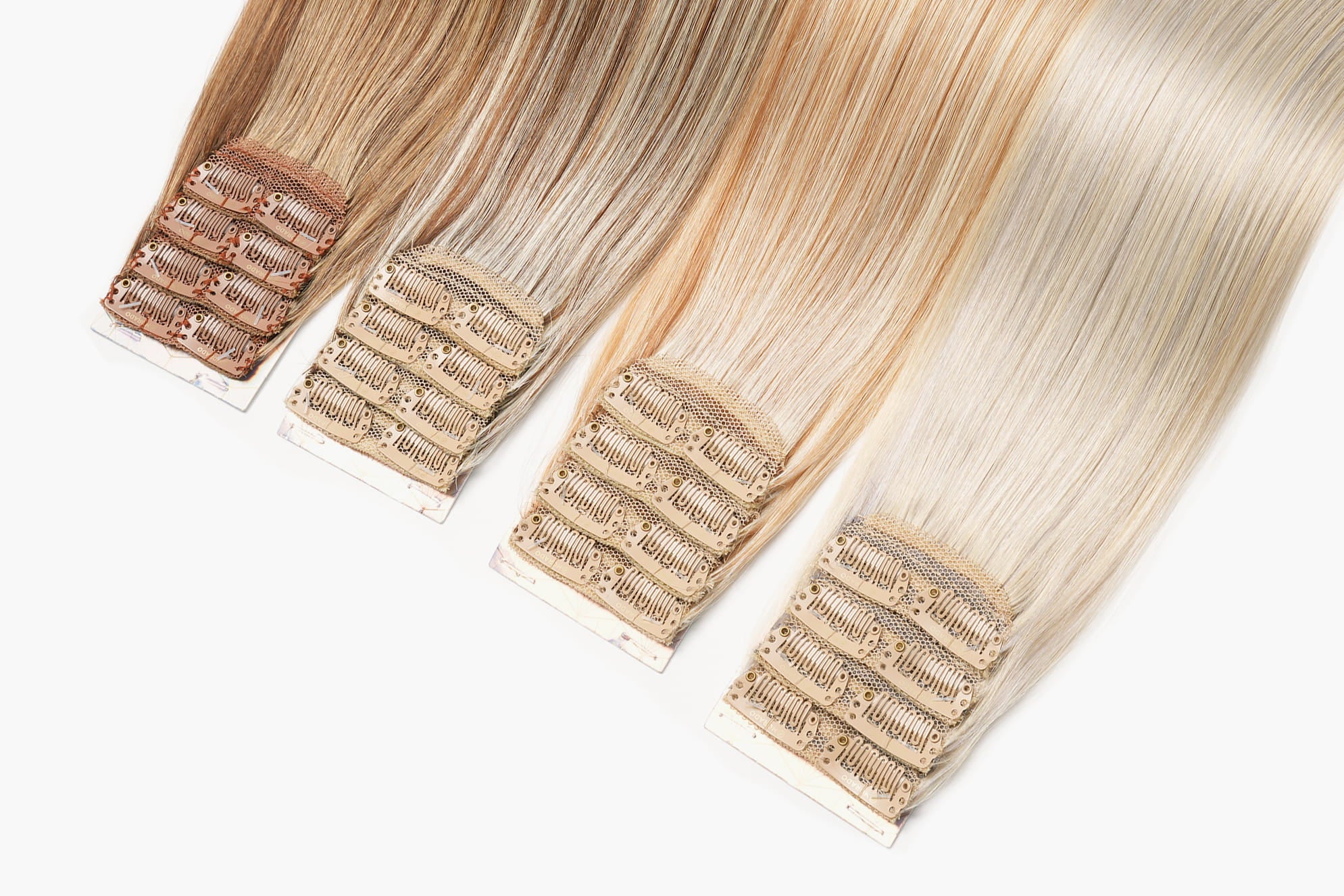
Look for lightweight, discreet systems such as Aura Seamless Clip-Ins, carefully customized tape-ins, or a properly fitted topper.
Medium-density hair:
Lucky you—most extension systems can work beautifully. Your decision will depend primarily on lifestyle, desired length, and maintenance preferences.
Thick, short, or blunt hair:
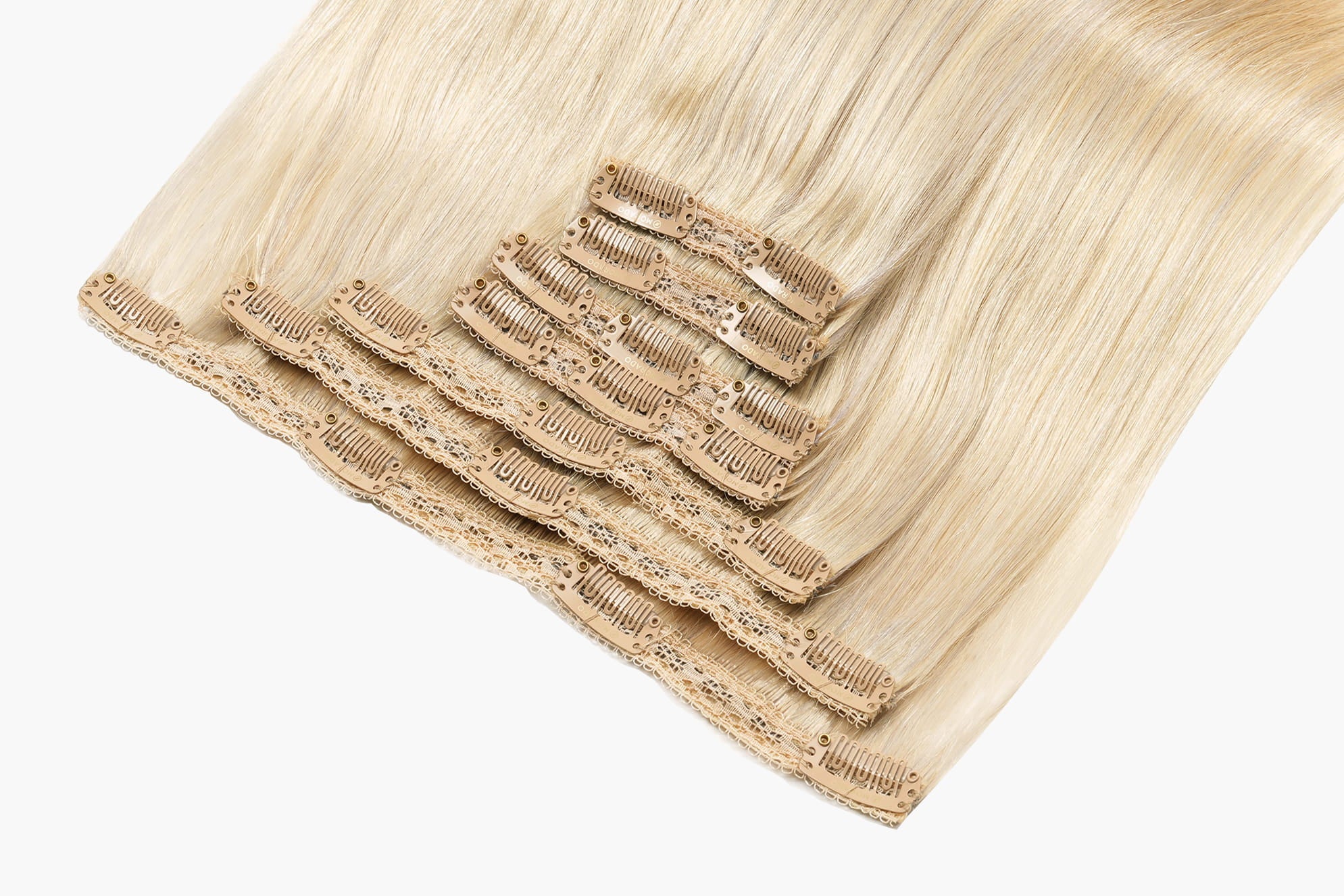
Choose a system with enough total hair to balance your natural density. Either one from the Diamond Luxury Collection; the Classic Lace-Weft 7pc Clip-Ins or Sewn-In Wefts can provide the fullness needed for a believable blend.
The golden rule is simple: your extensions should imitate the density of your natural hair from roots to ends.
Share