


Clip-Ins vs. Tape-Ins: Which Fits Your Routine?
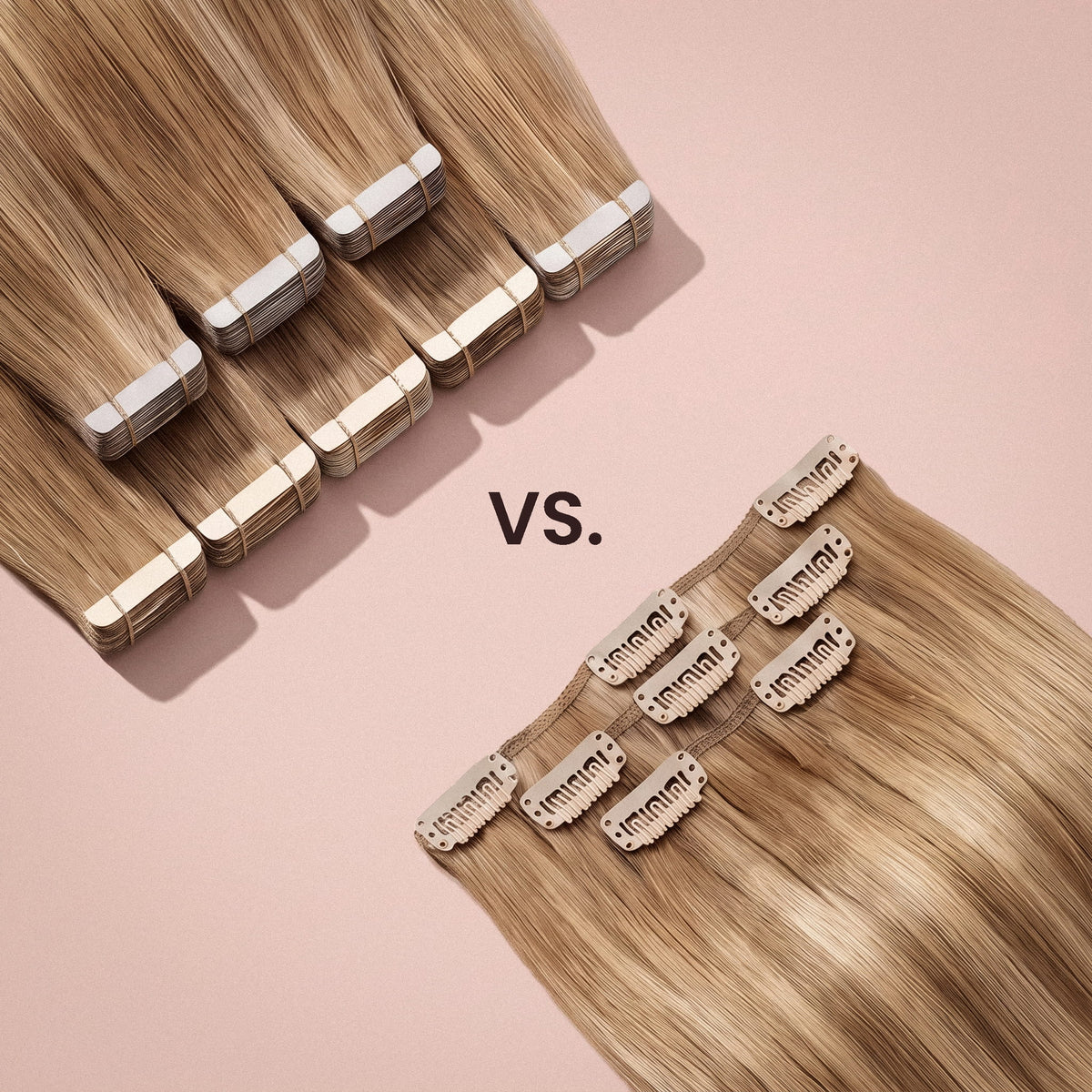
If you’ve ever stood in front of the mirror wishing your hair had just a little more length or fullness—and then felt completely overwhelmed the moment you started researching extensions—you’re not alone. The clip-in vs. tape-in question is one of the most common ones we hear at Morado, and the honest answer is that neither one is “better.” They’re built for different lives.
The right choice depends less on the hair itself and more on your mornings, your budget, and how much commitment feels comfortable to you.
In this guide, we’ll walk through how each type works, what they really cost—in money and in time—and the lifestyle questions that make the decision surprisingly easy.
How Clip-In Extensions Work
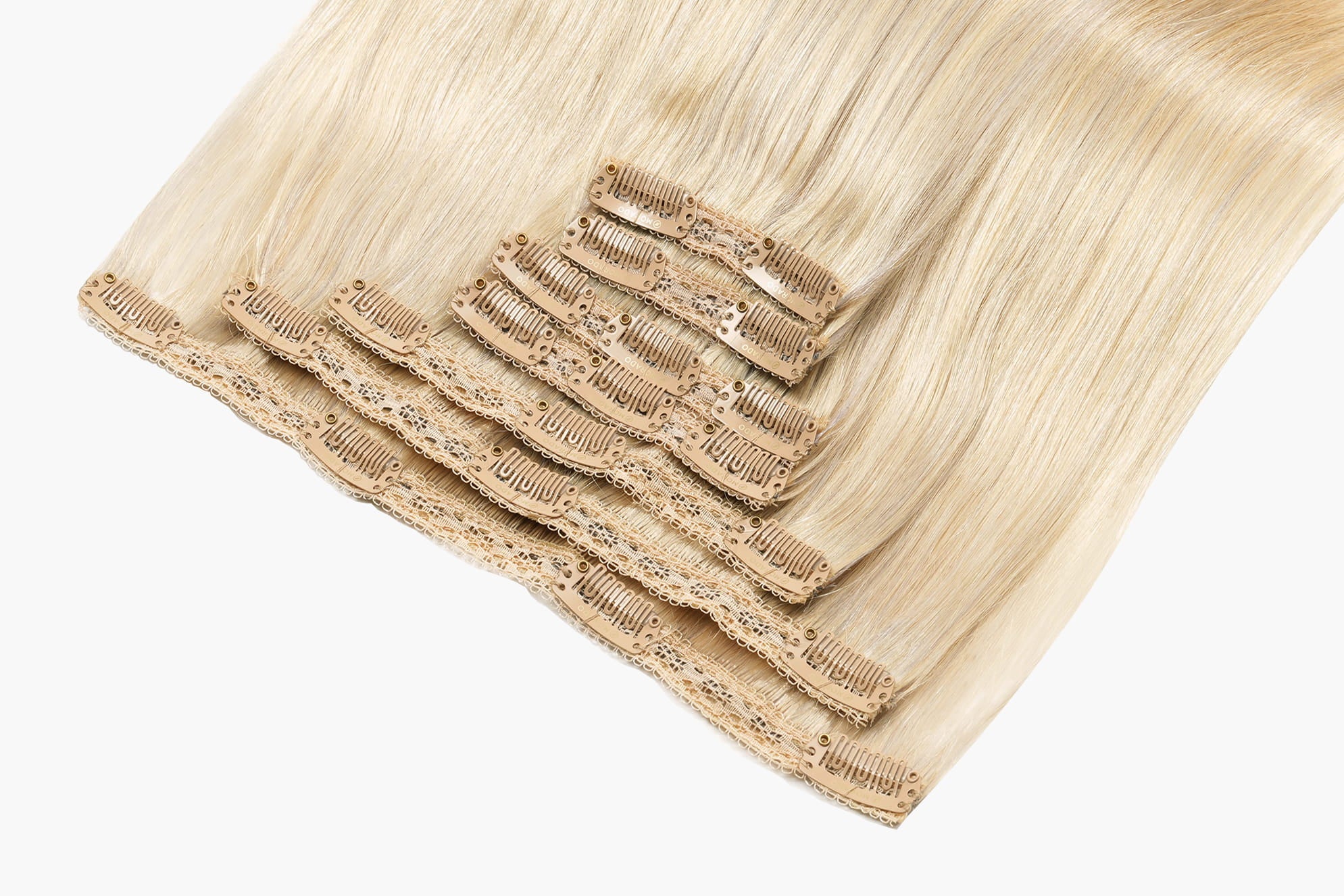
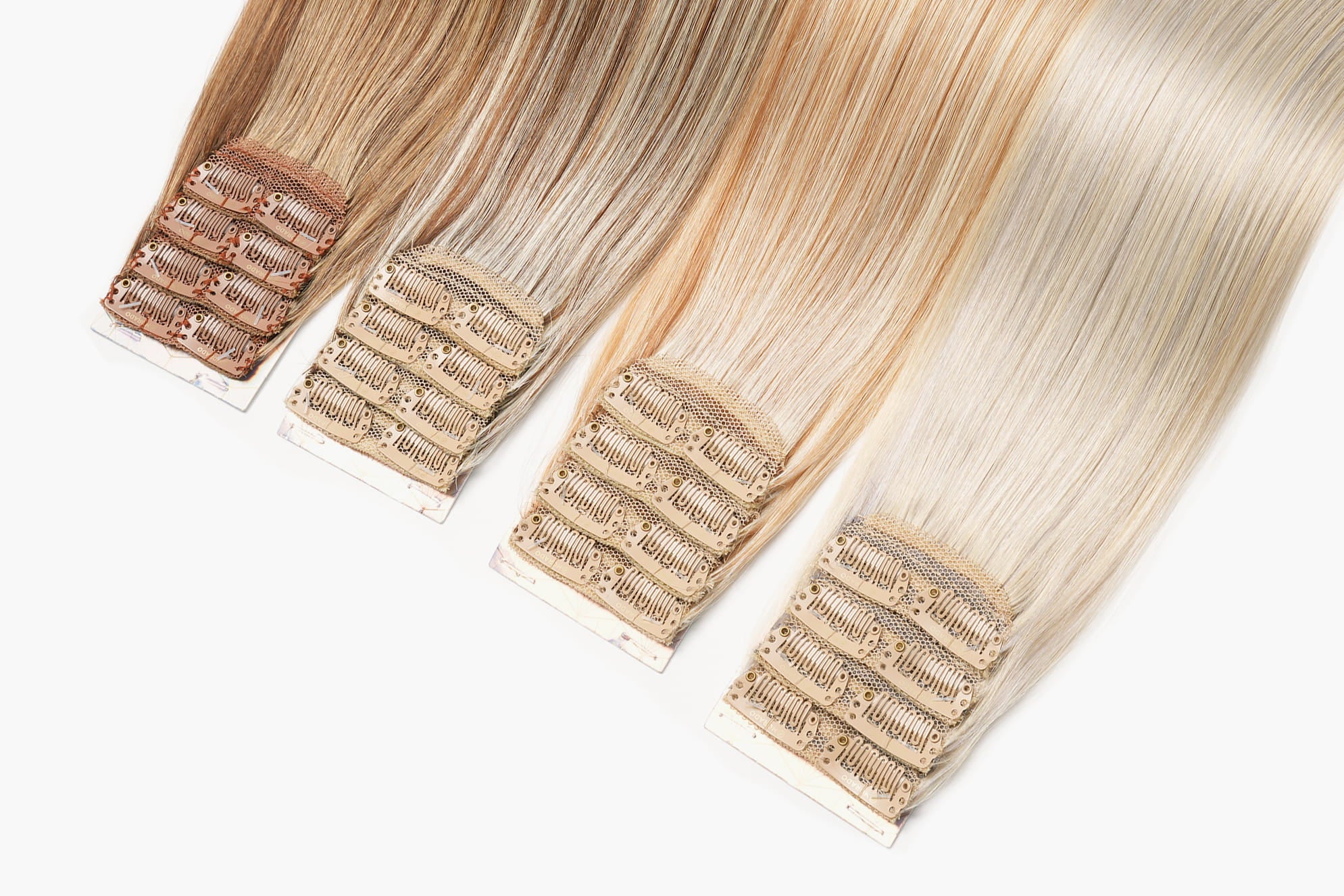
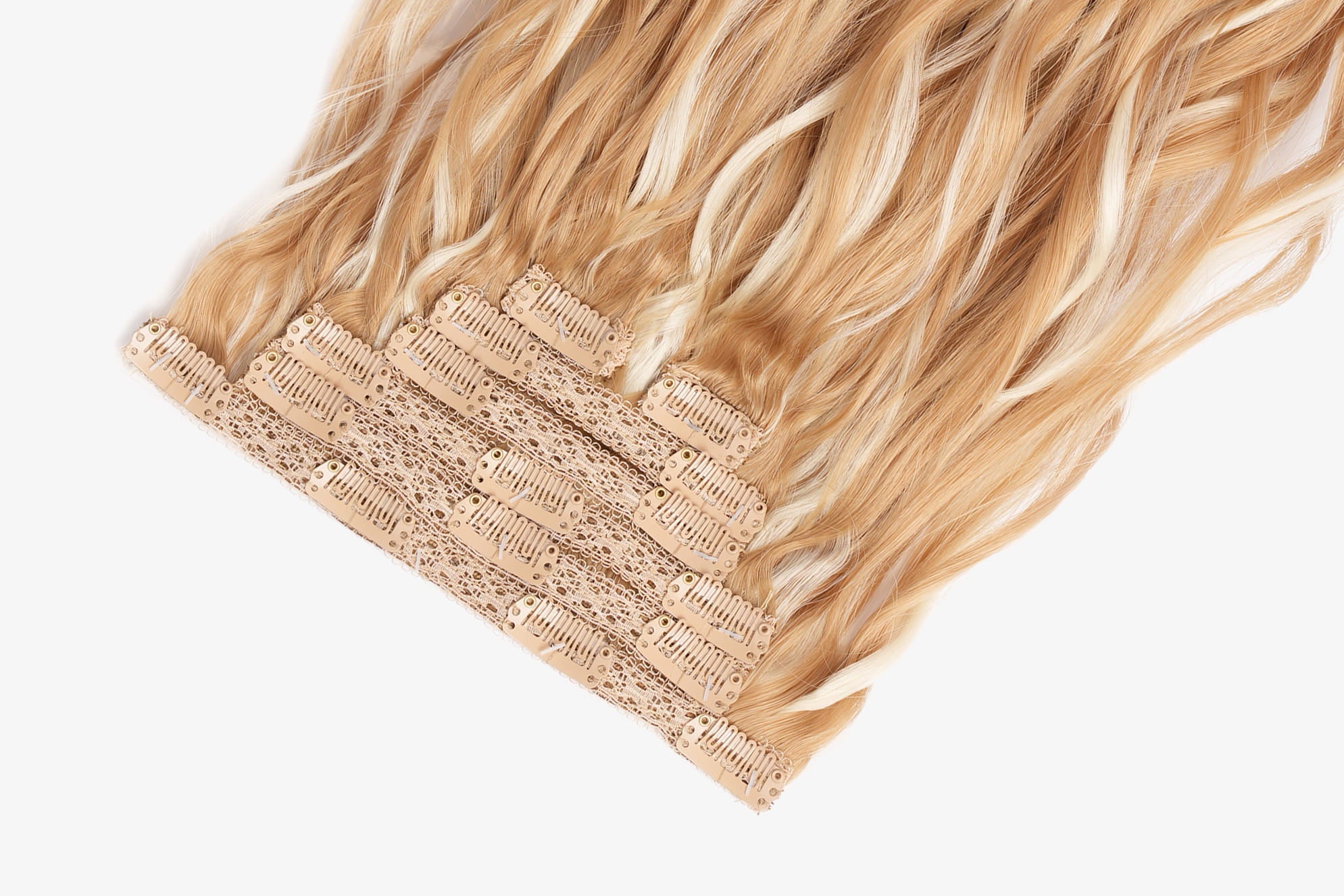
Clip-in extensions are exactly what they sound like: wefts of hair with small pressure clips sewn along the top. You section your hair, snap the clips in close to the root, blend, and go. When the day—or the event—is over, they come out in seconds and go back in their box until next time.
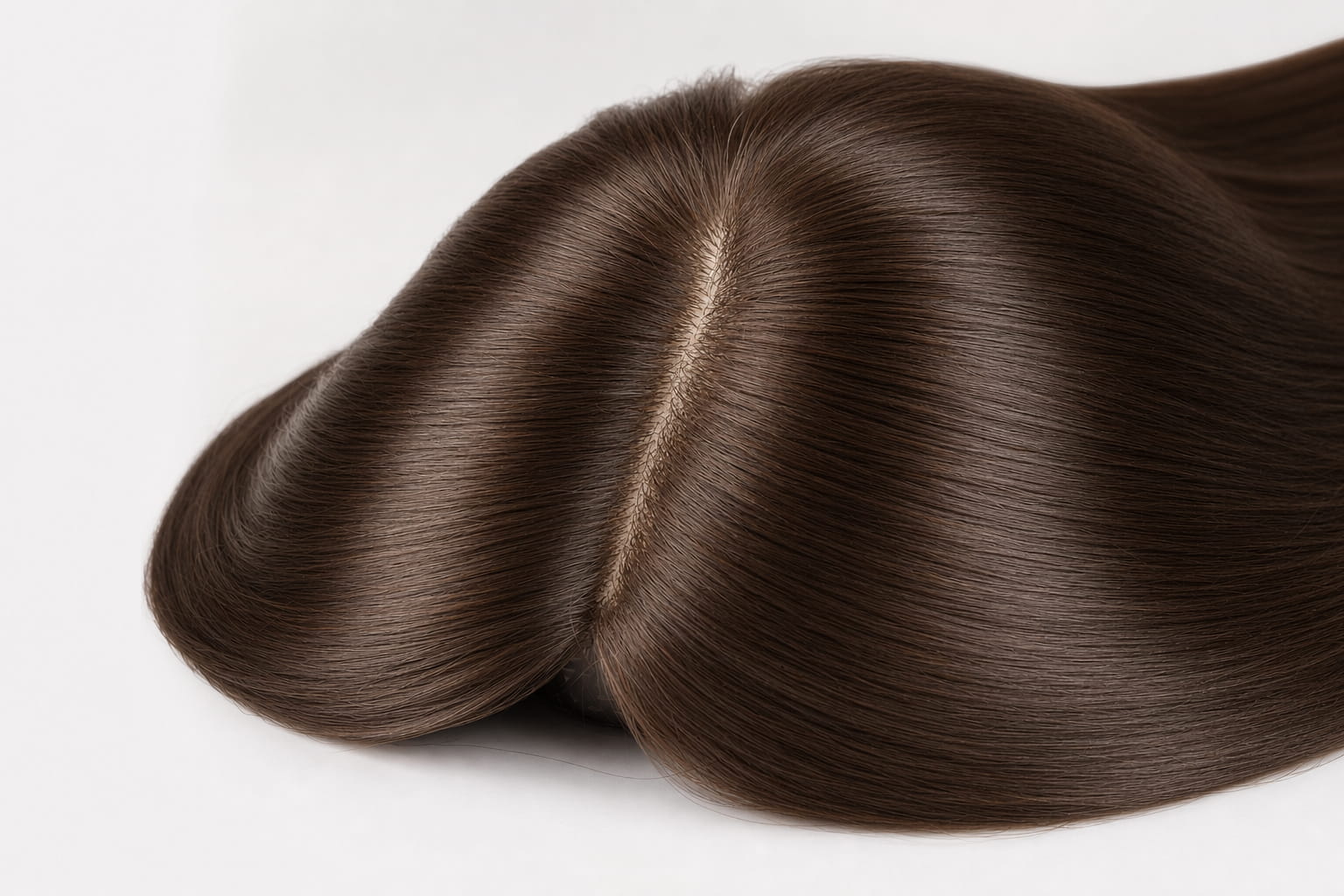
Morado’s clip-ins come as a full 7-piece set of 100% Remy human hair, with soft, silicone-backed clips designed to grip without tension or pulling. Because the hair is Remy—meaning every strand’s cuticle runs in the same natural direction—it stays silky, resists tangling, and can be styled with heat just like your own hair.
Sets come in 18" and 22" lengths, in solid shades and blended highlights, starting from $99.99.
The biggest draw of clip-ins is freedom. There’s no salon appointment, no adhesive, and no commitment. If you love the idea of full, bouncy hair for a wedding, a date night, or a week when you just want to feel a little extra—but you also love scalp massages and sleeping with your hair in a messy bun—clip-ins let you have both.
How Tape-In Extensions Work
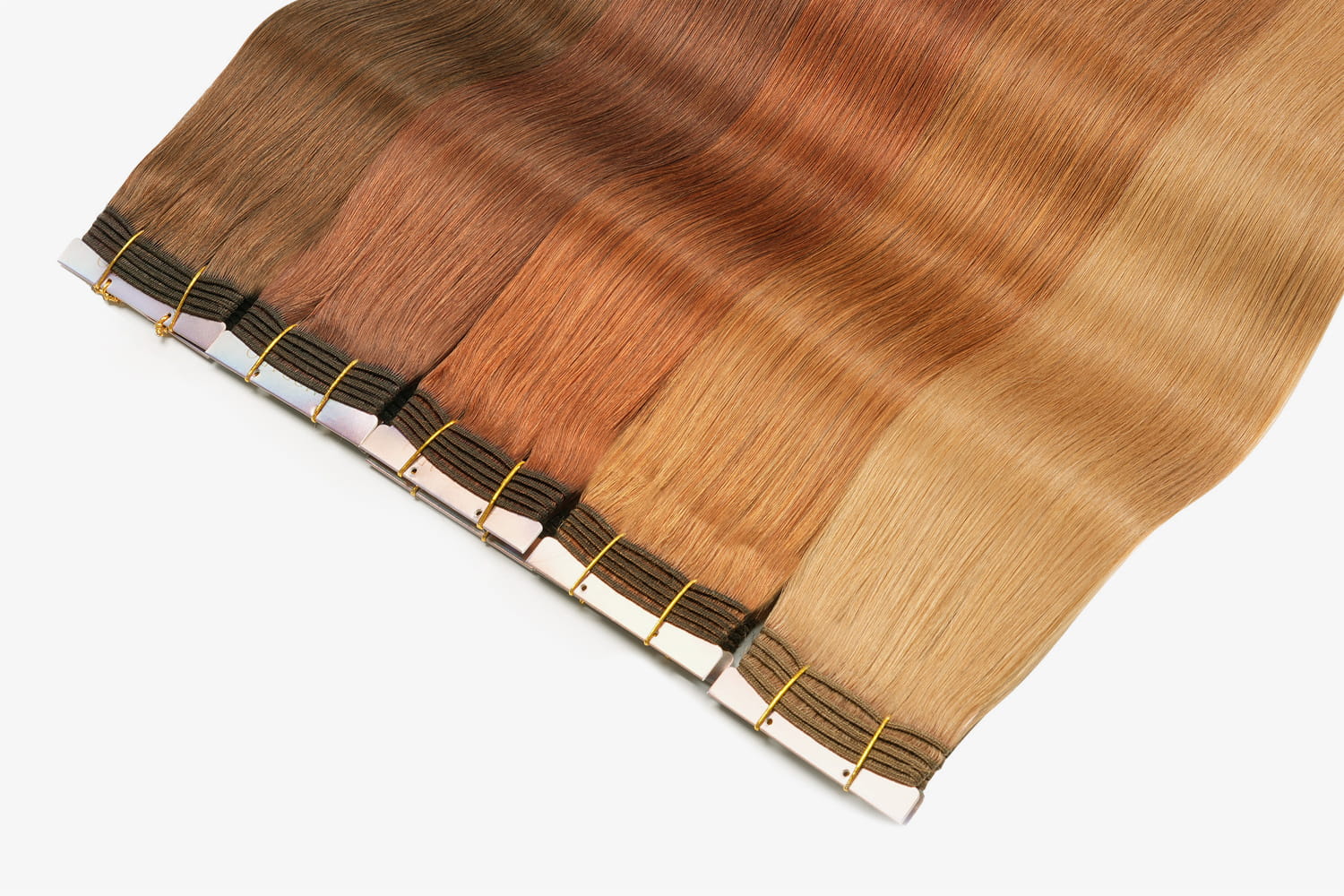
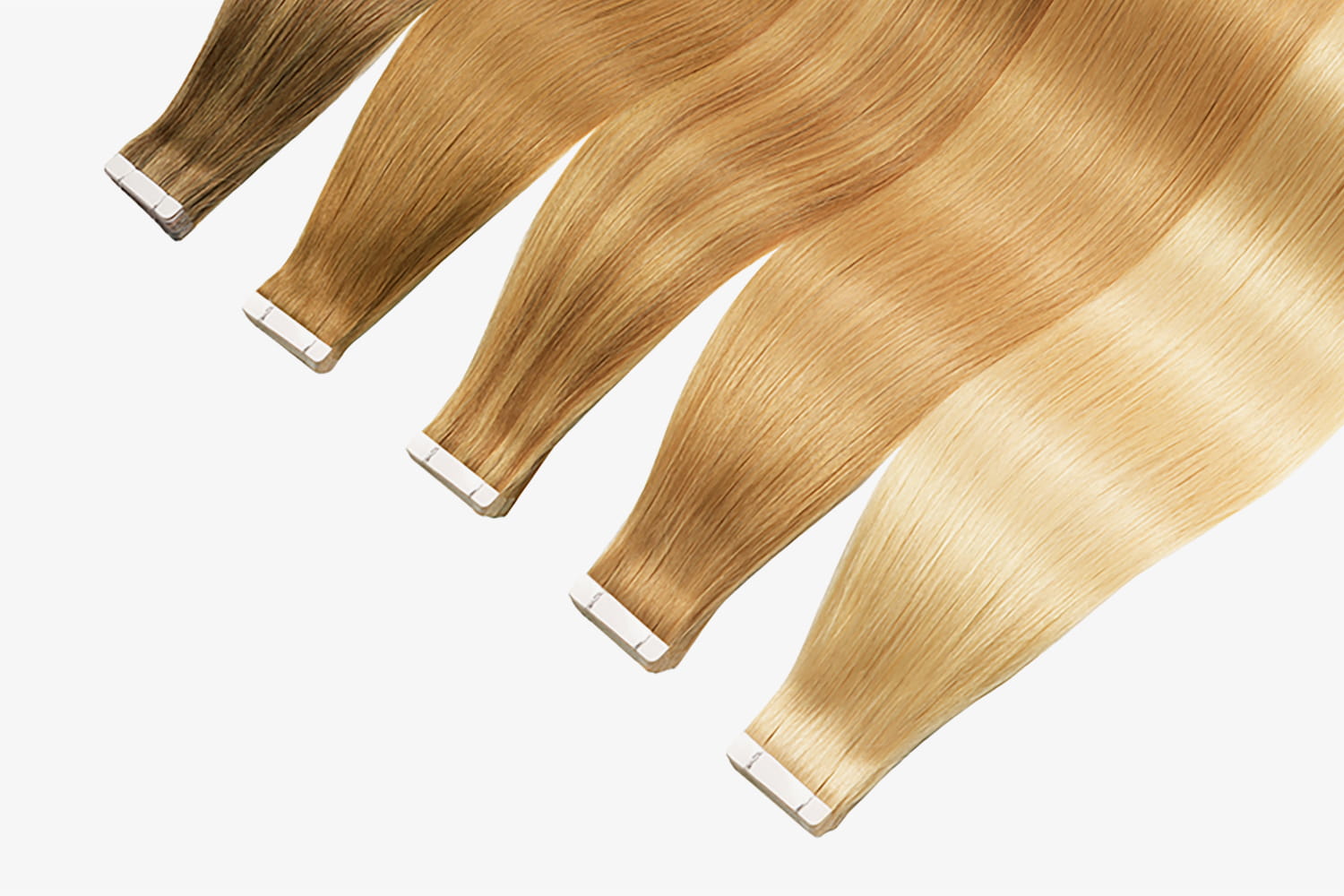
Tape-ins are a semi-permanent option. Thin wefts with a medical-grade adhesive strip are “sandwiched” around small sections of your natural hair, sitting flat against the scalp. A stylist installs them in about an hour, and then they simply live with you—through workouts, showers, and Monday mornings—for roughly 6 to 8 weeks before they need to be moved up as your hair grows.
Morado’s tape-in extensions are made from 100% premium Remy human hair with medical-grade adhesive, engineered to lay flush against your scalp for an invisible, seamless blend.
They come in 18" and 22" lengths across 20 shades—including balayage and highlighted blends—priced from $71.75 to $89.99 per pack. Because the hair is reusable, the same wefts can be re-taped and reinstalled multiple times, which makes them one of the more cost-effective semi-permanent options over a full year.
The draw here is the opposite of clip-ins: you never think about your hair. You wake up with length and volume already in place. For many people—especially anyone tired of a daily “putting my hair on” step—that’s the whole point.
Clip-Ins vs. Tape-Ins at a Glance
| Clip-Ins | Tape-Ins | |
| Installation | DIY, 5–10 minutes at home | Professional install, about 1 hour |
| Wear Time | Daily wear — removed at night | Continuous, 6–8 weeks between move-ups |
| Commitment Level | None — in and out whenever you like | Semi-permanent |
| Starting Price | From $99.99 (7-piece Remy set) | From $71.75 per pack |
| Reusability | Months to a year+ with gentle care | Reusable across multiple reinstalls with re-taping |
| Sleeping & Workouts | Remove first | Stay in — designed for daily life |
| Best For | Occasional wear, events, commitment-free volume | Everyday length and fullness with zero morning effort |
The Real Question: What Does Your Week Look Like?
Specs are helpful, but your routine is the real decider. Ask yourself a few honest questions:
-
How often do you want longer, fuller hair?
If the answer is “for special occasions” or “a few days a week,” clip-ins make sense. If it’s “every single day,” taping in once every couple of months beats clipping in 60 times.
-
How do you feel about a daily hair step?
Some people find clipping in a 5-minute ritual they enjoy. Others know themselves—if it adds friction, it won’t happen, and the set will live in a drawer.
-
Do you sleep, swim, or sweat hard?
Tape-ins are built to live through all of it. Clip-ins need to come out before bed and before the pool.
-
How’s your scalp comfort?
Clip-ins put brief, repeated pressure on the same spots. Silicone-backed clips like Morado’s minimize this, but tape-ins distribute weight over a flat, feather-light strip—often the more comfortable choice for sensitive scalps and finer hair.
-
What’s your budget rhythm?
Clip-ins are a one-time purchase with no upkeep costs. Tape-ins add a stylist visit every 6–8 weeks—worth budgeting for before you commit.
Caring for Each Type
Clip-In Care
Brush gently before and after each wear, wash only every 15–20 wears with sulfate-free shampoo, and let them air-dry flat. Store them clipped together in a box or hanger, away from sunlight. Treated kindly, a quality Remy set keeps its silkiness for a very long time.
Tape-In Care
Use sulfate-free, alcohol-free products, keep conditioner and oils away from the adhesive area, and brush from ends to roots with a loop or extension-safe brush. Sleep with hair loosely braided, and see your stylist every 6–8 weeks for move-ups. Small habits, big payoff: the same hair can look beautiful through multiple installs.
Our Honest Take
Choose clip-ins if you want flexibility, you’re new to extensions, or fuller hair is a sometimes-treat rather than an everyday need.
Choose tape-ins if you’re ready for wake-up-and-go hair and don’t mind a standing salon date every couple of months.
Plenty of Morado customers eventually own both—tape-ins as their everyday base, clip-ins for extra drama on big occasions. There’s no wrong answer, only the one that fits the life you’re actually living.
Whichever you choose, both lines are 100% Remy human hair backed by the Morado Promise—including 90-day returns and exchanges—so you can decide with confidence.
Frequently Asked Questions
Q. Do tape-in extensions damage your hair?
Not when they’re installed and maintained properly. Tape-ins are among the gentlest semi-permanent methods because the lightweight strip distributes weight across a wide section instead of stressing individual strands. Damage almost always comes from skipped move-ups or at-home removal—keep your 6–8 week appointments and let a stylist remove them with proper solution.
Q. Can I install clip-ins myself?
Yes—that’s their superpower. Most people get a natural blend within their first two or three tries. Tease the root slightly before clipping for extra grip, and clip wefts a finger-width below your part line so they stay hidden.
Q. Which lasts longer, clip-ins or tape-ins?
The hair itself lasts a long time in both cases because it’s Remy human hair. Clip-ins often last a year or more since they’re only worn part-time. Tape-in wefts endure daily wear but can be re-taped and reinstalled multiple times, so a single purchase carries through several installation cycles.
Q. Can I sleep or swim in clip-in extensions?
We don’t recommend it. Sleeping in clip-ins can tug at your roots and tangle the wefts, and chlorine or salt water is hard on any extension hair. Take them out first—it only takes a minute.
If sleeping and swimming in your extensions matters to you, tape-ins are the better fit.
Share
Read more
Your Hair Extensions Arrived—Do This Before Opening Them
Your package has arrived. The lighting is perfect. Your phone is ready for the transformation video. But before you release your new hair from every seal, net, band and protective tie—pause. A care...
Aura, Diamond, or Ruby? Choosing Your Line
Aura, Diamond, and Ruby — three premium Morado lines, three different strengths. Compare hair type, volume, styling, and price to find the line made for you.