
Heat Styling Extensions Safely: Curls, Waves & Sleek Without the Damage
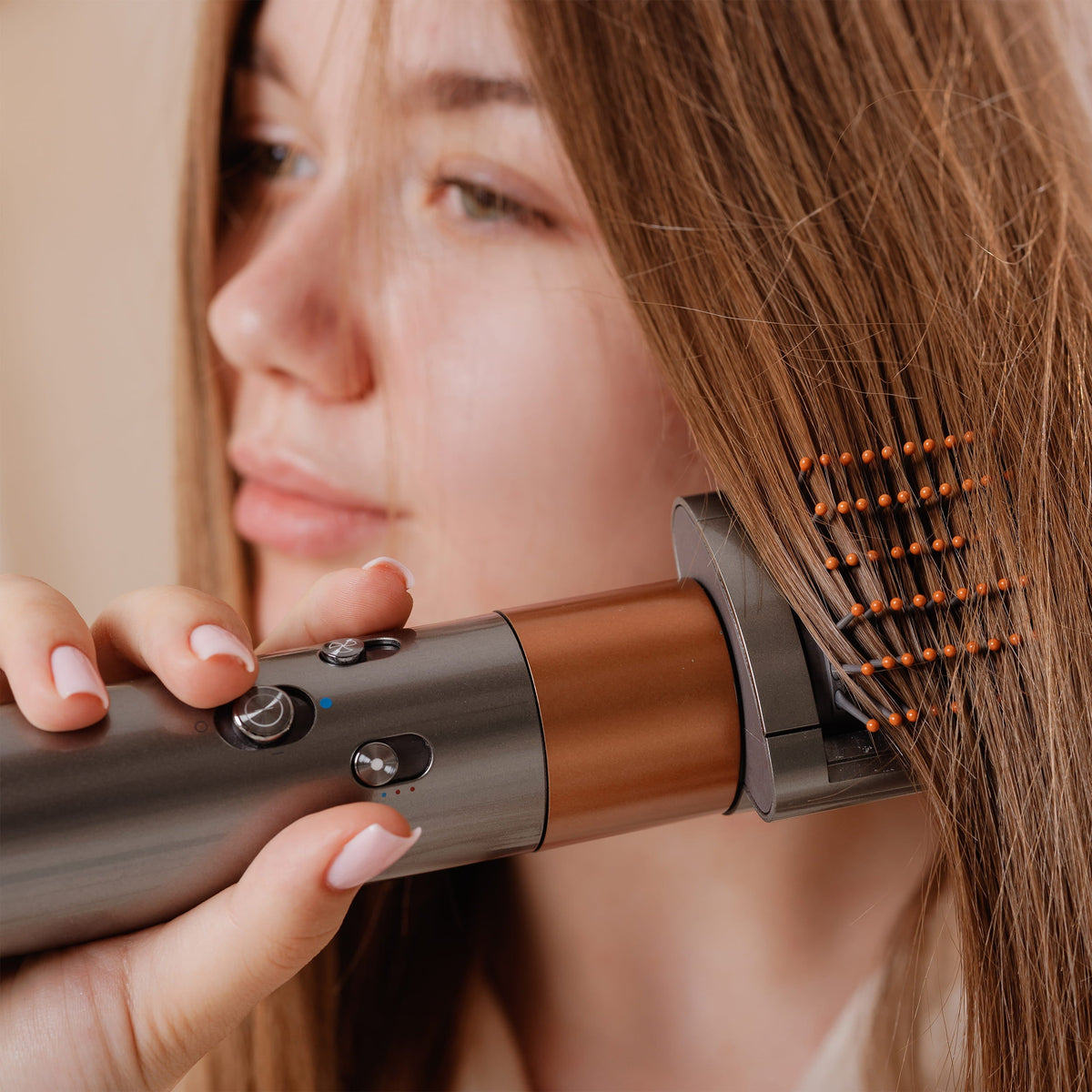
One of the best reasons to choose 100% Remy human hair is the styling freedom: it curls, waves, straightens, and blow-dries like the hair you grew — which is exactly why heat is also where good sets go to die early. Your natural hair survives styling abuse because it’s perpetually replaced; extension hair keeps a permanent record. Every pass of the iron is written into strands that will never grow out. The goal of this guide isn’t to scare you off hot tools — it’s to let you use them for the whole life of your set. The difference is about four habits.
The Four Habits That Change Everything
-
Heat protectant, every single time. Non-negotiable and first for a reason. A thermal protectant spray through dry mid-lengths and ends before any hot tool is the closest thing hair care has to a seatbelt. Choose alcohol-free formulas; keep it off attachment zones.
-
Moderate temperatures. Extension hair styles beautifully at 300–350°F (150–175°C) — it doesn’t need the 450°F your iron offers. Fine-textured and lighter shades sit at the low end; one pass at medium heat beats three passes at low and one scorching pass at high. If your tool has no dial, it’s the wrong tool for hair you paid for.
-
Style dry hair only. Water boils. Heat on damp extension hair micro-blisters the cuticle from the inside — the sizzle you can sometimes hear is the sound of lifespan leaving. Fully dry, always, before any iron or wand.
-
Let sets cool before you touch them. Curls set as they cool, not as they heat. Clip or cup each curl until cool and you’ll need lower heat and fewer re-dos — the gentlest styling session is the one you don’t repeat tomorrow.
Technique by Extension Type
Clip-ins, toppers & fill-ins: style off the head when you can
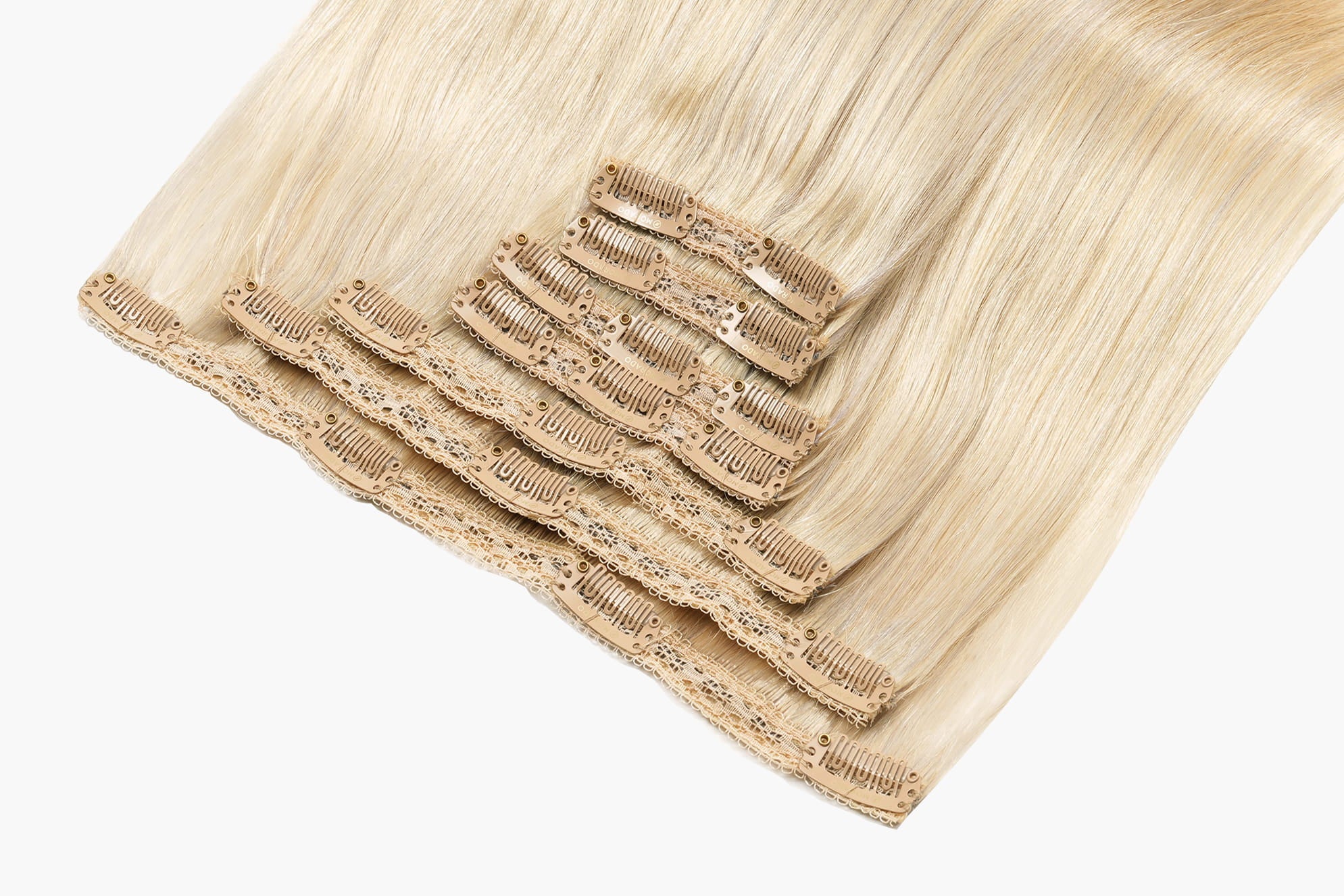
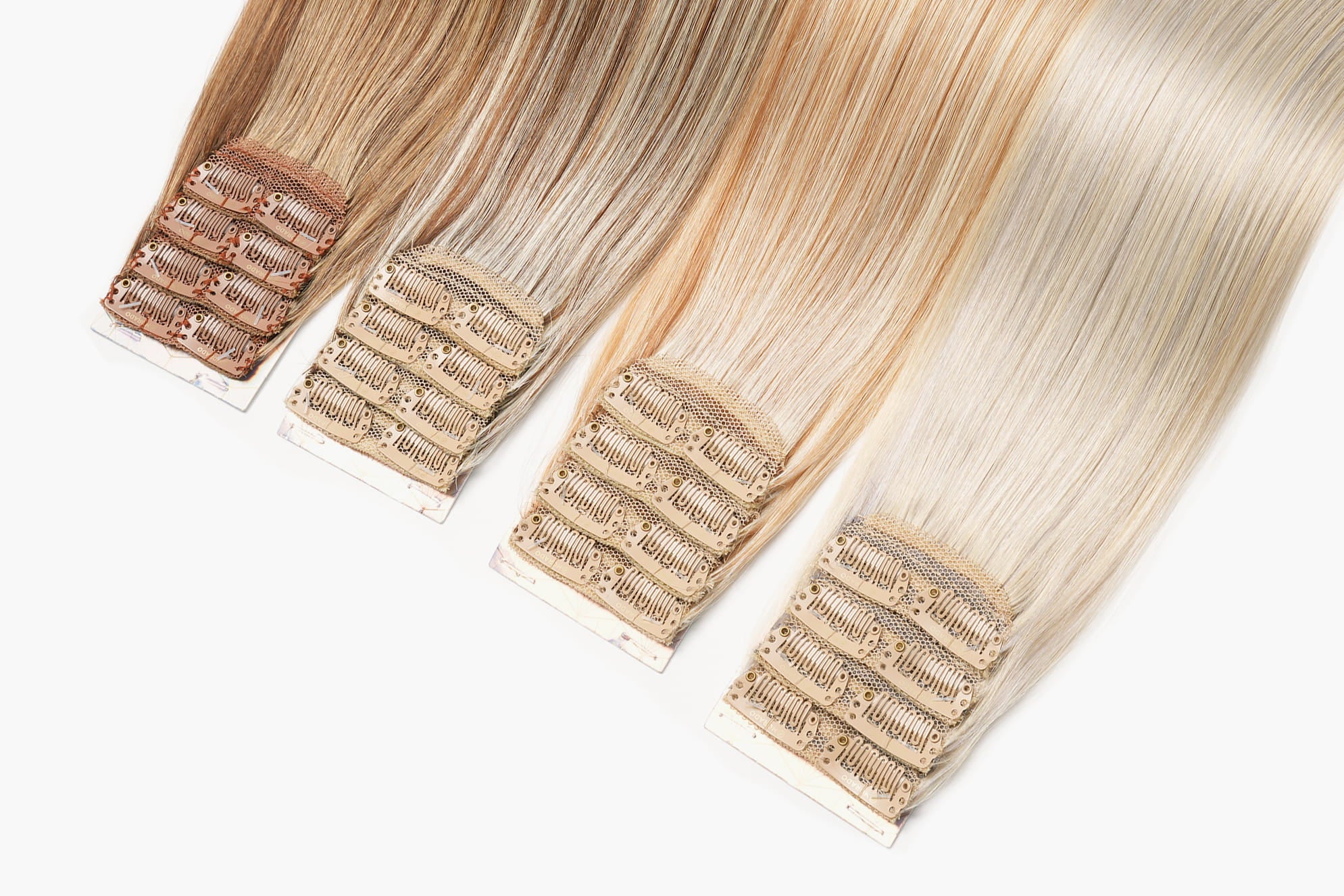
Removable pieces offer a luxury your natural hair never could: styling on a table. Clip wefts to a stand or heat-proof surface and you get even tension, full visibility, and zero risk to your scalp. Style piece and natural hair with the same tool at the same temperature so textures match — the matched wave, more than anything, is what makes the blend disappear. For toppers, keep the iron well clear of the silk or lace base; heat is the one thing the base can’t recover from.
Tape-ins, wefts & micro loops: respect the attachment line
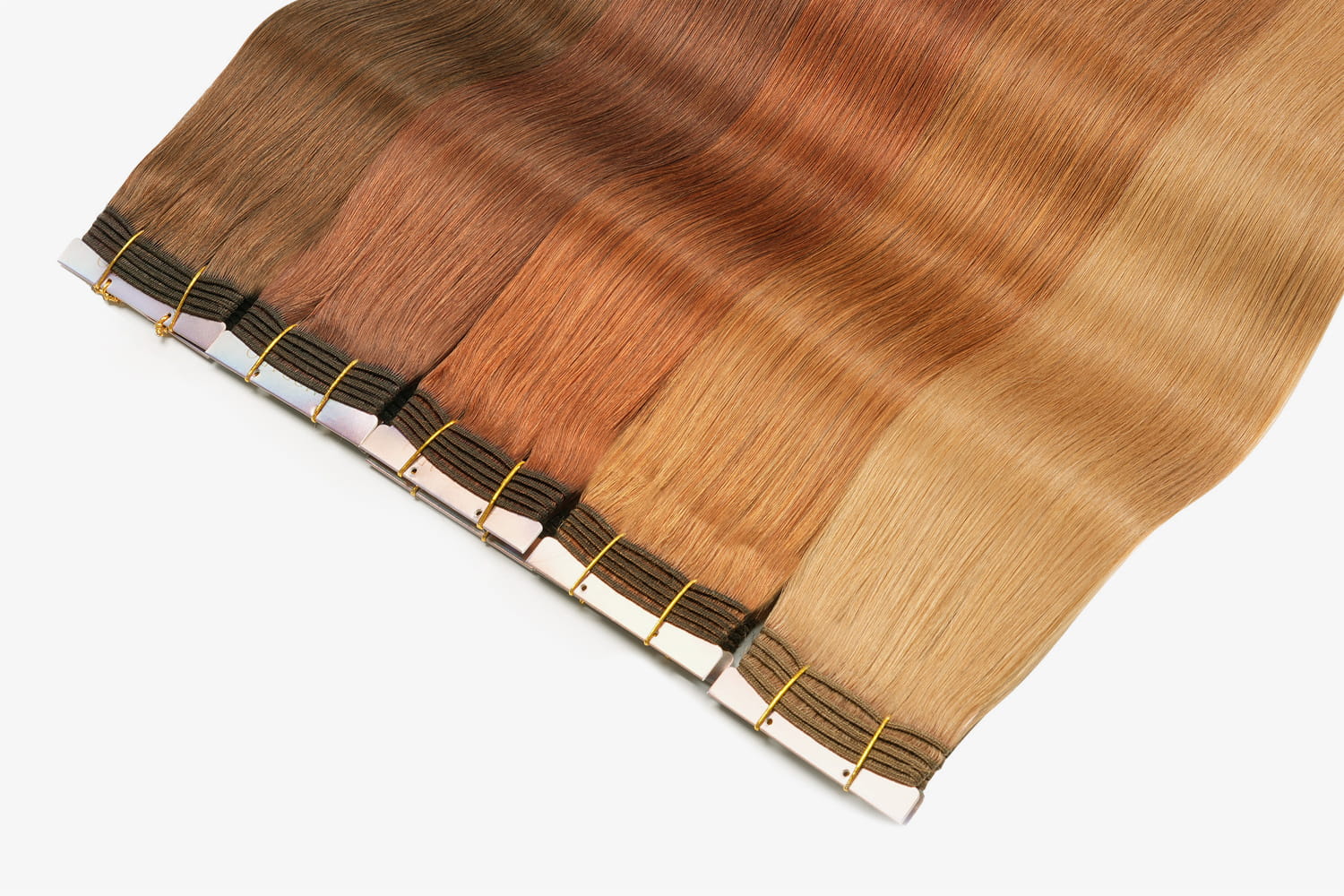
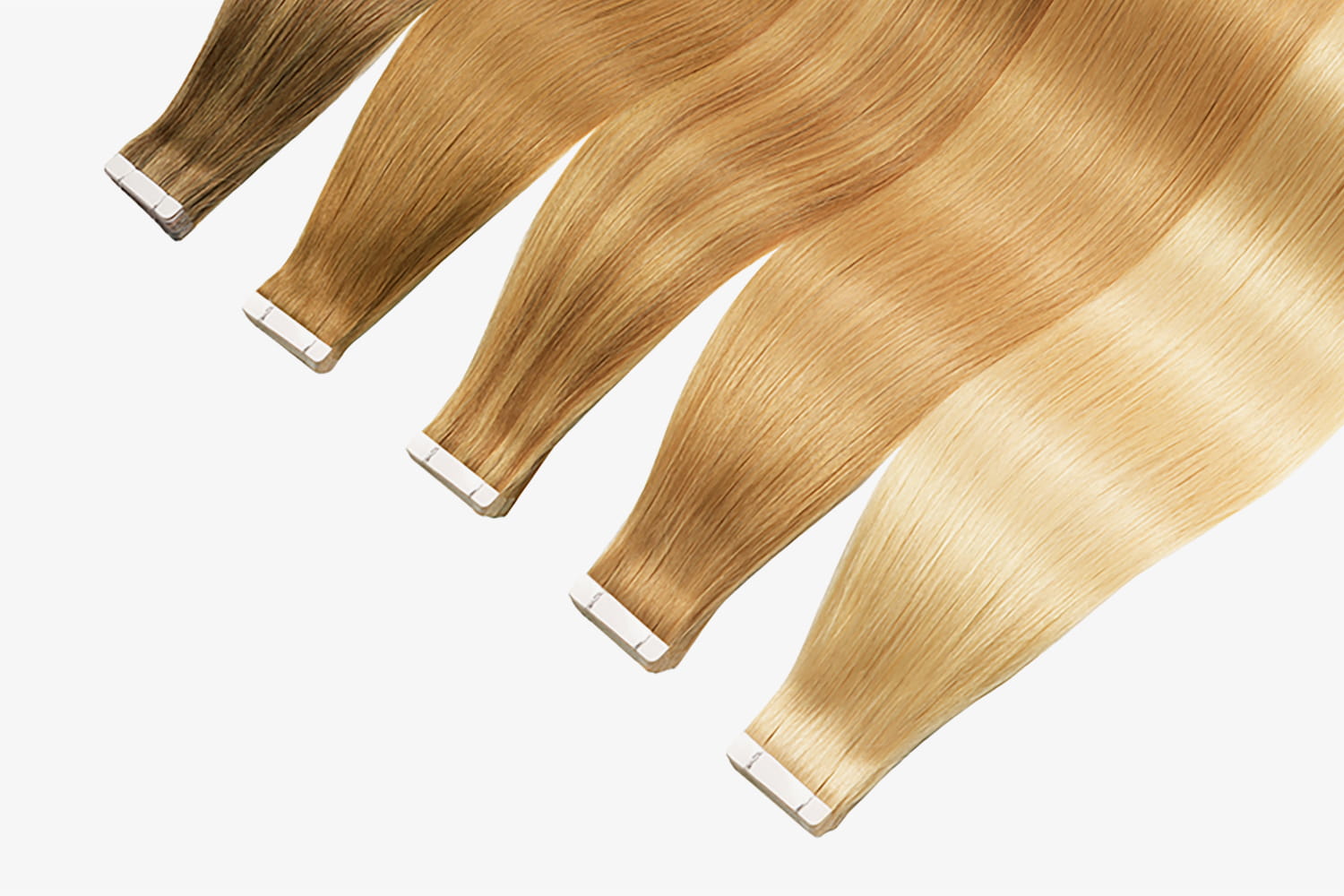
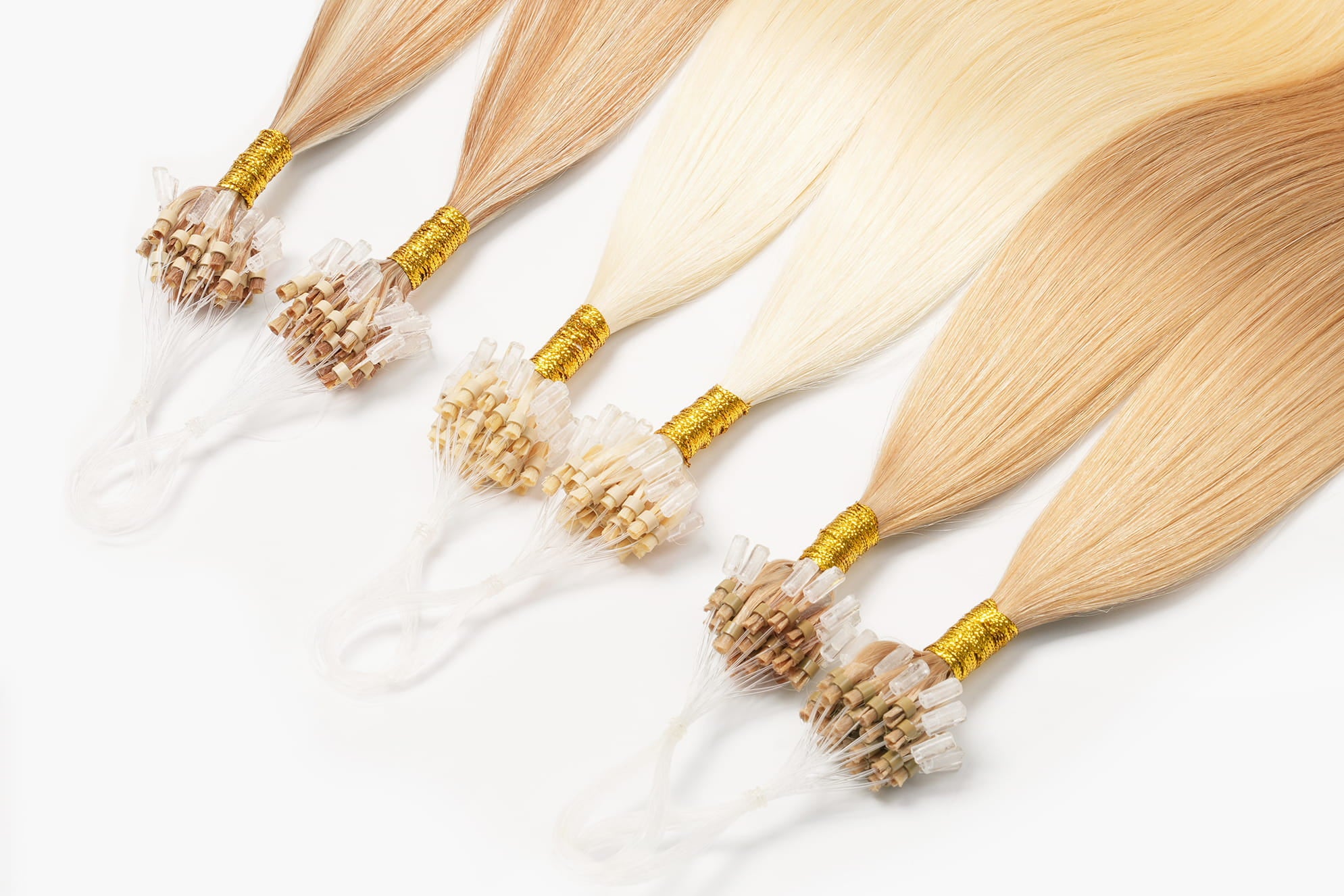
Installed extensions style in place, with one map in mind: everything below the attachments is styleable; everything at or above them is off-limits. Direct heat softens tape adhesive, and repeated hot passes over beads and seams stress the anchor points. Keep tools a couple of inches below the rows, use a comb to isolate sections, and when blow-drying, point the airflow down the hair shaft — it smooths the cuticle and spares the bonds.
Ruby synthetic: heat-resistant is not heat-proof
Ruby’s premium fiber tolerates styling within the temperature range on your piece’s care card — a genuine upgrade over ordinary synthetics, which melt where human hair merely suffers. But the deeper truth is that Ruby rarely needs your iron at all: its style is set into the fiber and returns after every wash. Restyle within the stated range when you want a change; otherwise, let the fiber do what you bought it for. Never guess at the limit — exceeding it is permanent in the worst way.
Temperature Cheat Sheet
| Hair | Safe Zone | Notes |
| Dark solid shades (Remy) | 325–350°F | The most heat-tolerant; still cap at 350°F |
| Blonde, silver & lightened shades | 300–325°F | More processed = less margin; protectant is critical |
| Fine textures & aging sets | 280–320°F | Older sets have spent reserves — style them gently |
| Ruby synthetic | Per care card only | Within range only; usually unnecessary — the style resets |
| Any hair, any day | Zero heat | Heatless curls (silk rollers, braid waves) cost nothing from the lifespan budget |
Make the Style Outlive the Session
The most protective styling habit is needing to style less. Remy hair holds a set impressively — so bank it: sleep in a loose braid to wake with waves, refresh curls with a cool-shot blast instead of re-ironing, use dry shampoo at your roots (off the attachments) to stretch styles across days, and let heatless methods carry the low-stakes days. Many Morado wearers settle into heat once or twice a week with touch-ups between — the exact rhythm at which a set stays silky to the end of its 4–6 months and beyond.
Styled this way, heat is a tool, not a tax. Your extensions were bought to be worn — curled for the wedding, sleeked for the interview, waved for no reason on a Tuesday. Protect them with the four habits, respect the attachment line and the temperature chart, and use them exactly as much as the mirror requires.
Frequently Asked Questions
Q. Can I curl and straighten Morado extensions?
Yes — Aura and Diamond lines are 100% Remy human hair and take hot tools like your own hair: curling irons, straighteners, wands, and blow-dryers all work. Stay in the 300–350°F range with heat protectant, keep tools away from attachments and topper bases, and style only fully dry hair.
Q. What temperature is safe for hair extensions?
300–350°F (150–175°C) covers nearly everything, with lighter and finer hair at the lower end. Extension hair doesn’t regenerate, so the maximum your tool offers is never the number to use — one clean pass at moderate heat outperforms repeated passes at any temperature.
Q. Will curling my extensions make the curl permanent?
No — heat styling on human hair lasts until the next wash or thorough brushing, exactly like your own hair. If you want a lasting texture change, that’s a chemical service, and extension hair generally shouldn’t undergo one. The happy middle: Remy hair holds sets well, so a curl banked overnight in a loose braid often carries several days.
Q. Can I blow-dry my tape-ins?
Yes — in fact you should blow-dry the attachment area on low heat after washing so tapes never sit damp. For styling, keep the dryer on low-to-medium, point airflow down the shaft, and avoid concentrating hot air directly on the tape bonds. High heat aimed at adhesive is how slipping starts.
Q. I used high heat on my set for months and it’s gone dry. Can it be saved?
Partially, often. Trim the most compromised ends, run weekly deep-conditioning masks, drop your styling temperature to the bottom of the safe zone, and switch to heatless sets where possible. Heat damage can’t be reversed — cuticle scorch is permanent — but a moisture-focused rescue routine usually restores enough slip and shine to finish the set’s life gracefully.
Read more

Which extensions can you sleep in — and how? The 5-minute nighttime routine for tape-ins, wefts, and micro loops, plus removal habits for clip-ins and toppers.
Step-by-step washing for clip-ins, tape-ins, wefts, micro loops, and toppers: how often, which products, and the mistakes that quietly ruin extension hair.