


How to Prevent Tangling and Shedding in Hair Extensions
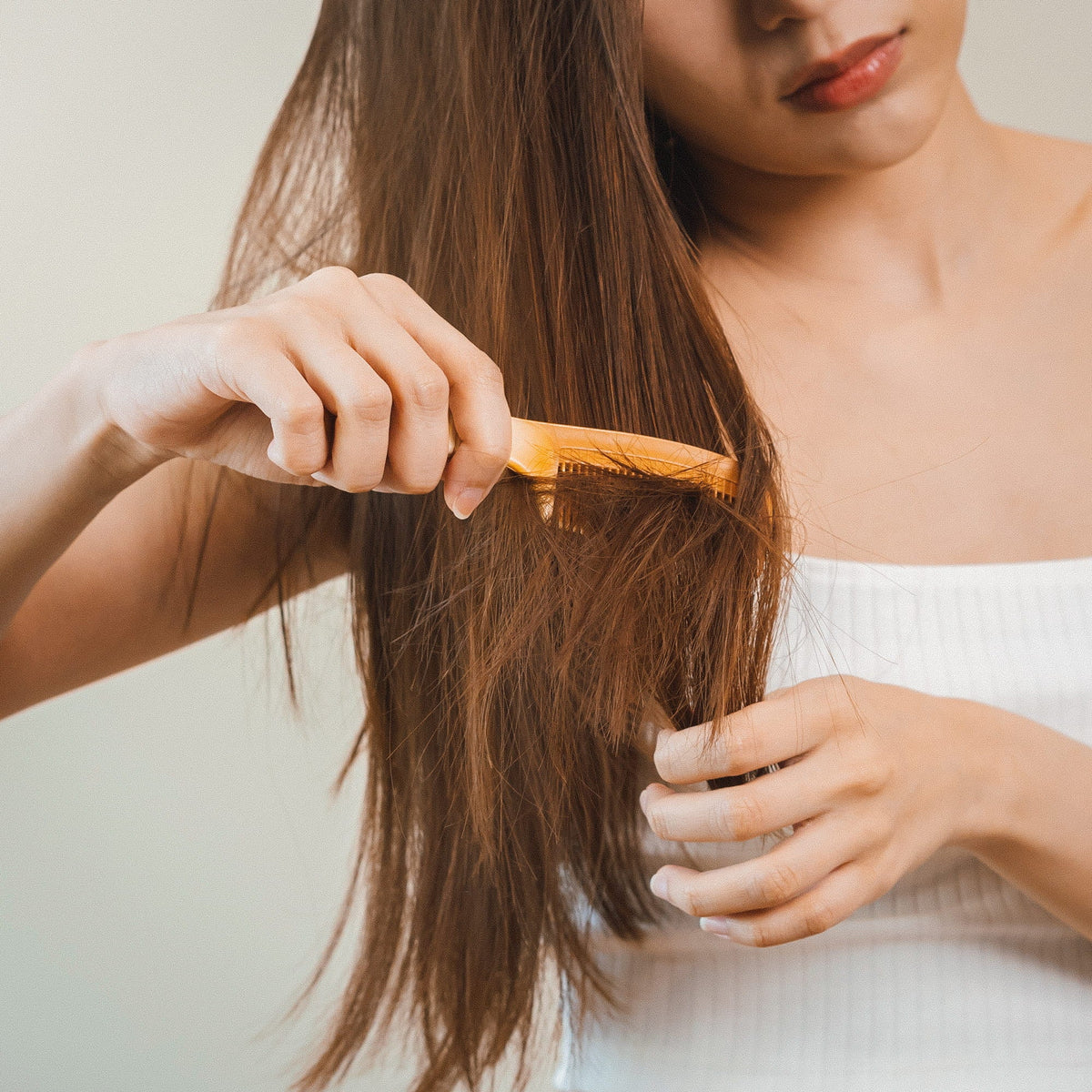
Nothing sours the extension experience faster than the Great Morning Tangle — reaching back and finding a bird’s nest at your nape that wasn’t there at bedtime — unless it’s watching strands collect in your brush and wondering if the whole set is unraveling. Take a breath: both problems are common, both are mostly preventable, and neither usually means anything is wrong with your hair. Tangling and shedding each have a short list of causes, and once you know the list, you can cross off yours one by one.
Why Extensions Tangle More Than Your Own Hair
Three structural reasons, none of them defects. First, no scalp oils: your natural hair is continuously conditioned from the root; extension hair gets only what you give it, and dry strands grip each other. Second, friction zones: extensions concentrate where movement is constant — the nape, the collar line, under bag straps — which is why matting always seems to start at the neck. Third, direction and density: more hair means more strand-on-strand contact, and any non-Remy hair in the mix (never Morado’s, but common elsewhere) has misaligned cuticles that Velcro together. Remy hair’s aligned cuticles are your head start; the habits below do the rest.
The Anti-Tangle Routine
-
Brush twice daily, ends first. Morning and night, with a loop brush or extension-friendly paddle: start at the ends, work upward in sections, and support the hair above where you’re brushing so attachments never take the tension. Two minutes that prevent twenty.
-
Never sleep on loose or damp hair. A loose braid or low ponytail for installed extensions (removable pieces come off entirely), and completely dry hair before any pillow — damp + friction overnight is the recipe for matting. A silk or satin pillowcase halves the friction for pennies.
-
Keep moisture in the hair. A leave-in conditioner or light serum through mid-lengths and ends daily, deep-conditioning mask weekly, sulfate-free everything. Hydrated strands slide; parched ones grab.
-
Defend the friction zones. Wear long hair forward over the shoulders under coats and bag straps, lift it clear of collars and seatbelts, and braid it for workouts, convertibles, and windy days. Wind is the world’s most efficient tangling machine.
-
Rinse after sweat and swim. Salt, chlorine, and dried sweat all roughen the hair’s surface. A quick fresh-water rinse and a pass of leave-in keeps the slip.
Shedding: What’s Normal and What Isn’t
First, the reassurance: some shedding is normal. Every weft holds thousands of strands, and a few released strands per wear — especially in the first week or two as loosely anchored hairs let go — is expected behavior, not decline. Your natural head sheds 50–100 hairs a day; a few from a weft is proportionally nothing.
Shedding worth investigating looks different: continuous streams of strands with every brush, visible thinning of a weft’s density, or bald lines appearing along a weft’s seam. The causes, in order of likelihood: brushing without support (yanking from the top pulls strands out at the seam — always hold the weft or row while brushing near it), product buildup at the base dissolving or stiffening the seam area, rough handling while wet, and — for installed hair — grown-out attachments twisting and stressing the weft. Notice that every cause is a handling issue, which is good news: handling can change tomorrow.
Rescue Protocols
For a tangle or mat that’s already formed
Never pull, and never attack it dry or soaking wet. Dampen slightly, saturate the mat with leave-in conditioner or a detangling spray, and let it sit a few minutes. Then, holding the hair above the mat firmly, tease strands free from the bottom edge of the tangle with a wide-tooth comb or your fingers — freeing the ends first, working upward, a few strands at a time. Patience is the tool; ten calm minutes saves hair that two frustrated minutes would tear out.
For a set that’s started shedding
Audit the routine: switch to supported brushing immediately, clarify any buildup at the seams (gently, with diluted sulfate-free shampoo at the base only), and book your move-up if attachments have grown out. For clip-in wefts shedding at the seam, a stylist can re-secure the weft stitching inexpensively — worth it on a set you love.
Prevention, Compressed
| Moment | Habit | Prevents |
| Morning | Ends-up brushing, supported; leave-in on lengths | Daytime knots, seam stress |
| All day | Hair clear of collars, straps, wind; braid when active | Nape matting |
| Washing | Sulfate-free, upright, no scrubbing; condition well | Dryness, the root of everything |
| Night | Removables off; installs braided loose; silk pillowcase; fully dry | The Great Morning Tangle |
| Every 6–8 weeks | Move-ups for installed hair | Twisted roots, seam shedding |
The Two-Week Test
If tangling or shedding has crept up on your set, run the full routine above for two weeks — most sets transform, because most trouble is habit-shaped, not hair-shaped. If a Morado set sheds heavily or mats persistently despite genuine care in its first weeks, contact us: that’s not the behavior Remy hair should show, and the 90-day Promise exists for exactly that conversation. Either way, you should end most days the way extension wearers deserve to: running your fingers through smooth lengths, no bird’s nest in sight.
Frequently Asked Questions
Q. Why do my extensions tangle at the back of my neck?
The nape is the friction capital of your head — collars, coat backs, bag straps, and pillow contact all concentrate there, and it’s the spot your brush reaches last. Counter it directly: thorough brushing at the nape morning and night, hair worn forward under outerwear, a loose braid at bedtime, and a silk pillowcase. Nape matting is nearly always friction, not faulty hair.
Q. How much shedding is normal for extensions?
A few strands per wear, slightly more in the first week or two as loosely anchored hairs release. Concerning shedding is continuous — streams with every brush, visible thinning, gaps along a seam — and almost always traces to unsupported brushing, buildup at the seams, or overdue move-ups, all fixable.
Q. What brush should I use on extensions?
A loop brush (its looped bristles glide over attachments without snagging) or a soft-bristle extension paddle. Fine-tooth combs and ball-tipped bristles catch at seams and beads. Whatever the tool, technique outranks it: ends first, work upward, support the hair above your stroke.
Q. Can I put oils on my extensions to stop tangling?
On the mid-lengths and ends, yes — lightweight serums and oils are excellent slip-restorers. Keep them strictly away from attachment zones: oils soften tape bonds and can cause micro-loop beads to slip. For installed extensions, “moisture below the attachments, nothing above” is the rule.
Q. A mat formed while I slept on damp hair. Is the set ruined?
Usually not — one mat, worked patiently with conditioner using the bottom-up rescue method above, typically releases without meaningful loss. What ruins sets is repetition: damp-hair sleeping as a habit, or ripping mats out dry. Rescue this one gently, and let it be the last one the routine allows.
Read more

Which extensions can you sleep in — and how? The 5-minute nighttime routine for tape-ins, wefts, and micro loops, plus removal habits for clip-ins and toppers.
Step-by-step washing for clip-ins, tape-ins, wefts, micro loops, and toppers: how often, which products, and the mistakes that quietly ruin extension hair.