

How to Store and Travel With Your Hair
Here’s a plot twist worth knowing: extensions spend most of their lives not on your head. A clip-in set worn twice a week is stored five days of every seven — which means storage isn’t the boring footnote of hair care; it’s where the majority of your set’s lifespan actually happens. Hair stored well waits for you exactly as you left it. Hair tossed in a drawer conducts a quiet experiment in tangling, dust, and creased wefts, and reports the results at your next big event. Same for travel: the difference between arriving with ready-to-wear hair and spending vacation night one detangling is entirely in the packing. Here’s how to get both right.
The Golden Rules of Storage
-
Store only clean-ish, completely dry hair. Product-heavy or damp hair in an enclosed space breeds odor, buildup, and in the worst case mildew. If a piece is due for its every-15-to-20-wears wash, wash before a long rest.
-
Detangle and smooth before putting away. Thirty seconds of brushing at storage time is the cheapest anti-tangle insurance there is — hair stored smooth stays smooth.
-
Darkness and dryness are the climate. UV fades color (lighter shades fastest) and humidity swells the cuticle, so the home you want is dark, cool, and dry: a drawer, closet shelf, or box — never a sunny bathroom counter or a steamy shower shelf.
-
Contain each piece. Silk or satin bags, the original box, or a hanging storage case — the goal is hair that can’t rub, snag, or collect dust. Cotton and rough fabrics steal moisture and invite frizz; silk and satin preserve it.
By Piece: The Right Way to Put Hair to Bed
Clip-ins and fill-ins
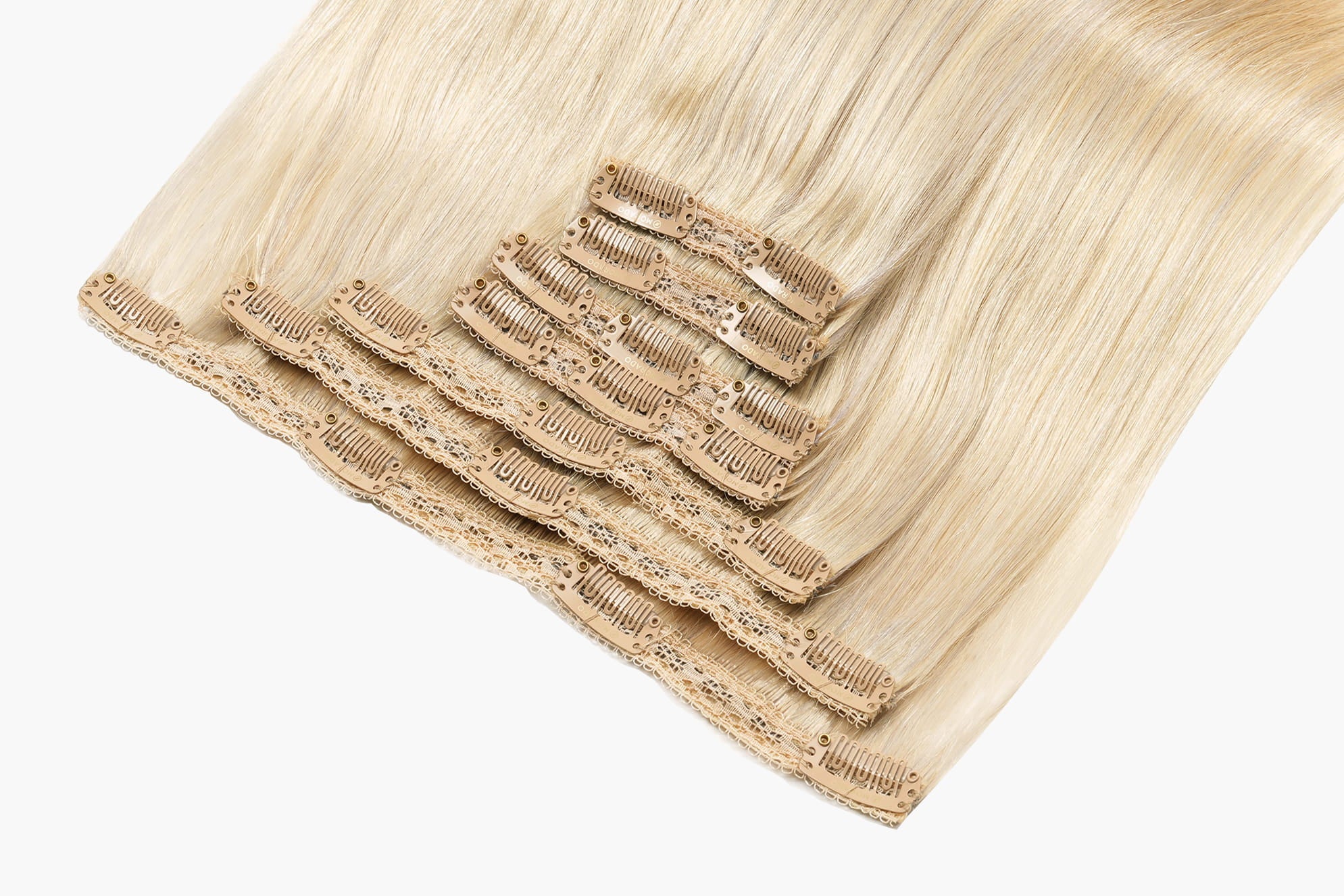
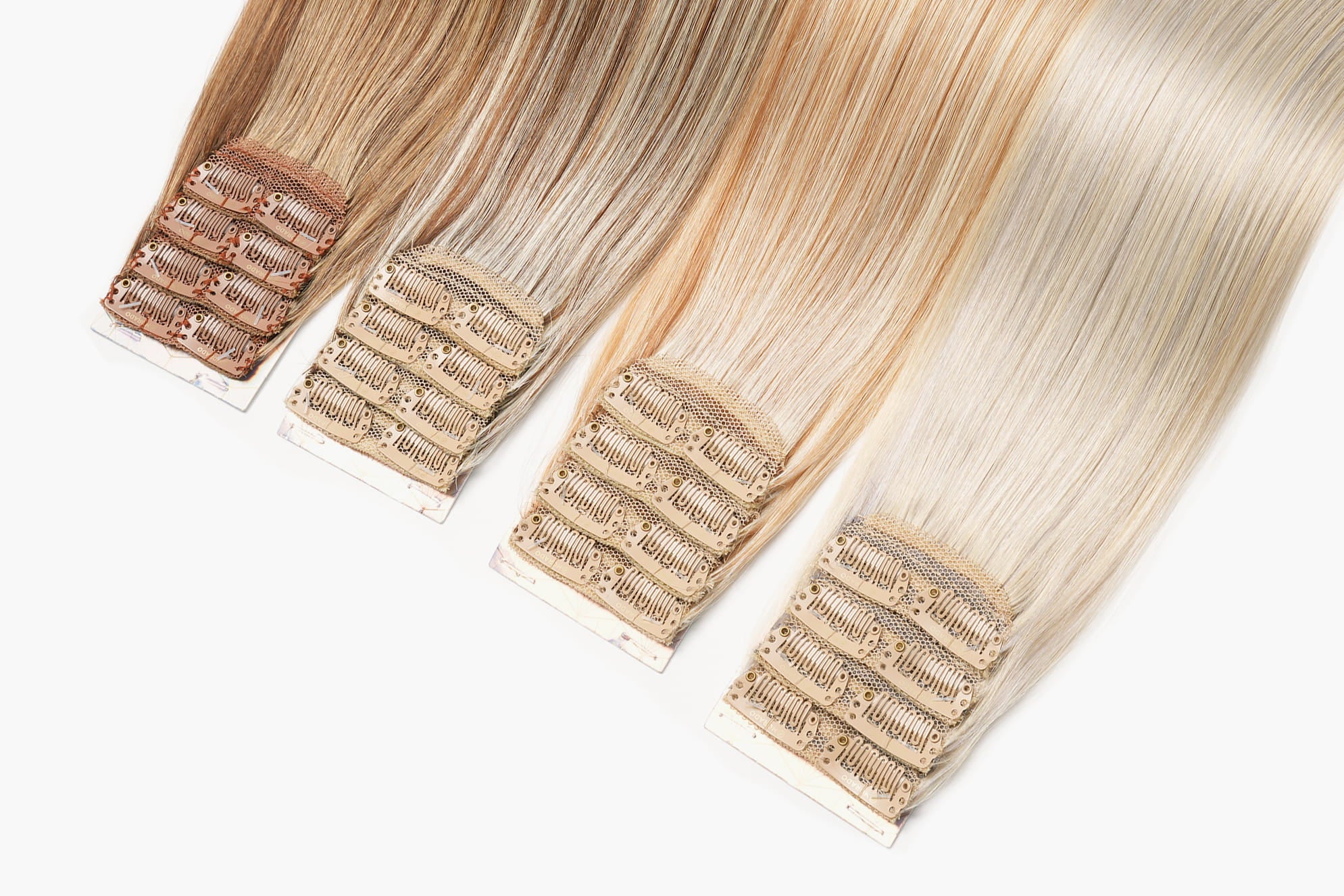
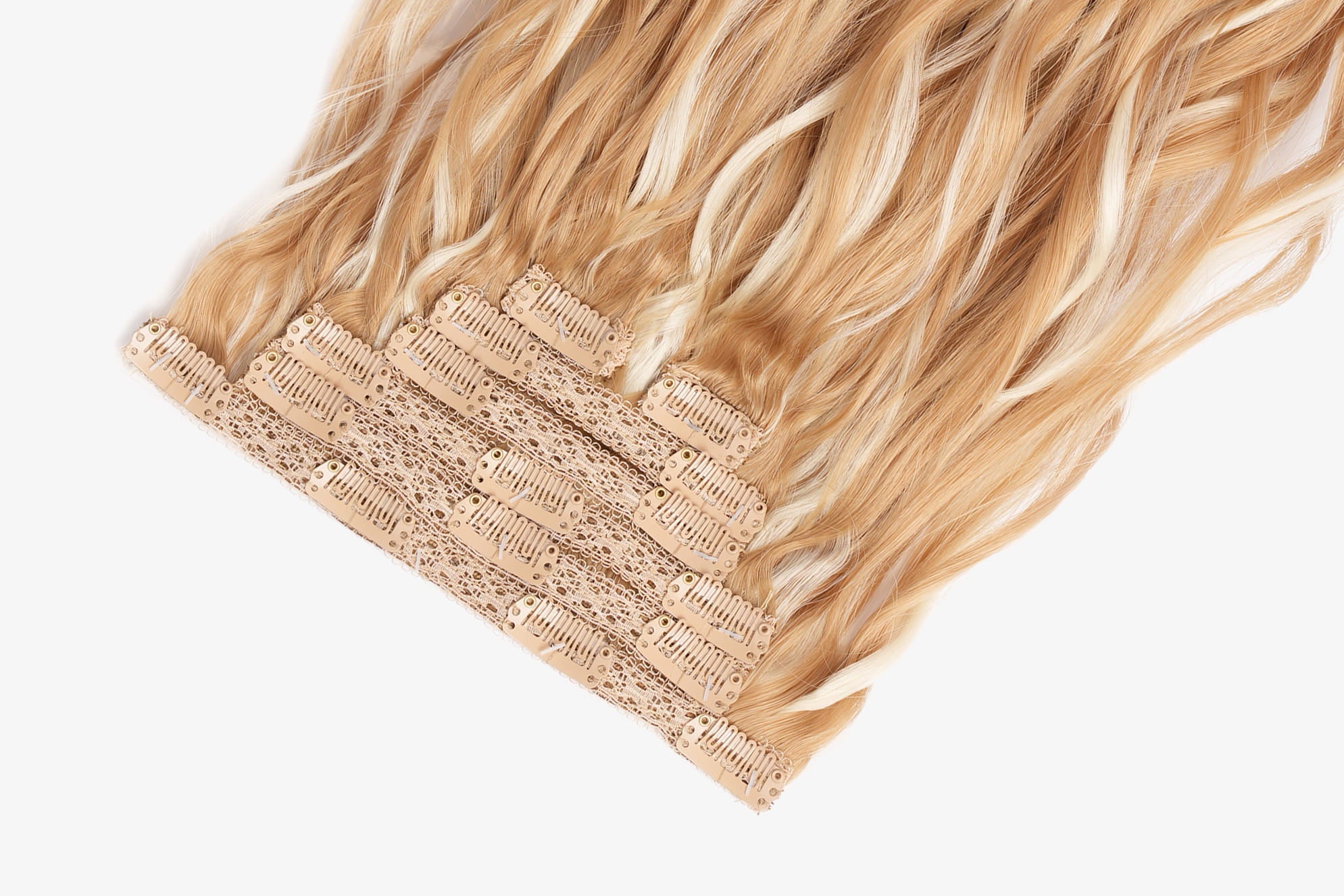
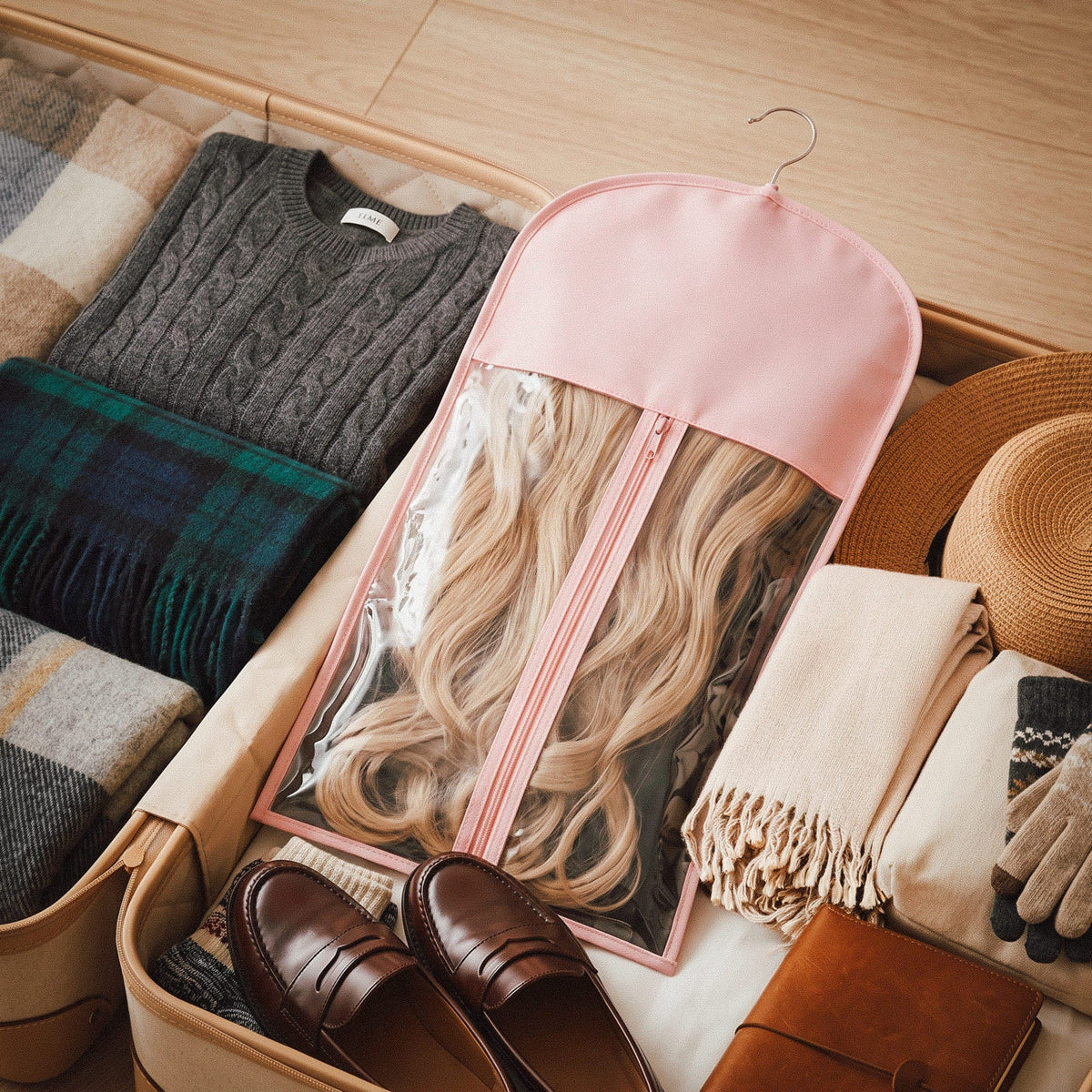
Stack the wefts aligned, close all the clips (open clips snag strands), then either hang the set on a clip-in hanger inside a garment-style bag or coil it loosely — never folded sharply — into a silk bag or its original box. For long stretches between events, a gentle twist of the stacked set into a loose loop keeps the ends from crushing.
Toppers and Ruby pieces
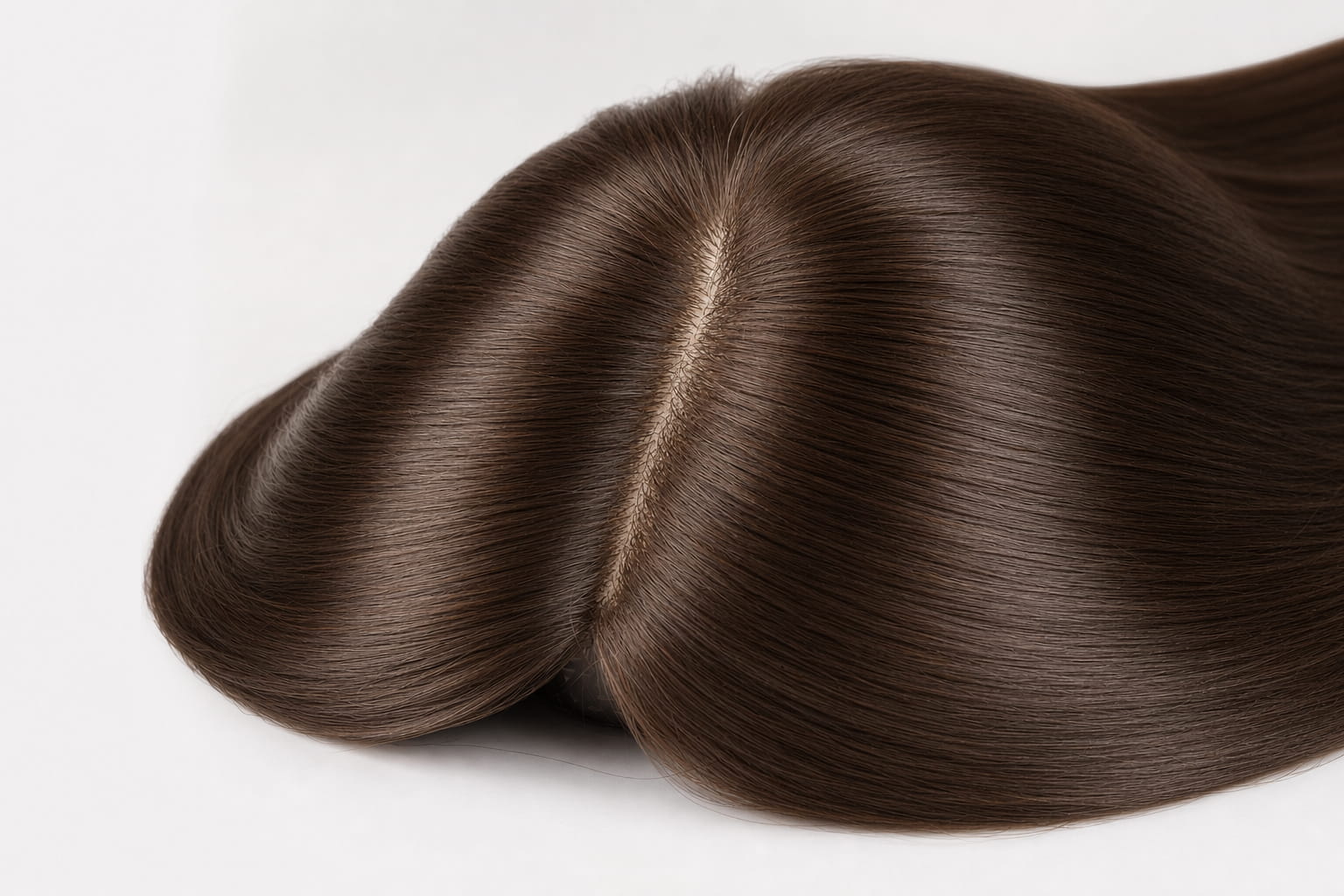
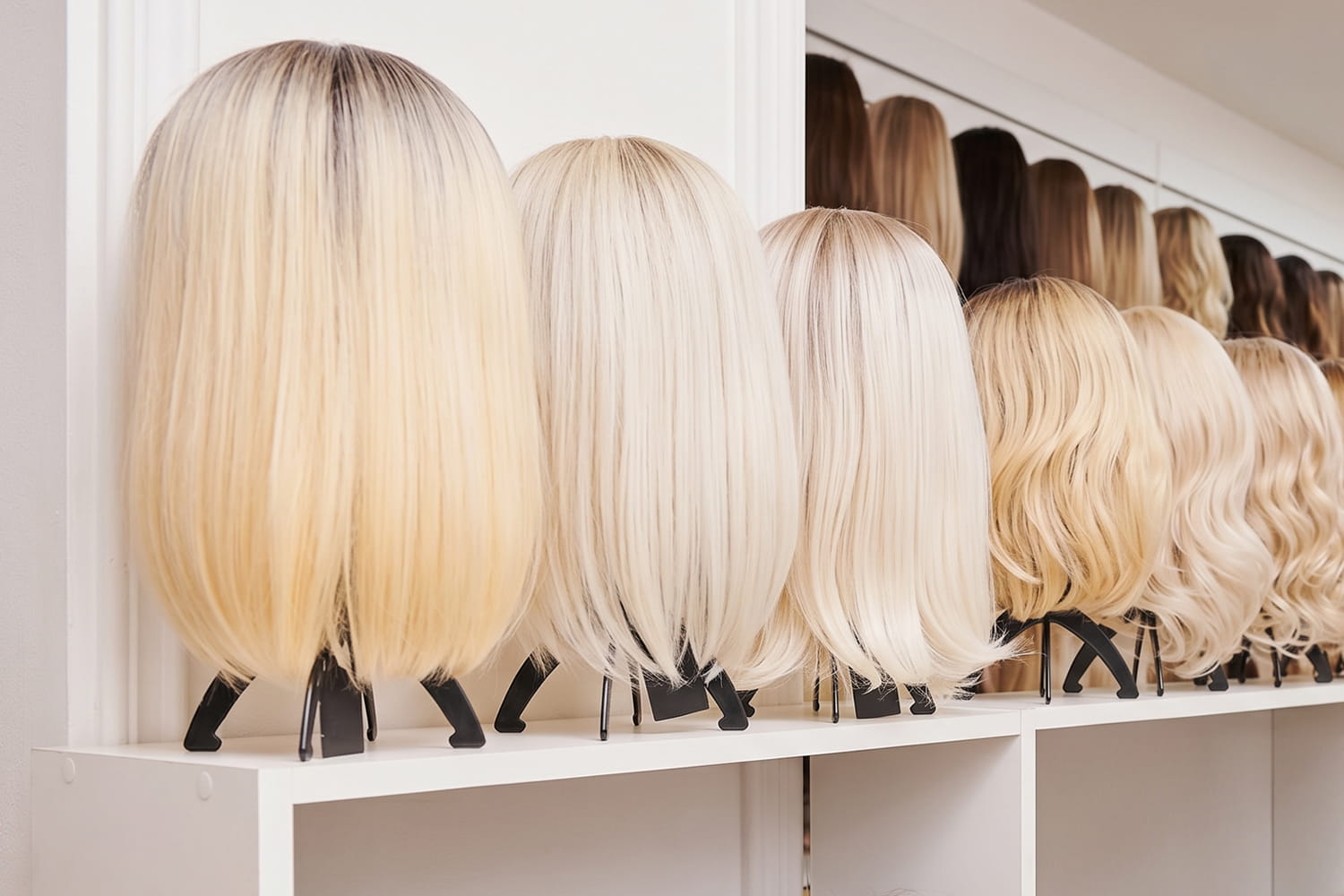
Base shape is everything: store toppers on a wig stand or mannequin head whenever possible, so the silk or lace base keeps its contour and the part stays trained. Boxed storage works for travel and short stays — base flat, hair smoothed, piece uncrushed. Ruby synthetic pieces are the easiest guests of all: on a stand, out of sunlight, and their set style waits indefinitely.
Between-install wefts, tape-ins & micro loop strands
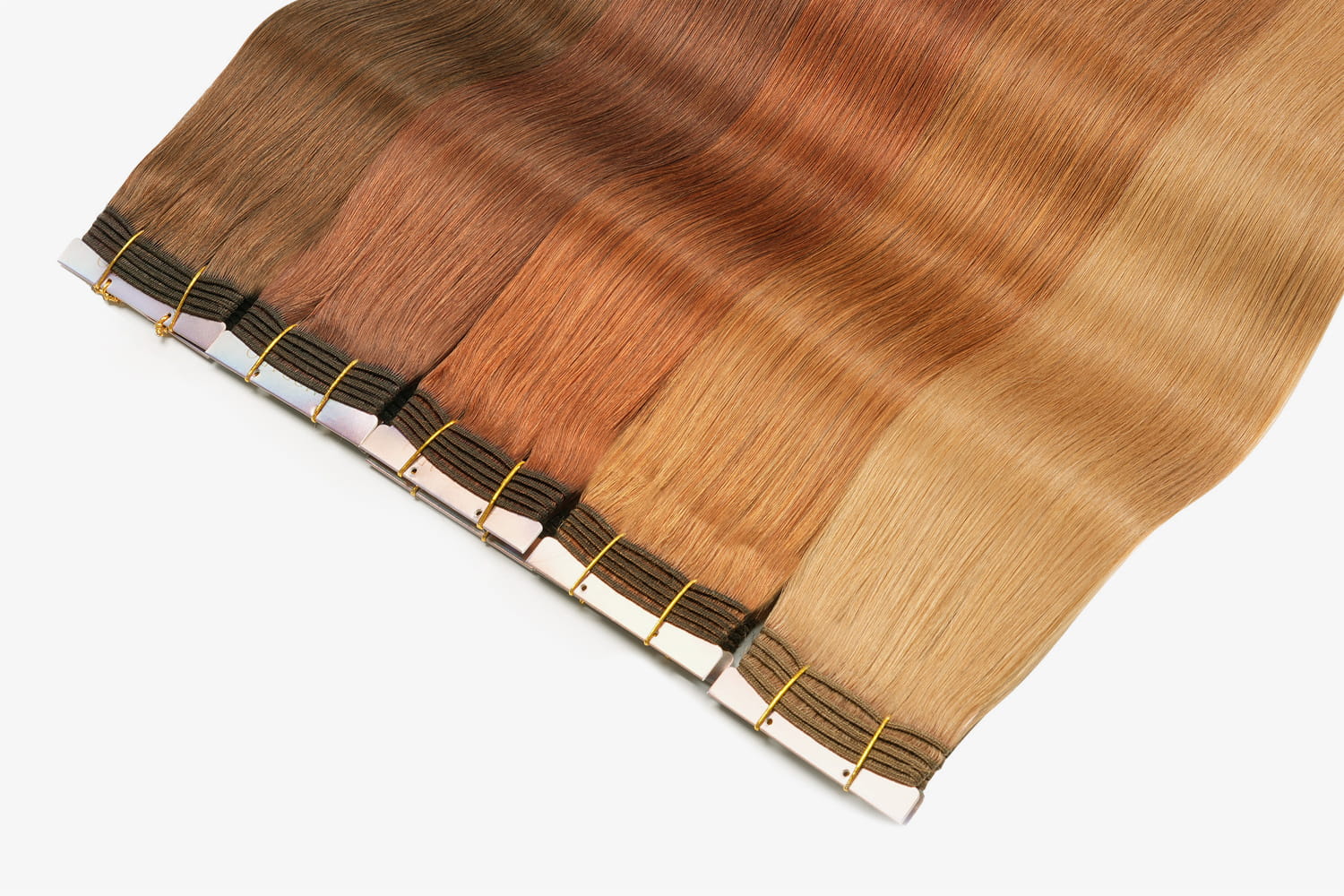
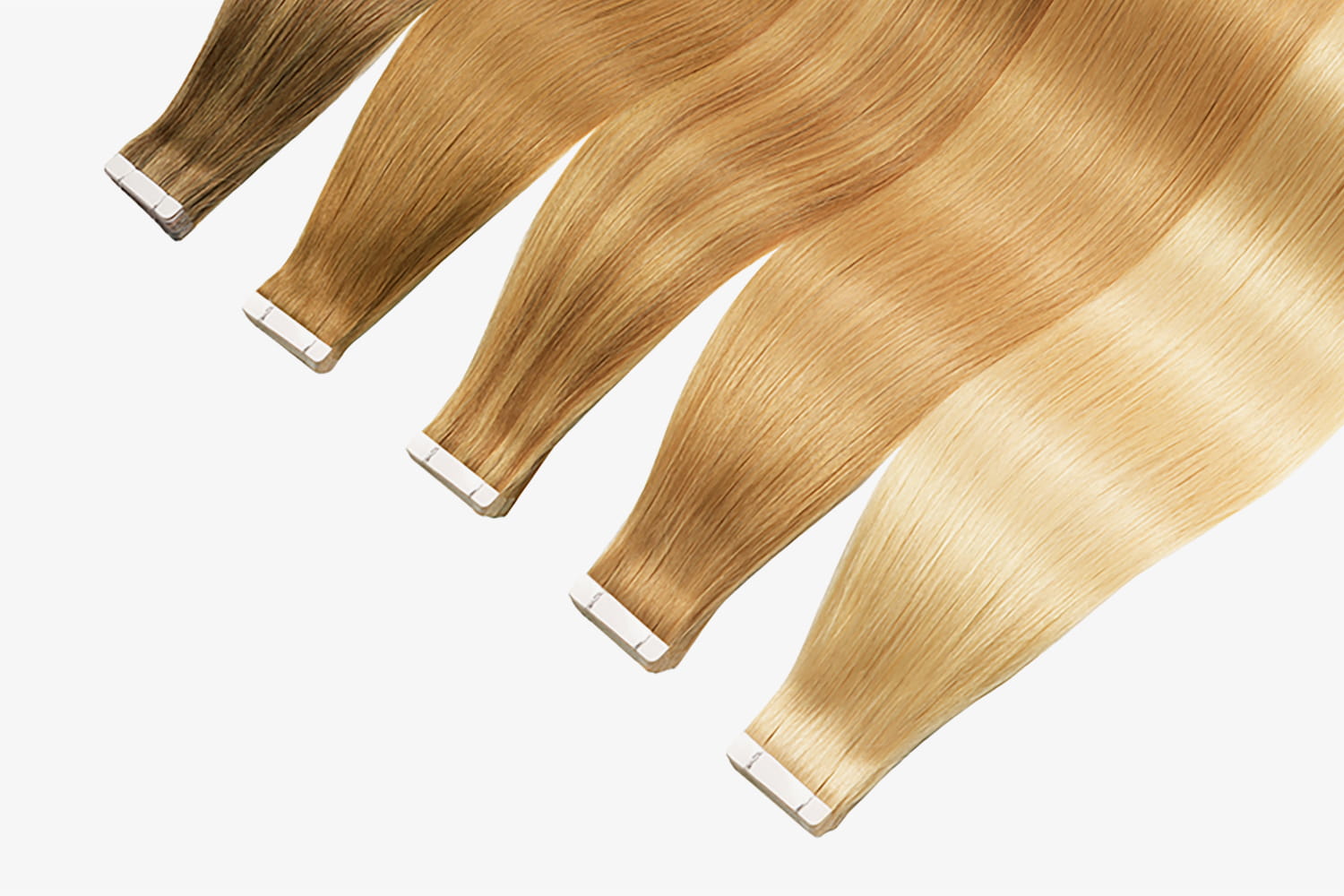
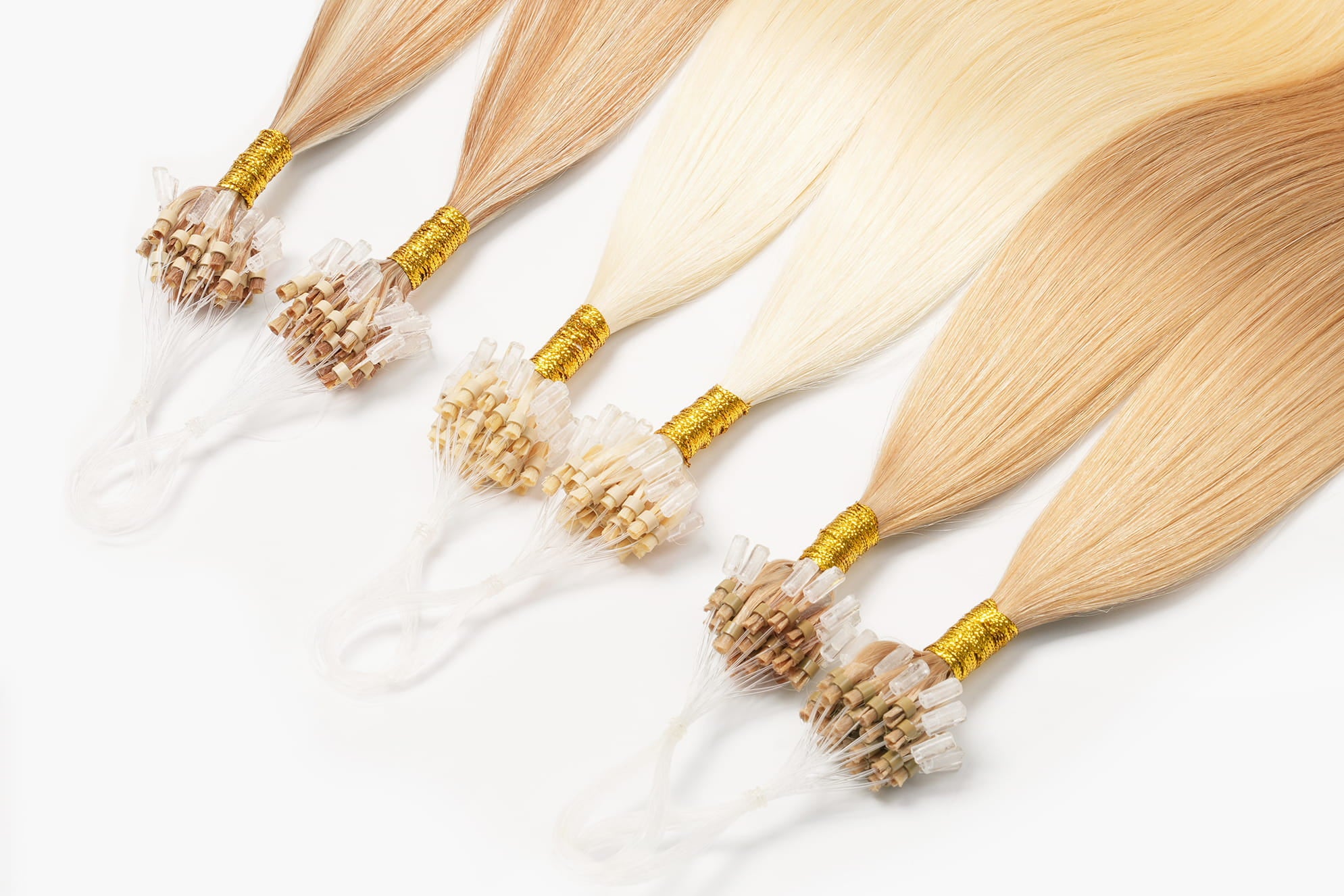
Hair waiting for its next install deserves the same care as hair in service: for tape-ins, keep removed wefts flat with tape areas clean and protected (your stylist will usually prep and store or return them re-taped); for wefts and loop strands, secure the tops together, smooth the lengths, and store flat in a silk bag. Label the shade and length on the bag — future you, holding two nearly identical browns, will be grateful.
Travel: Packing Hair That Arrives Ready
The airport question first: yes, extensions fly — carry-on or checked, no restrictions, though carry-on is wiser for anything you’d grieve losing. Now the technique:
| Step | Do This |
| Pack the hair | Brush smooth, clips closed, coil loosely into a silk bag, then into a hard-sided case or sturdy box so nothing crushes it. Toppers: base flat atop packed clothes or in a hatbox-style case. |
| Pack the kit | Travel-size sulfate-free shampoo/conditioner, leave-in spray, loop brush, silk pillowcase, and (for topper wearers) a folding travel stand or a rolled towel to drape the piece over at night. |
| In transit (worn) | Long flights in installed extensions: loose braid, hair forward over one shoulder, and a scarf or hood between hair and the seat back — airline headrests are friction machines. |
| On arrival | Unpack the hair first, shake out, hang or stand it overnight — most travel creasing relaxes by morning. A cool-shot pass of a dryer or low-heat wand fixes what gravity doesn’t. |
| The whole trip | Keep the nighttime routine portable: removables off, installs braided, silk pillowcase on the hotel pillow. Vacation is where routines go to die — pack yours. |
Destination Hazards, Briefly
-
Beach trips: salt, sun, and wind are the tangling trifecta — braid it, hat it, rinse it nightly, and consider leaving your best set home in favor of an older “travel set” (a genuinely useful retirement career for a faded favorite).
-
Humid climates: expect the hair to drink the air a little; extra leave-in and a smoothing serum keep it composed.
-
Cold, dry climates: static and hat-friction — a dryer sheet smoothed over the lengths and hair worn forward under coats.
-
Pools and hot tubs: the chlorine rules from our washing guide apply double on vacation, and hot-tub steam is tape-in adhesive’s least favorite weather — hair up and out of the water.
Stored Well, Ready Always
The through-line of all of this: hair off your head is not on pause — it’s either being preserved or being spent. A silk bag, a stand, a closed clip, thirty seconds of brushing before the drawer closes: none of it is effortful, and together it’s why one woman’s two-year-old clip-ins pass for new while another’s six-month set looks tired. Your Morado hair was made to keep its silk for the long haul. Storage is where you let it. Pack accordingly, store deliberately, and every unboxing after the first can feel like the first.
Frequently Asked Questions
Q. Can I store my extensions in the original box?
Yes — Morado boxes are a perfectly good home, especially for occasional-wear sets: dark, dust-free, and shaped for the hair. Smooth and coil the hair loosely rather than folding it sharply, close all clips, and keep the box somewhere cool and dry rather than a humid bathroom.
Q. How should I pack a topper in a suitcase?
Base flat, hair smoothed and loosely gathered, in a silk bag laid on top of your packed clothes (never wedged at the bottom), or in a small hard case. On arrival, put it on a travel stand or drape it over a rolled towel overnight — the base rebounds and the hair falls back into place by morning.
Q. Will TSA or airport security have any issue with extensions?
None — human-hair and synthetic pieces are ordinary belongings with no restrictions, worn or packed, carry-on or checked. Carry on anything precious, simply because checked bags go missing; nobody has ever regretted keeping their hair with them.
Q. How long can extensions stay in storage unworn?
Indefinitely, if stored clean, dry, dark, and contained — hair doesn’t expire on the shelf; it only wears in use. After months in storage, expect a brief reawakening: a shake-out, a brush, maybe one gentle wash, and the set returns to service as it was.
Q. Should I braid clip-ins before storing them?
A very loose braid or coil is fine for keeping long sets organized, and some wearers like the soft wave it leaves. Avoid tight braiding — it creases the hair and stresses the wefts over long storage. Smooth, loose, and contained beats elaborate every time.
Read more

Which extensions can you sleep in — and how? The 5-minute nighttime routine for tape-ins, wefts, and micro loops, plus removal habits for clip-ins and toppers.
Step-by-step washing for clip-ins, tape-ins, wefts, micro loops, and toppers: how often, which products, and the mistakes that quietly ruin extension hair.