


Tape-In vs. Micro Loop Extensions: A Complete Comparison
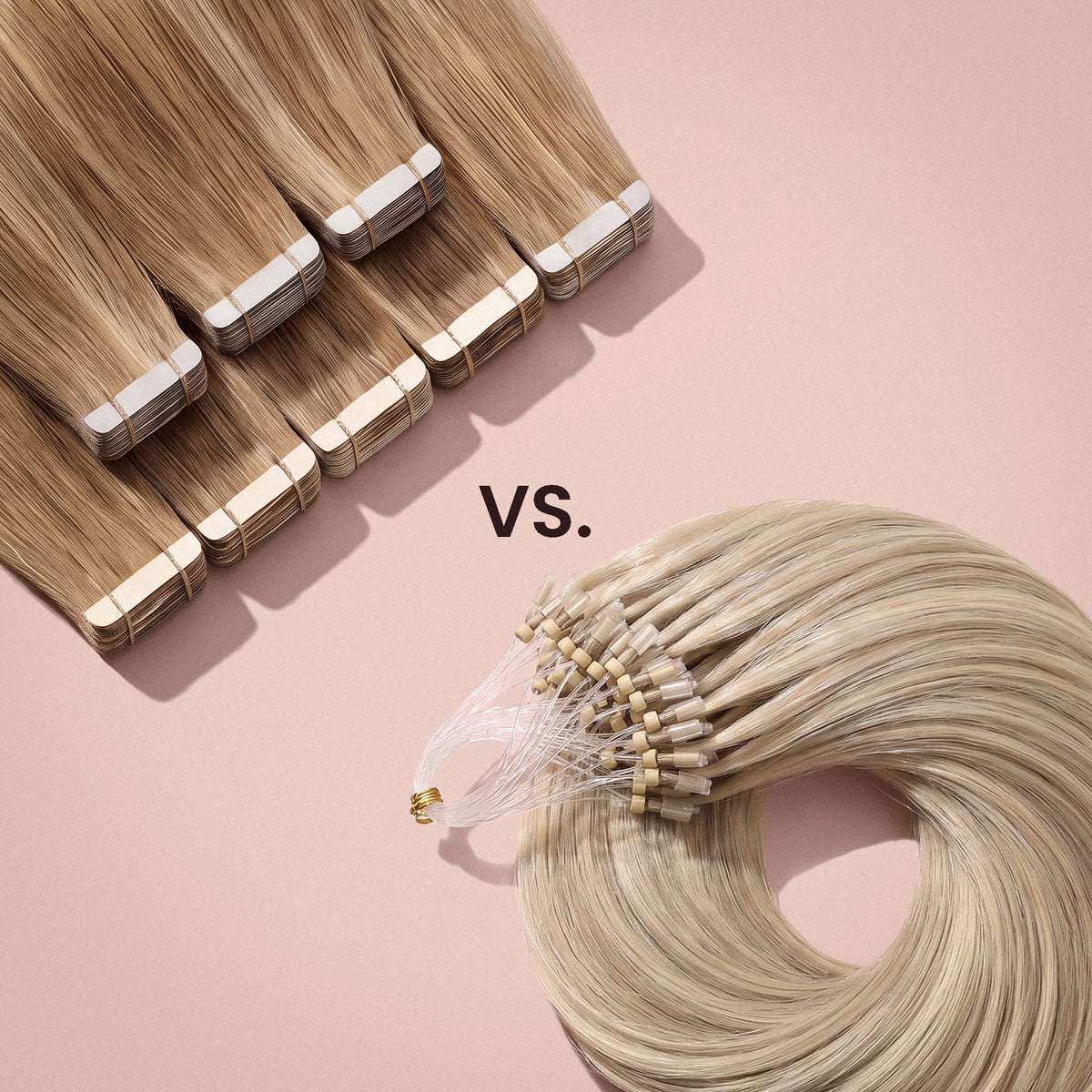
So you’ve decided you want extensions that stay in—no daily clipping, no removing anything at night. Wonderful. Now you’ve hit the next fork in the road: tape-ins or micro loops? Both are semi-permanent, both use 100% Remy human hair at Morado, and both can look completely undetectable. But they attach to your hair in fundamentally different ways, and that difference ripples into everything—comfort, styling, upkeep, even which products you can use in the shower.
Let’s break it down properly, so you can walk into this decision—or your stylist’s chair—feeling informed instead of overwhelmed.
The Core Difference: Adhesive vs. Beads
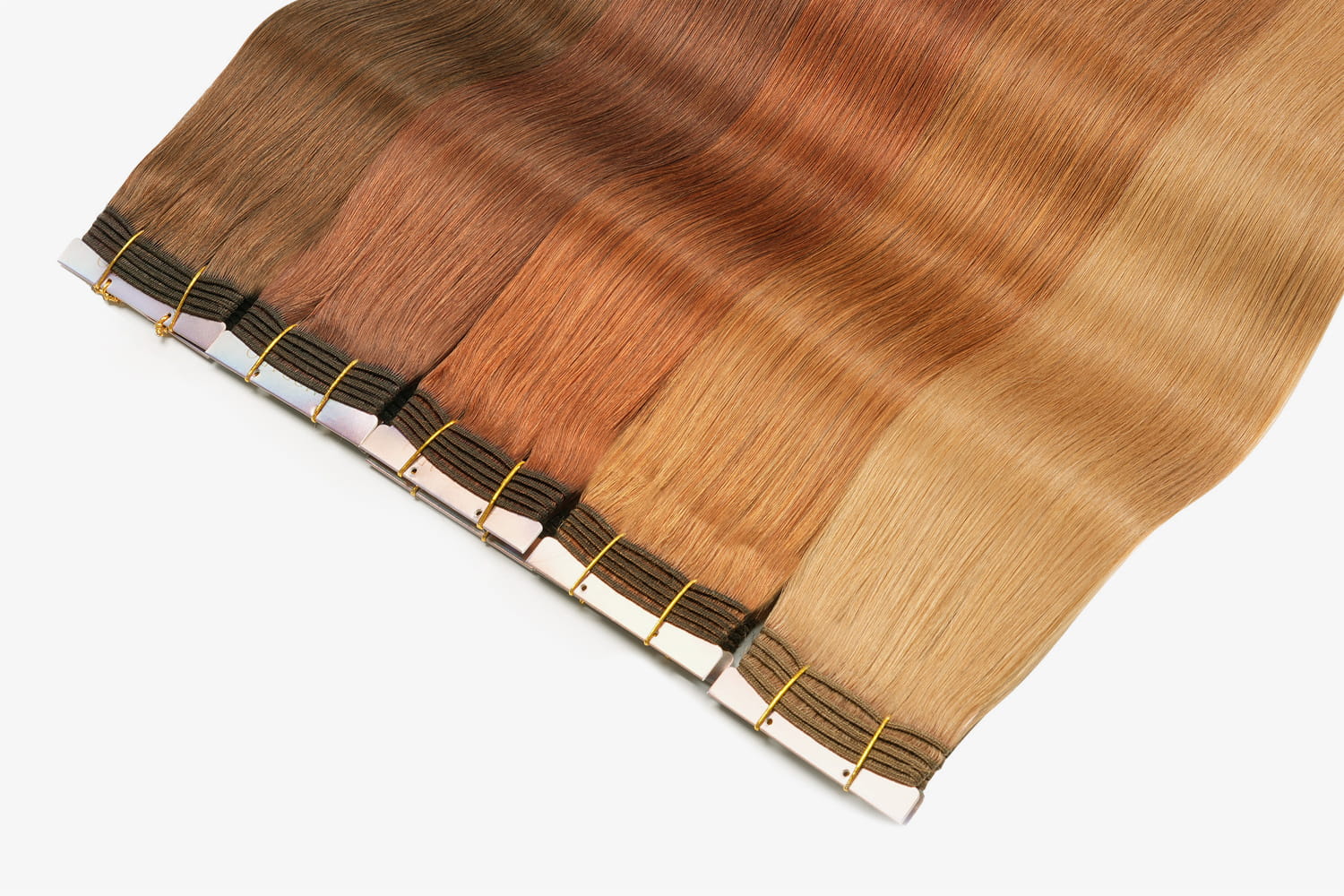
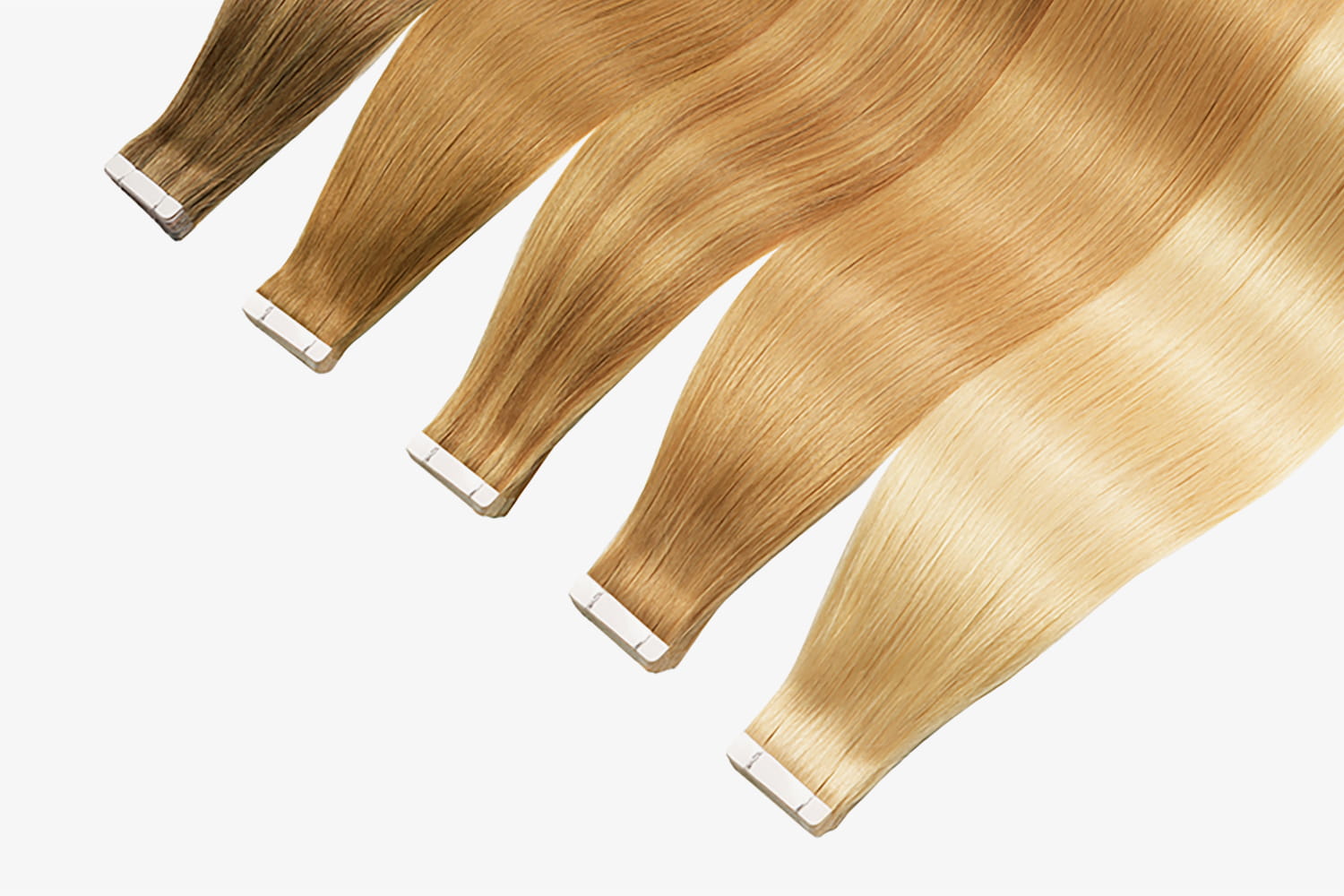
Tape-in extensions attach with thin, medical-grade adhesive strips. Your stylist sandwiches a small section of your natural hair between two wefts—or a weft and a single-sided tab—and the bond lies flat against your scalp. Installation is fast, usually under an hour for a full head.
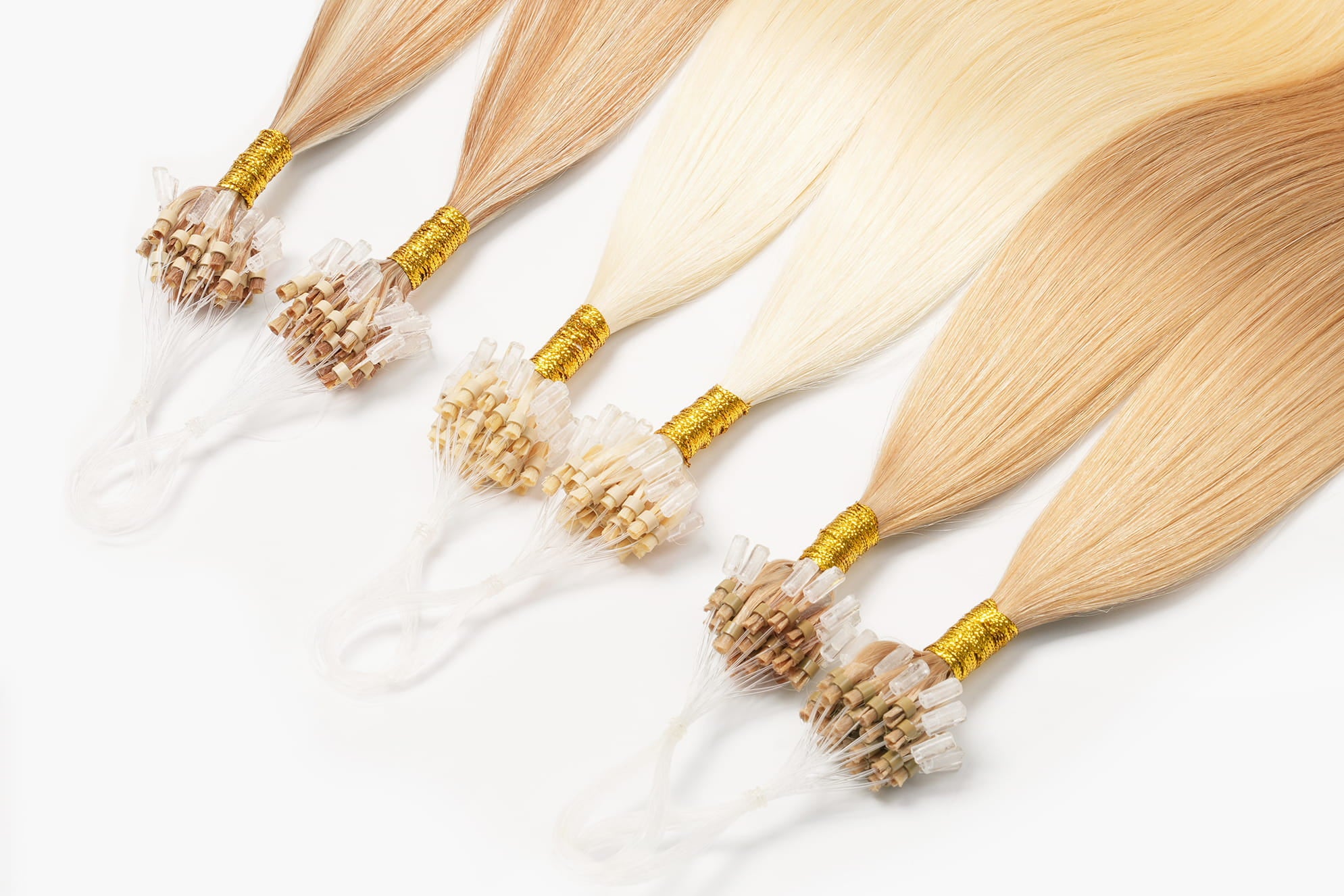
Micro loop extensions, also called micro bead or micro link extensions, skip adhesive entirely. Each small strand of extension hair comes with a pre-attached, silicone-lined micro bead and a threading loop. Your stylist pulls a sliver of your natural hair through the loop, slides the bead up near the root, and clamps it flat with pliers. No heat, no glue, no chemicals—just a tiny, cushioned bead holding each strand in place.
Everything else about these two methods flows from that one difference. Adhesive gives you speed and a flatter finish; beads give you an adhesive-free bond and strand-by-strand precision.
What Morado Offers in Each
Tape-In Extensions
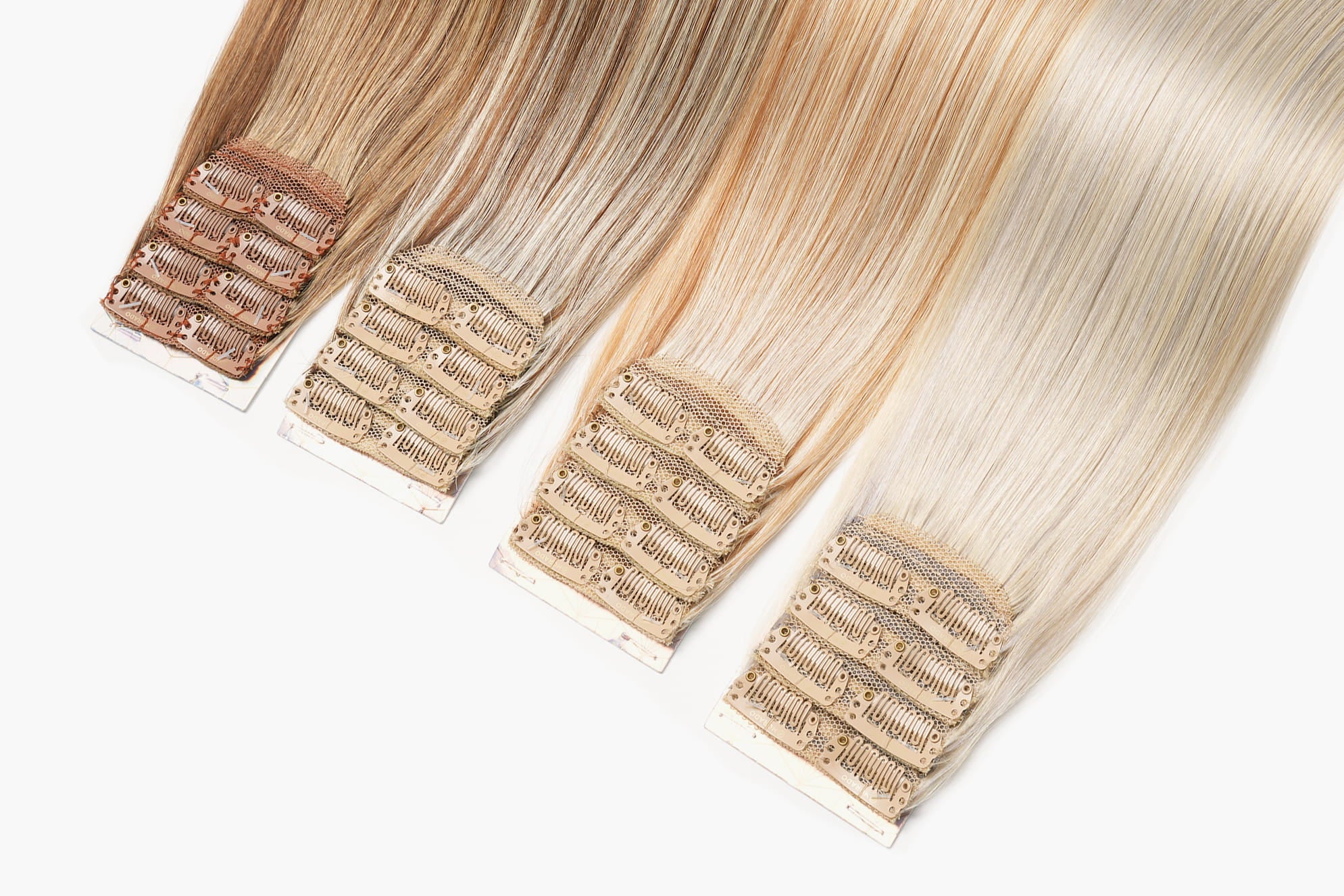
Our tape-in collection is made with 100% premium Remy human hair and medical-grade adhesive. They are available in 18" and 22" lengths across 20 shades, including solids, highlights, and balayage, starting from $71.75 to $89.99 per pack.
The wefts are engineered to lay flush against the scalp for an invisible blend, and the hair can be reused through multiple re-tapings and reinstalls.
Micro Loop Extensions
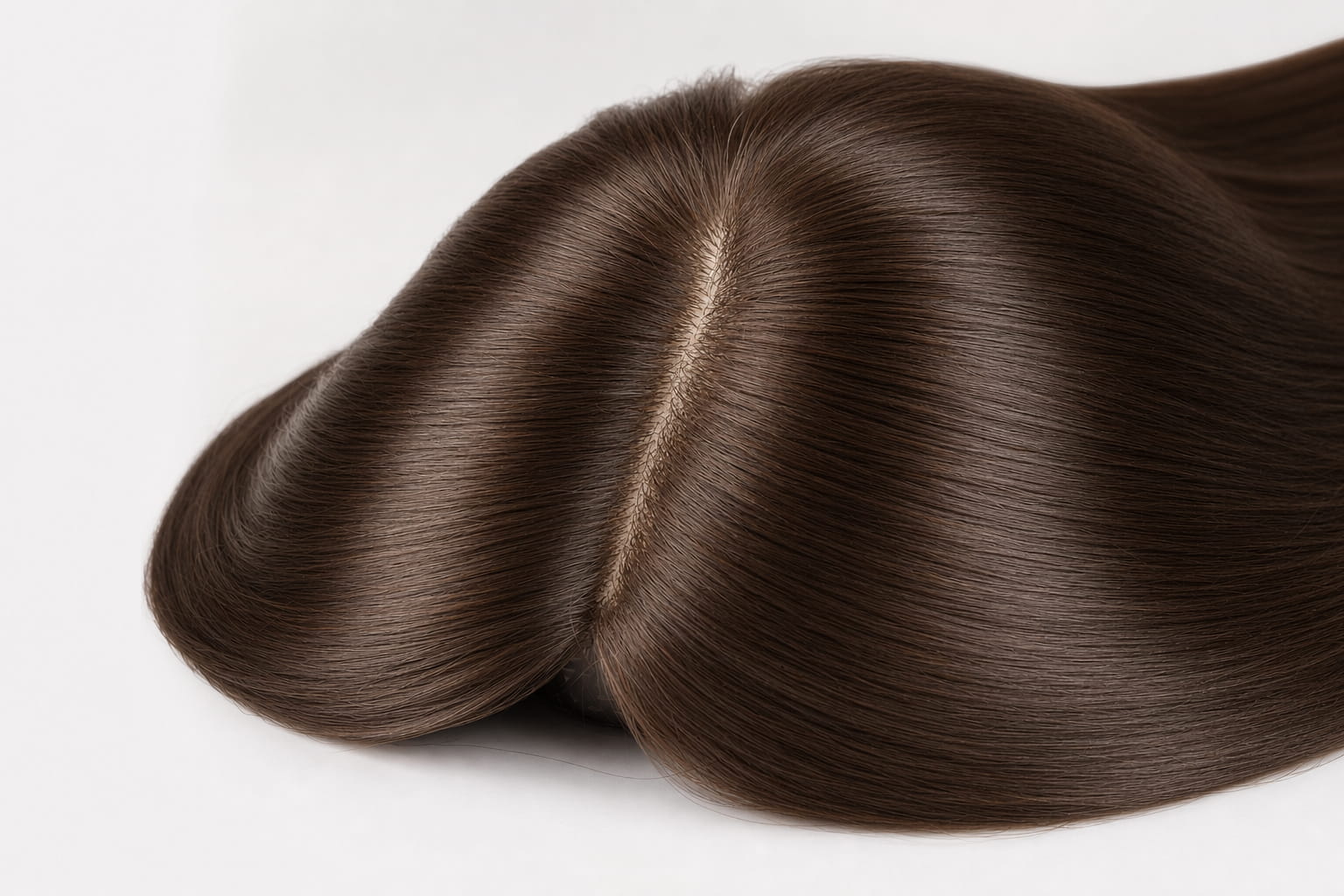
Our micro loop collection features the same ethically sourced Remy quality in a European ultra-fine, silky texture. Each set contains 50 individual 1-gram strands, for 50 grams total, in 18" and 22" lengths across 15 shades, starting at $71.75.
With sulfate-free care, the hair can stay soft and vibrant for 4 to 6 months, and the strands can be reused with fresh beads at each move-up.
Tape-Ins vs. Micro Loops at a Glance
| Tape-Ins | Micro Loops | |
| Attachment | Medical-grade adhesive strips | Silicone-lined beads, clamped—no glue or heat |
| Install Time | About 1 hour | 2–3 hours, strand by strand |
| Move-Up Schedule | Every 6–8 weeks | Every 6–8 weeks, beads repositioned |
| Hair Lifespan | Multiple reinstalls with re-taping | 4–6 months with proper care, reusable with new beads |
| Feel at the Scalp | Flat, seamless strips | Small rounded beads |
| High Ponytails & Updos | Good—strips can peek through in tight styles | Excellent—strand placement moves freely |
| Product Restrictions | Keep oils and conditioner off the bonds | None near the bead—nothing to dissolve |
| Starting Price | From $71.75 per pack | From $71.75 per 50-strand set |
Comfort and Feel
This is where personal preference really shows up. Tape-ins are practically weightless and lie so flat that most wearers forget them within a day or two. The trade-off: for the first few washes, you may notice the strips when you shampoo, and oils or heavy conditioner near the roots can soften the adhesive.
Micro loops have a small learning curve of their own. You may feel the beads for the first several nights, especially if you sleep on your side, and they can be detected when you run your fingers over your scalp. But because the silicone lining cushions your hair inside the bead, there’s no chemical bond touching your strands at all—a big deal if you’ve had adhesive sensitivities, or you simply love knowing your extensions come out exactly the way they went in.
Styling Freedom
Both methods handle everyday styling beautifully—heat tools, curls, waves and braids. The difference appears at the extremes.
Because micro loops are applied strand by strand, your stylist can place them lower and more precisely around your hairline, which makes very high ponytails and slicked-back styles easier to pull off without anything peeking through. Tape-in wefts are wider, so placement matters more. A skilled stylist can still create a high ponytail, but it takes more planning.
If your daily life involves gym buns, tight braids or dance-studio updos, micro loops deserve a hard look. If you mostly wear your hair down or in soft styles, tape-ins’ flatter profile may serve you better.
Maintenance and Cost Over Time
Both systems require a salon visit every 6 to 8 weeks as your natural hair grows. Tape-in move-ups are faster because the strips are removed, re-taped and reapplied, so you’ll spend less time in the chair but pay a little for replacement tape.
Micro loop move-ups take longer since each bead is opened, slid up and re-clamped—but there’s no adhesive to replace, just inexpensive beads.
Because both Morado collections start at $71.75 and both reuse the same Remy hair across appointments, your long-term cost difference comes down mostly to your stylist’s time. Ask for quotes on both installation and move-up pricing before you decide—it varies more by salon than by method.
So Which One Is Right for You?
Choose tape-ins if:
• You want the fastest installation
• You prefer the flattest, most invisible finish
• You don’t mind keeping oils away from your roots
• You have very fine or fragile hair and want weight distributed across a wider strip
Choose micro loops if:
• You prefer a completely glue-free, heat-free method
• You love high ponytails and versatile styling
• You’ve reacted to adhesives before
• You want strand-by-strand placement
You’ll need at least 4–6 inches of natural hair for proper blending, and medium-to-thick textures generally hold beads especially well.
Neither choice is a gamble at Morado—both are 100% Remy human hair, ethically sourced, and covered by our 90-day returns and exchanges. And if you’re still torn, a quick consultation with your stylist—bring photos of how you usually wear your hair—will usually settle it in five minutes.
Frequently Asked Questions
Q. Do micro loop extensions damage your hair?
Installed correctly, no. The silicone lining inside each bead cushions your natural hair, and there’s no glue, heat or chemical involved. Damage risk comes from beads clamped too tightly, sections that are too small, or skipping move-ups—all avoidable with a certified stylist and a regular 6–8 week schedule.
Q. How long do tape-in extensions last?
Each installation lasts 6–8 weeks before the strips need to be moved up. The Remy hair itself lasts much longer—Morado tape-ins are designed for multiple beautiful reinstalls with fresh tape, so one purchase typically carries you through several appointments.
Q. Can I install tape-ins or micro loops myself?
We strongly recommend a certified stylist for both. Correct placement, sectioning and tension are what protect your natural hair and keep the extensions invisible. DIY installations are the most common cause of discomfort and premature slipping.
Q. Which is better for fine or thin hair?
Usually tape-ins, because the lightweight strip distributes weight across a wider section and lies flatter against a fine-haired scalp. Micro loops can still work on finer hair with smaller sections and a conservative strand count—an experienced stylist will tell you honestly what your density can support.
Q. Can I use regular shampoo with these extensions?
Use sulfate-free shampoo with both. With tape-ins, also keep conditioners and oils away from the adhesive area near your roots. Micro loops have no product restrictions at the bead—just condition from mid-length to ends, as you should with any extension hair.
Share
Read more
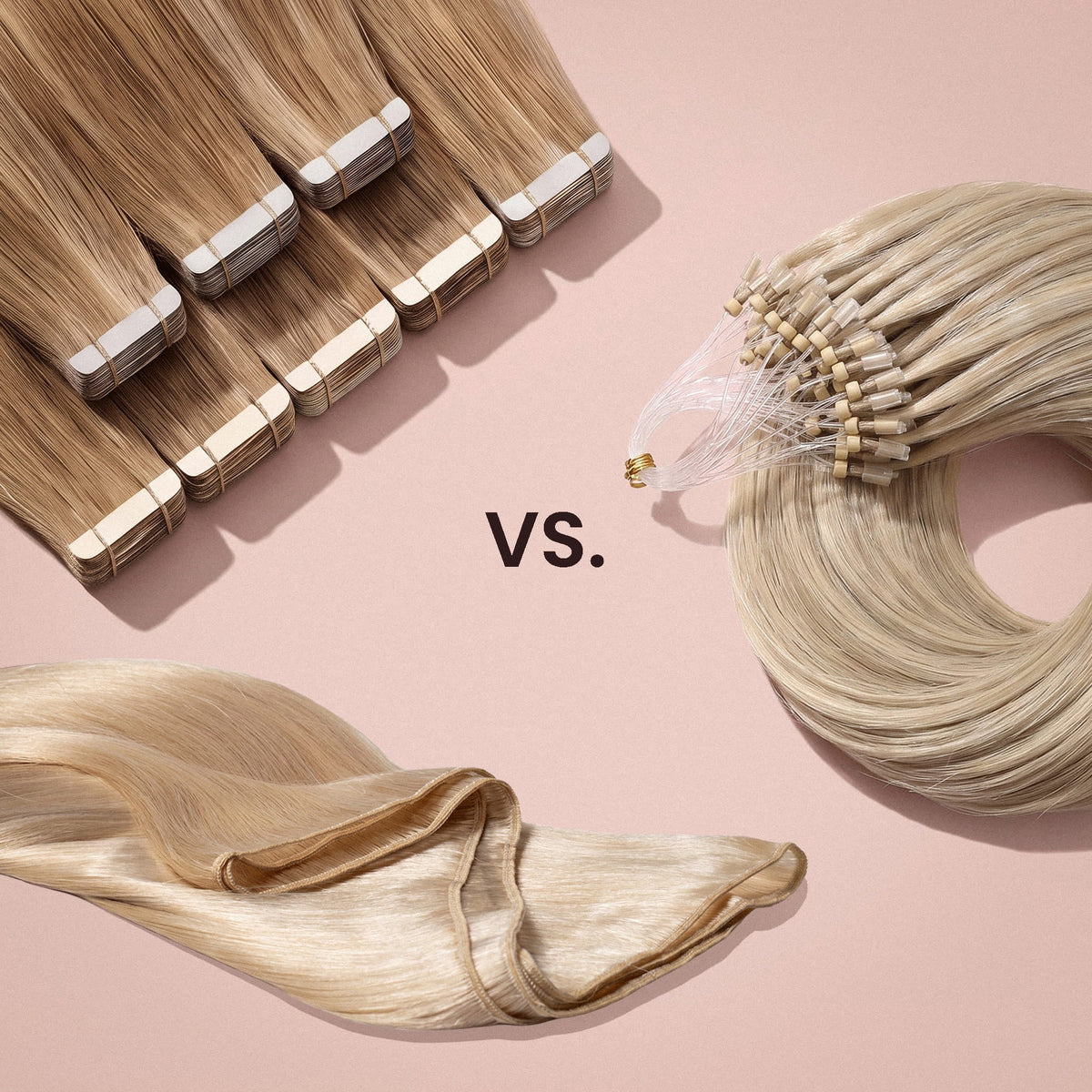
Weft, Micro Loop, or Tape-In? A Stylist’s Guide
A stylist’s honest guide to weft, micro loop, and tape-in extensions: how eachmethod works, who it flatters, install and upkeep schedules, and how to choose.
Weft, Micro Loop, or Tape-In? A Stylist’s Guide
A stylist’s honest guide to weft, micro loop, and tape-in extensions: how eachmethod works, who it flatters, install and upkeep schedules, and how to choose.