

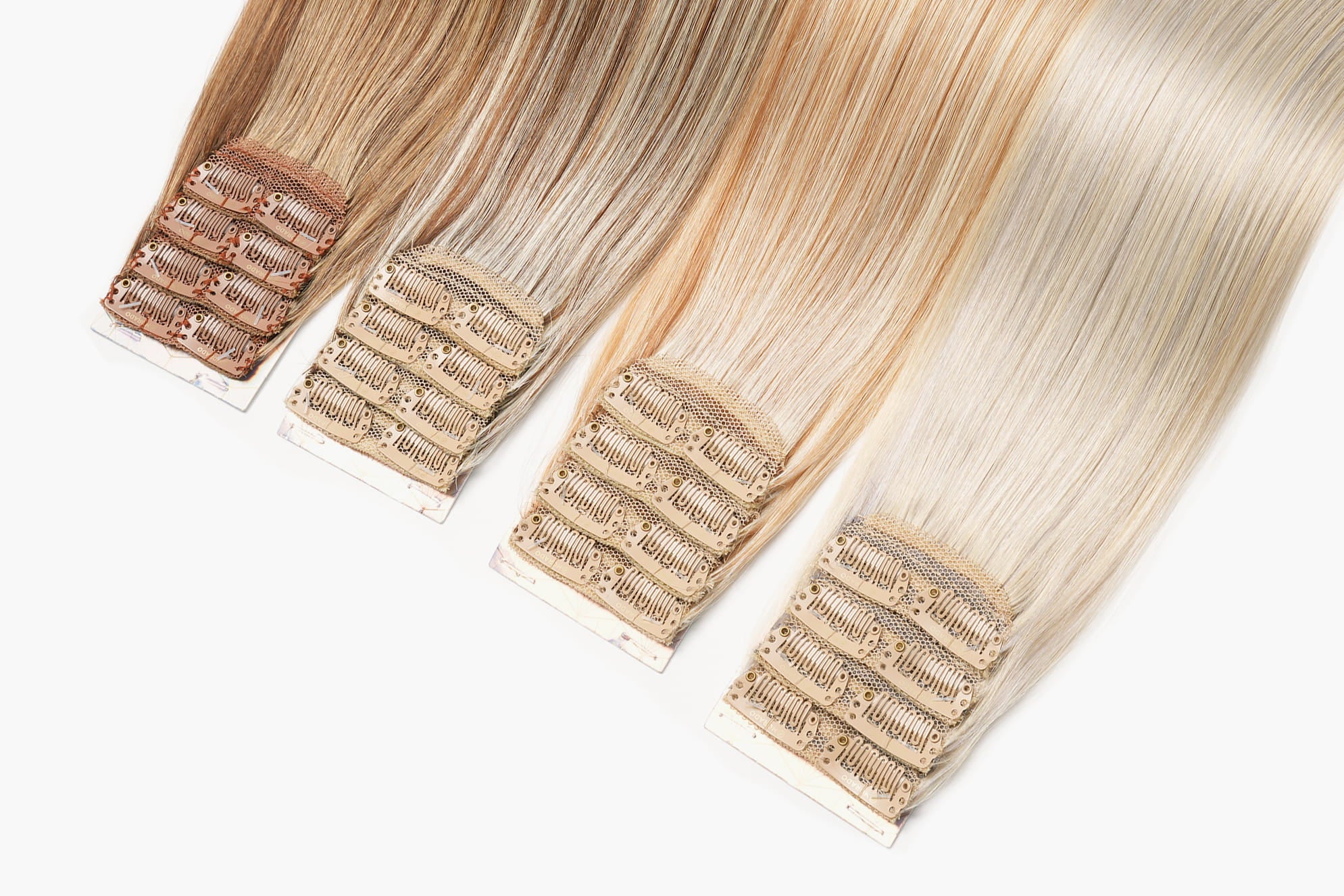
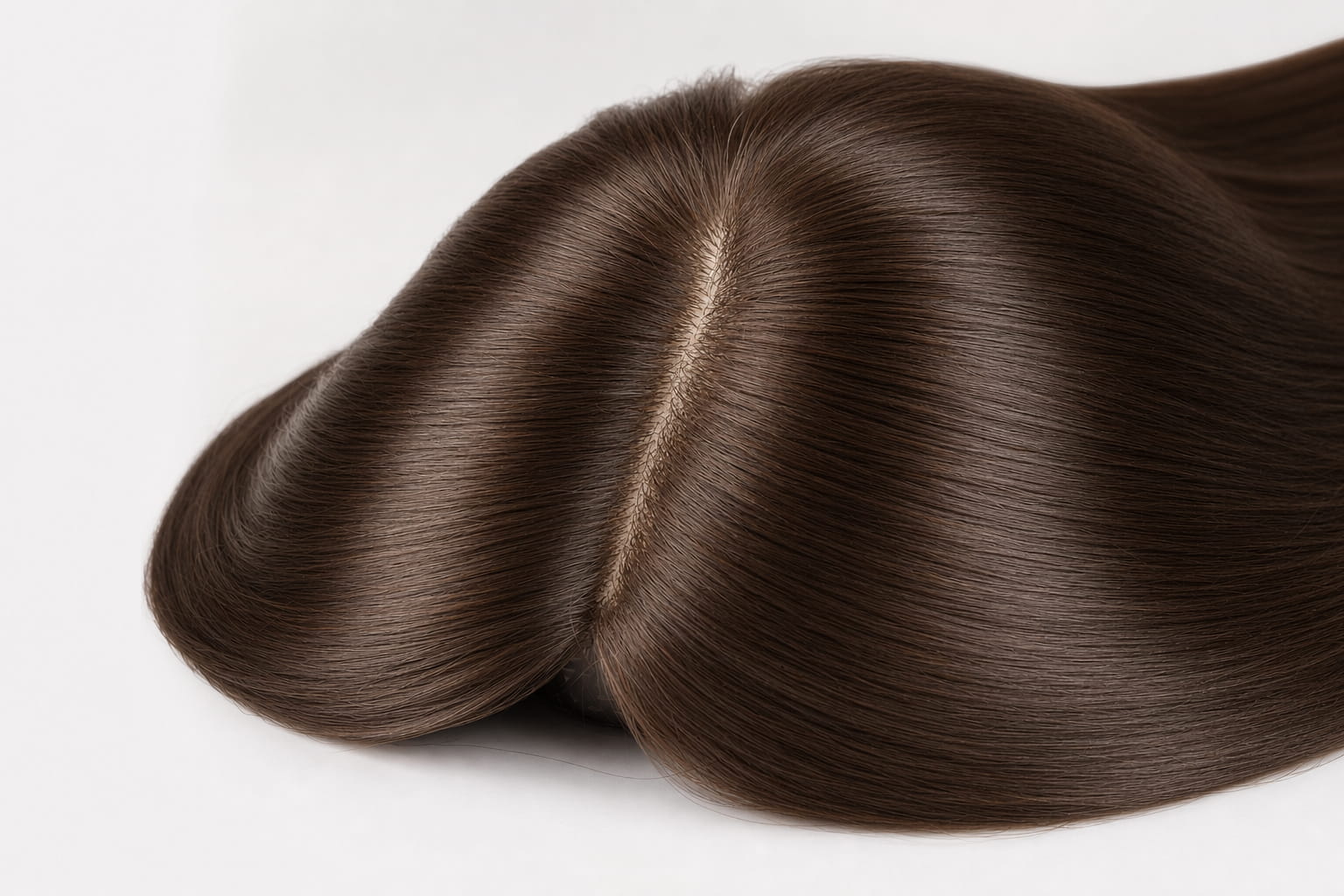
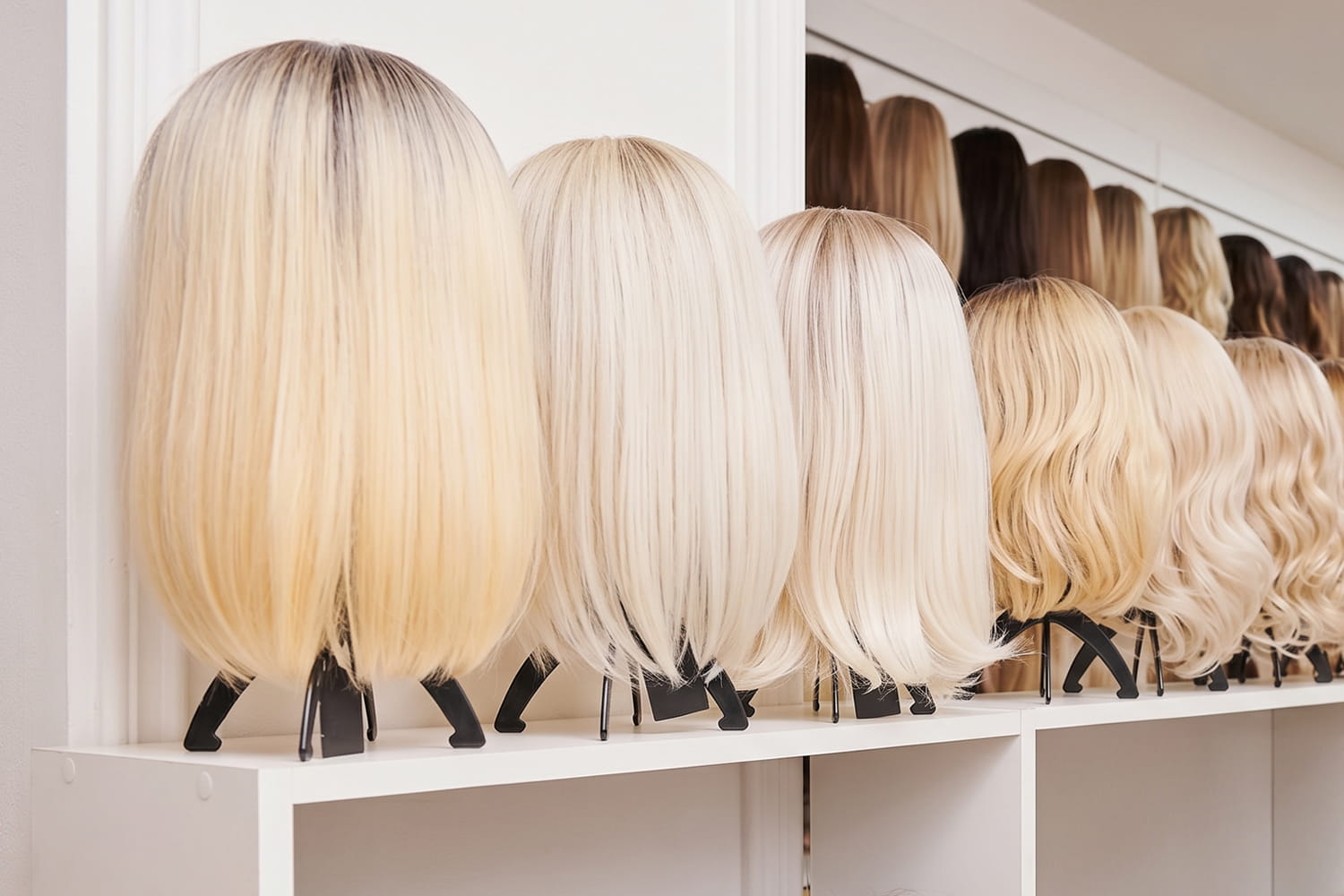
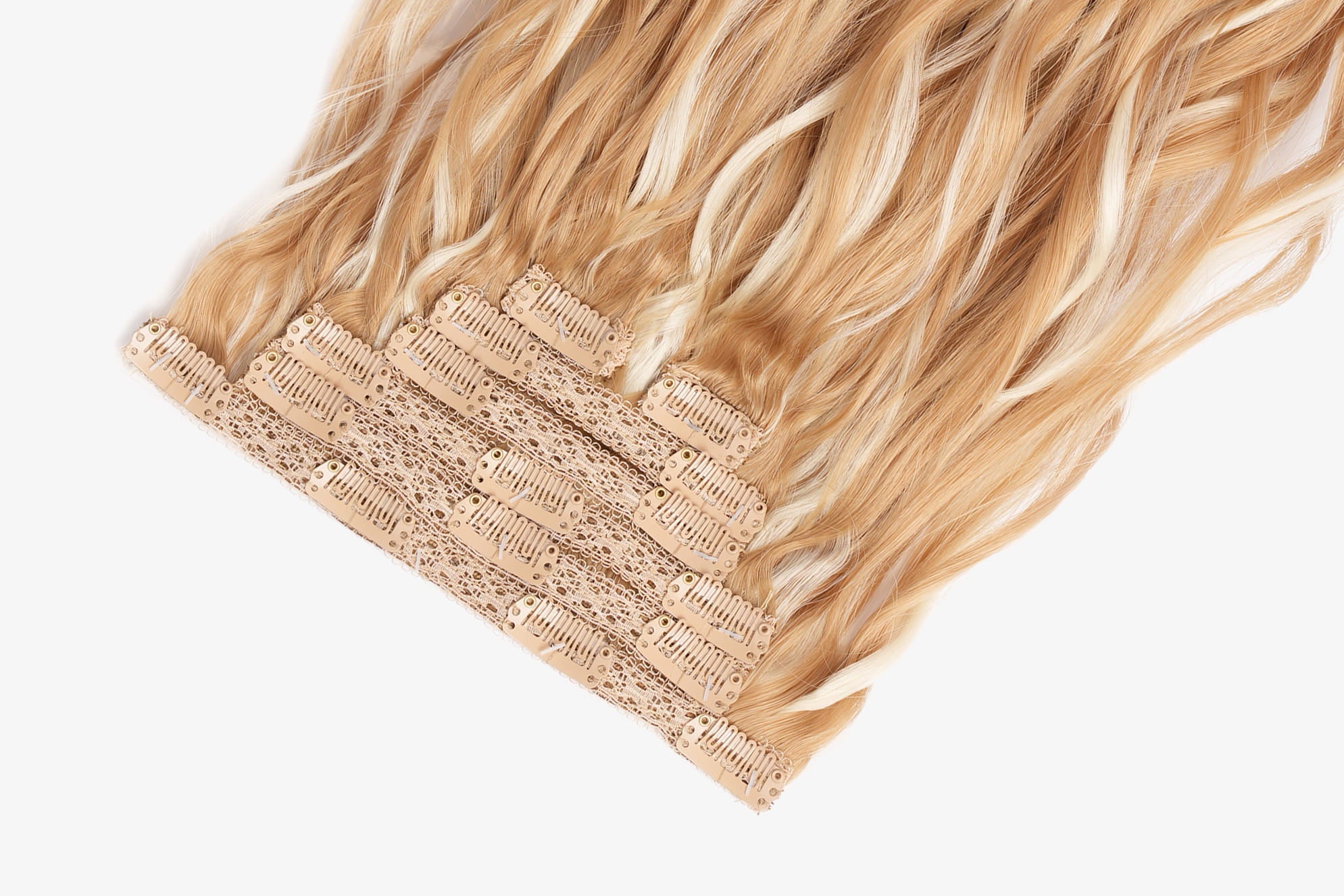

Weft, Micro Loop, or Tape-In? A Stylist’s Guide
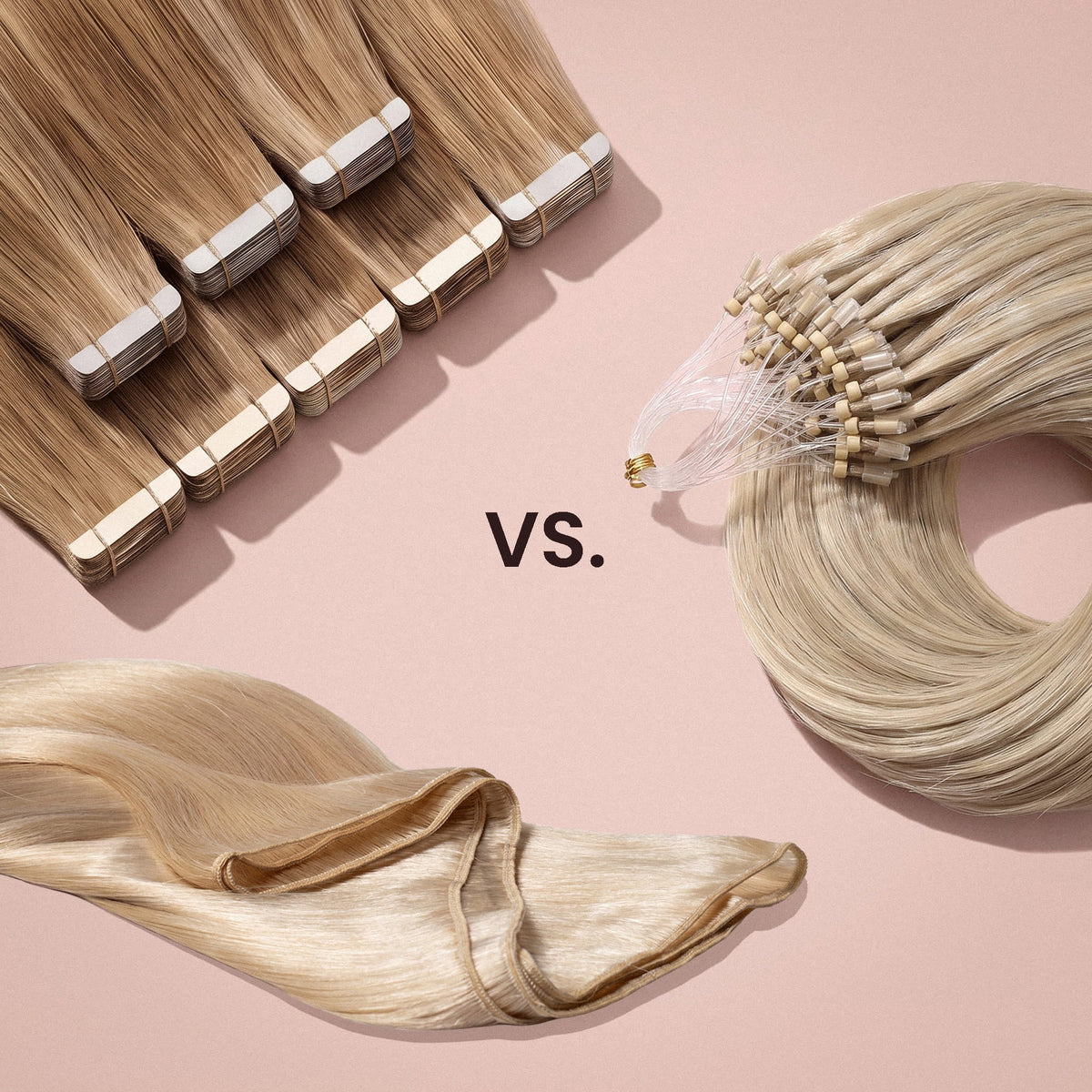
Ask three friends which extension method changed their life and you might get three different answers—and all of them are right. That’s the thing stylists understand that the internet often doesn’t: weft, micro loop, and tape-in extensions aren’t competing for the title of “best.” Each one is the best answer to a different head of hair, a different lifestyle, and a different definition of low-maintenance.
This guide walks through the three methods the way a good stylist would in a consultation: what each one actually is, who it flatters most, what the upkeep honestly looks like, and the questions worth answering before you book.
Method 1: Weft Extensions — The Volume Powerhouse
A weft is a continuous curtain of hair, attached along a strong seam at the top. Stylists install wefts in rows: a track of small silicone-lined beads is placed along a section of your natural hair, and the weft is sewn snugly against it through beaded-row or “invisible weft” methods. In some cases, wefts may also be secured with micro-beading or bonding, depending on the technique your stylist is certified in.
Because one weft carries a lot of hair, this is the method of choice for serious volume and density.
Morado offers weft lines for different goals and budgets—from the value-driven Diamond machine weft, starting from $99.99, to the premium Aura weft, where roughly half of the strands run the same length from top to bottom for full, uncompromised density in 100–105 gram packs.
Both are 100% Remy human hair, last approximately 4–6 months with proper care, and require a professional install with move-ups every 6–8 weeks.
A stylist would steer you here if: you want a dramatic transformation, your hair is medium to thick enough to cover the rows, you love wearing your hair down or in soft styles, and you’re happy trading a longer installation for the fullest possible result.
Method 2: Micro Loop Extensions — Precision, Strand by Strand
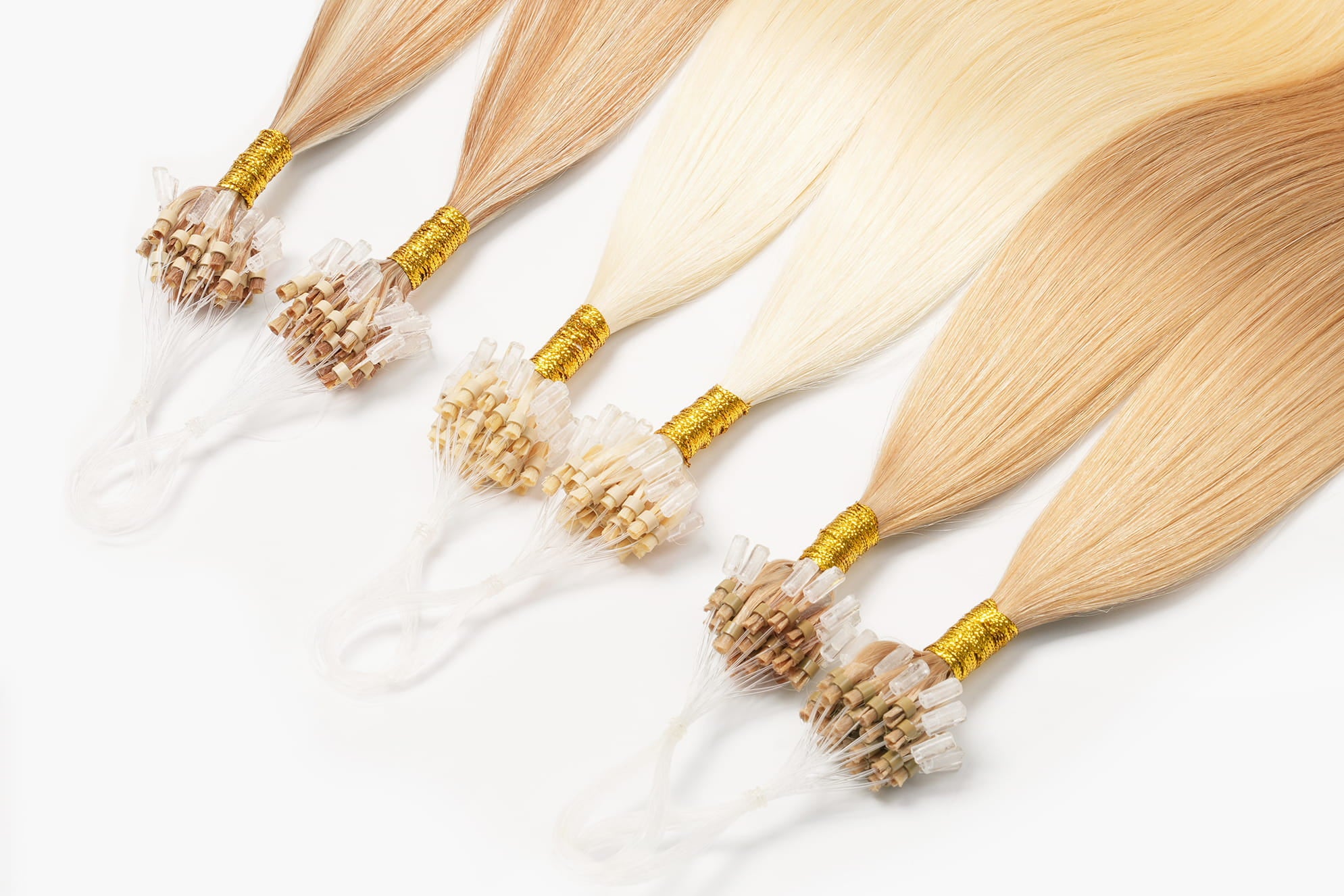
Micro loops are individual strands. Morado’s come in sets of 50 one-gram strands, each with a pre-attached silicone-lined bead and threading loop. Your stylist threads a small piece of your natural hair through the loop, slides the bead to the root, and clamps it flat.
No glue, no heat, no chemicals.
That strand-by-strand application is slower—plan on 2–3 hours for a full head—but it gives your stylist precise control. Density can be scattered exactly where you need it, including around the hairline and face-framing layers.
It’s also a method that leaves your natural hair relatively untouched. The bead opens, the strand comes out, and everything can be removed without adhesive or heat.
A stylist would steer you here if: you want targeted length or fill rather than maximum volume, you wear high ponytails and versatile styles, you prefer an adhesive-free bond, and you have at least 4–6 inches of natural hair to anchor and blend.
Starting from $71.75 per set, micro loops are also one of the more accessible ways to try semi-permanent extensions.
Method 3: Tape-In Extensions — The Everyday Workhorse
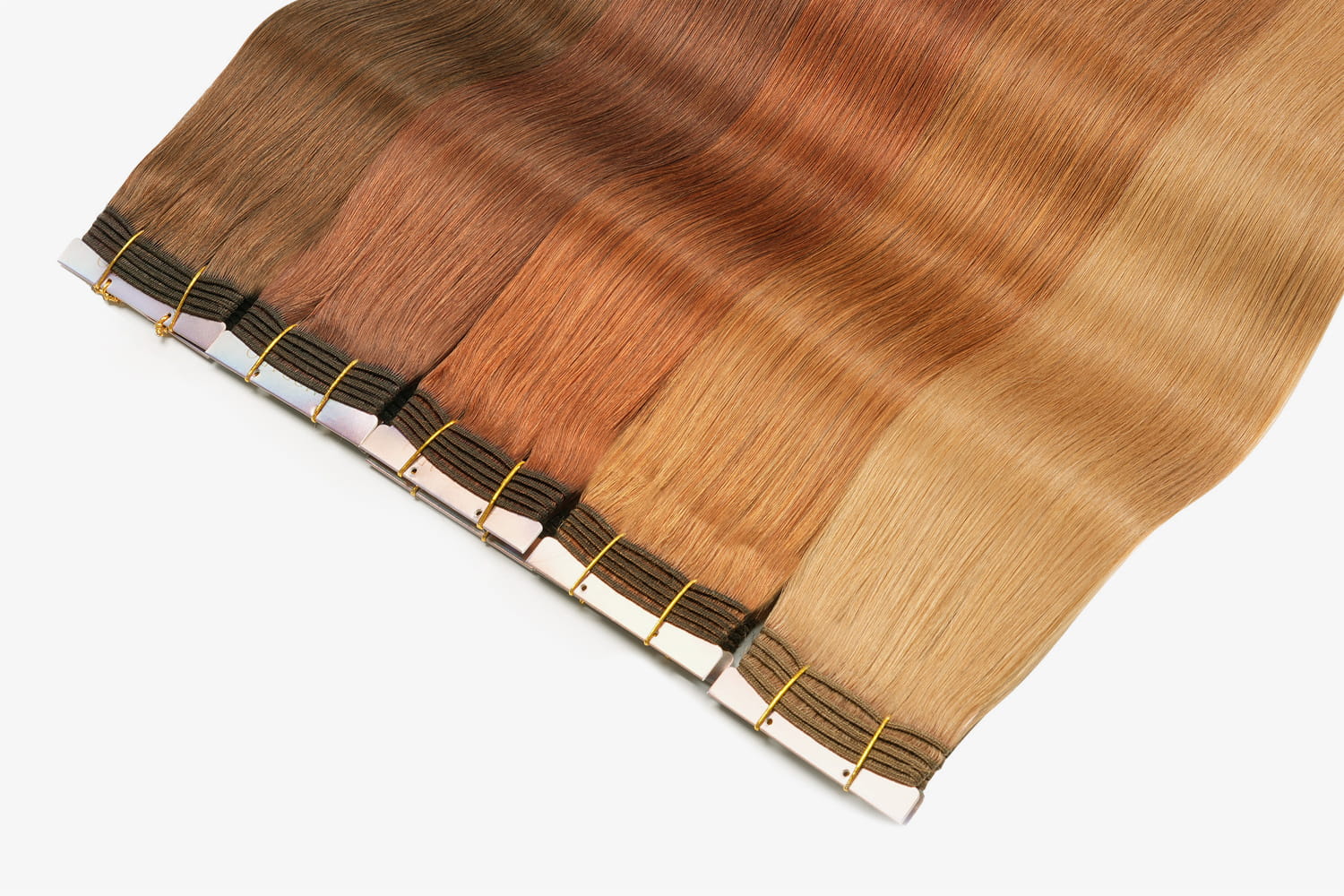
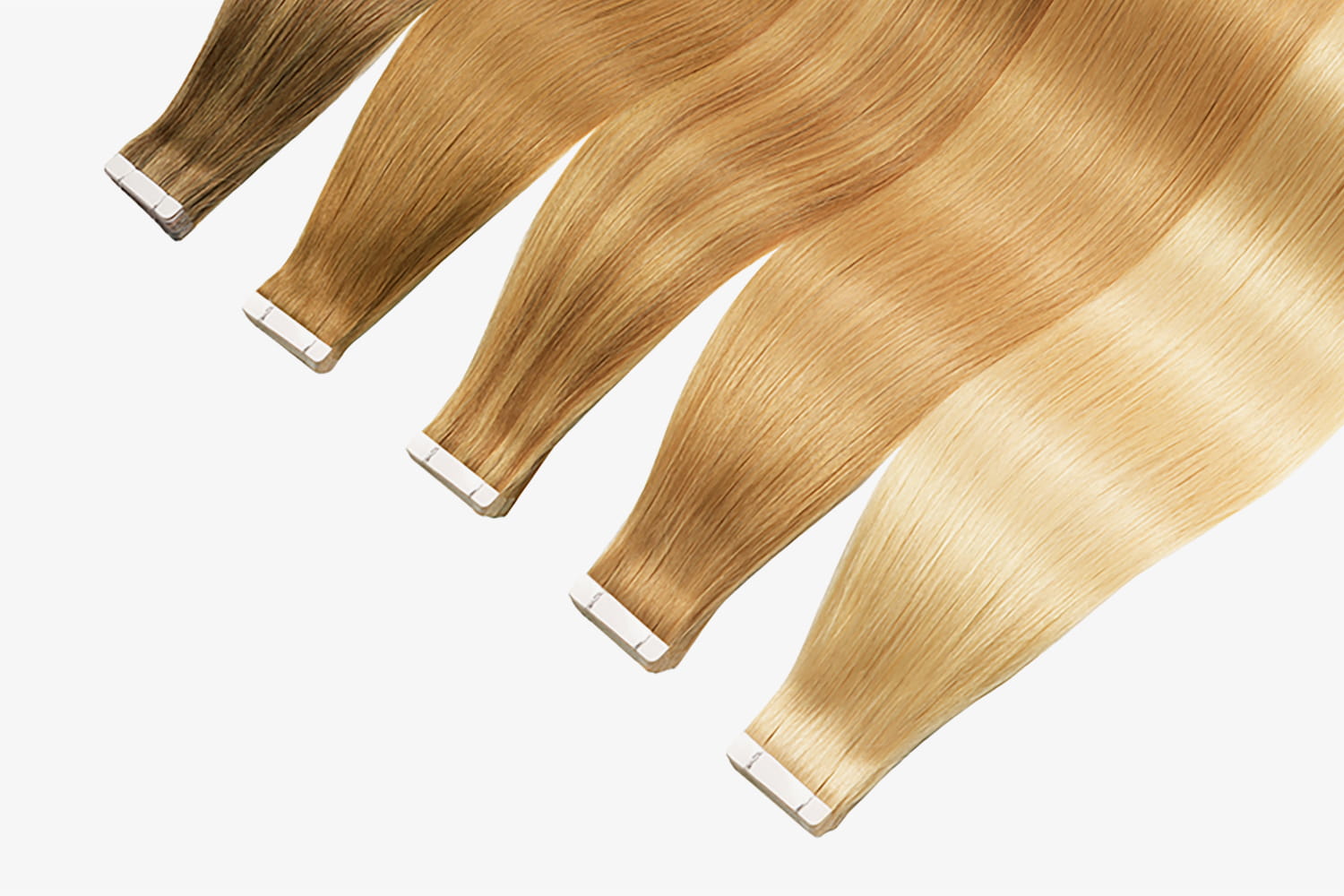
Tape-ins are thin wefts with medical-grade adhesive strips, sandwiched around slim sections of your natural hair. They install in about an hour, lie completely flat against the scalp, and are particularly well suited to fine and thin hair because the weight spreads across a wide, feather-light strip instead of hanging from individual strands.
Morado tape-ins are 100% premium Remy human hair in 18" and 22" lengths, across 20 shades including balayage blends, from $71.75 to $89.99 per pack.
The hair can be re-taped and reinstalled across multiple cycles, helping keep the long-term cost more manageable.
A stylist would steer you here if: your hair is fine or thin, you want the fastest installation and simplest move-ups, or you’re stepping up from clip-ins to your first semi-permanent method and want a straightforward introduction to extensions.
The Three Methods at a Glance
| Weft | Micro Loop | Tape-In | |
| Best For | Maximum volume & density | Precision fill and styling freedom | Fine/thin hair and fast installs |
| Install Time | 2–3 hours | 2–3 hours | About 1 hour |
| Attachment | Sewn to beaded rows | Clamped silicone-lined beads | Medical-grade adhesive |
| Move-Ups | Every 6–8 weeks | Every 6–8 weeks | Every 6–8 weeks |
| Hair Lifespan | 4–6 months | 4–6 months | Multiple reinstalls |
| Starting Price | From $99.99 | From $71.75 | From $71.75 |
| Hair Density Needed | Medium to thick | Fine to thick; 4–6" minimum length | Fine to thick |
Five Questions Stylists Ask Before Recommending a Method
-
“How dense is your natural hair?”
Rows of wefts need enough natural hair to stay covered. Fine hair usually points toward tape-ins, or micro loops with conservative strand counts. -
“How do you wear your hair most days?”
Down and wavy suits every method. Daily high ponytails and slick-back styles can favor micro loops because of their precise, strand-by-strand placement. -
“What’s your honest maintenance appetite?”
All three methods need 6–8 week move-ups, but installation and chair time differ. If an hour appointment is your maximum, tape-ins win. -
“What result are we chasing—length, volume, or both?”
Length alone is achievable with any of the three methods. A true density transformation is where wefts really shine. -
“Any sensitivities?”
Adhesive sensitivity may rule out tape-ins. Micro loops and sewn wefts are glue-free and heat-free methods.
Whatever You Choose, the Hair Quality Decides the Outcome
Here’s the part that outranks method entirely: mediocre hair in the perfect method still looks mediocre, while great hair flatters almost any installation.
Every Morado extension—weft, micro loop, or tape-in—is 100% ethically sourced Remy human hair with the cuticle aligned in its natural direction. That’s why it stays silky, resists tangling, and blends naturally with your own hair.
With sulfate-free care and regular move-ups, you can expect months of beautiful wear from any of the three.
Still unsure? Bring this guide and a photo of your usual everyday style to your stylist, or reach out to our team. Between your hair’s density, your routine, and your goal, the right method usually announces itself.
The Morado Promise, with 90-day returns and exchanges, means you never have to choose completely blind.
Frequently Asked Questions
Q. Which extension method is least damaging?
All three can be safe when installed and maintained properly by a professional. Tape-ins distribute weight across a wider area, micro loops avoid adhesives entirely, and modern beaded-row weft methods avoid both glue and heat. Damage is more often associated with poor installation, excessive weight for your natural density, or skipped move-ups rather than the method itself.
Q. How much hair do I need for weft extensions?
You need enough natural density to cover the rows—typically medium to thick hair, or fine hair with strategic placement by an experienced stylist. If your hair is very fine, tape-ins can provide a more seamless result. A topper or scalp fill-in may be more appropriate for addressing crown thinning that extensions cannot adequately cover.
Q. Can I switch methods later?
Absolutely. Many people start with one method and transition to another later. It’s common to begin with tape-ins and move to wefts once you know you enjoy everyday extensions. Your stylist can transition you at a regular move-up appointment, and because Morado hair is Remy quality across methods, your color match can carry over.
Q. How long does each method last before the hair needs replacing?
With sulfate-free products and gentle heat styling, Morado weft and micro loop hair can stay beautiful for approximately 4–6 months of continuous wear, while tape-in hair can carry through multiple re-tape cycles. Reusing the same hair across move-ups is what makes semi-permanent extensions more economical than they may initially appear.
Share
Read more
Tape-In vs. Micro Loop Extensions: A Complete Comparison
Tape-in or micro loop extensions? Compare adhesive vs. bead application, comfort, lifespan, styling freedom, and cost to find your perfect semi-permanent match.
Tape-In vs. Micro Loop Extensions: A Complete Comparison
Tape-in or micro loop extensions? Compare adhesive vs. bead application, comfort, lifespan, styling freedom, and cost to find your perfect semi-permanent match.