


Toppers & Scalp Fill-Ins: Natural Coverage for Thinning Hair
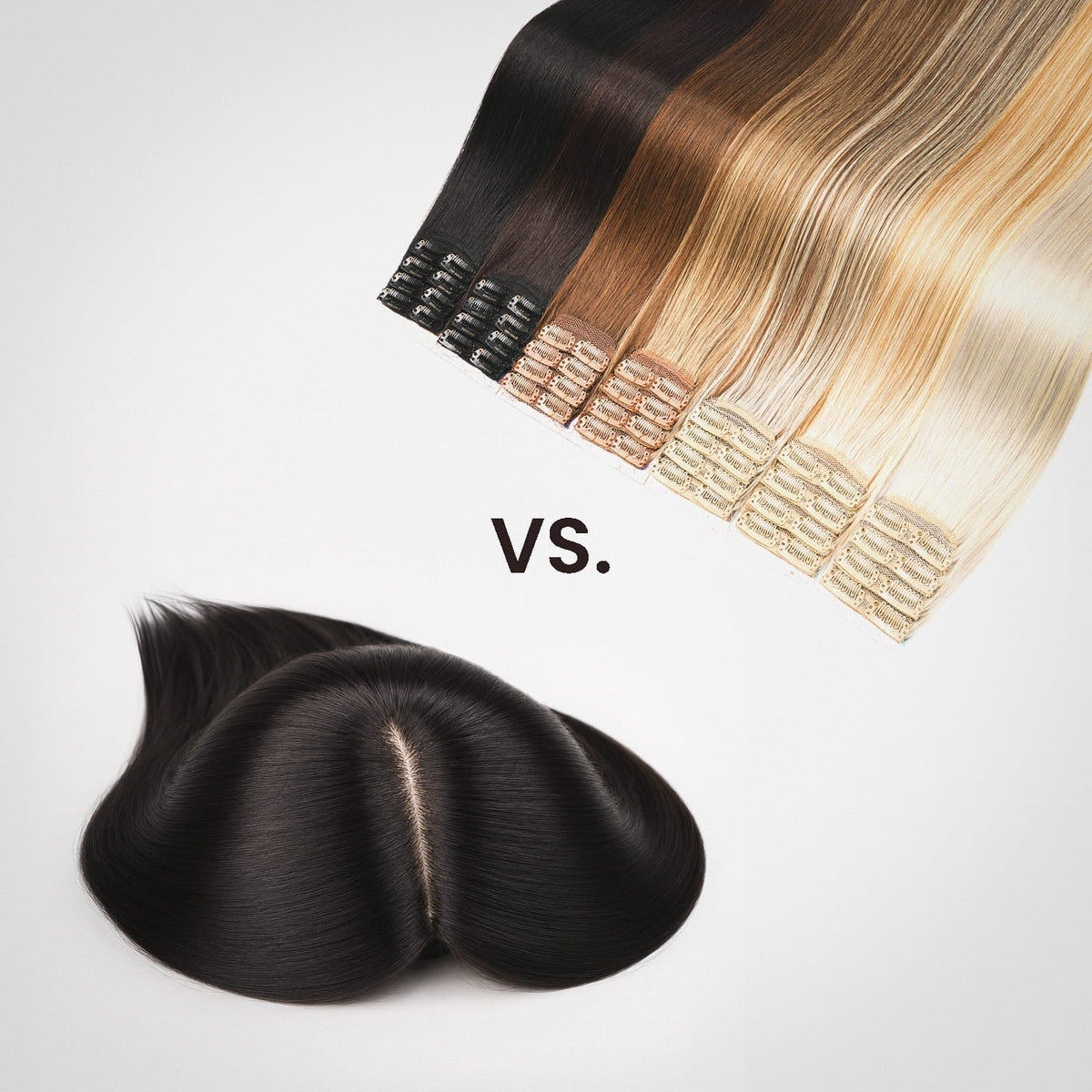
Thinning hair asks a very specific thing of a solution: cover exactly where I need it, look like nothing at all, and don’t harm what I have left. Full extensions can’t do that—they add length and volume below the crown, not coverage on top. Wigs can, but they replace everything, which is more than most thinning calls for.
The answer, for most women, lives between those extremes: toppers and scalp fill-ins—two targeted, clip-in, damage-free tools that put natural coverage right where you need it and nowhere you don’t.
Here’s how each works, how they differ, and how to know which one—or which combination—your hair is asking for.
Toppers: Coverage for the Crown and Part
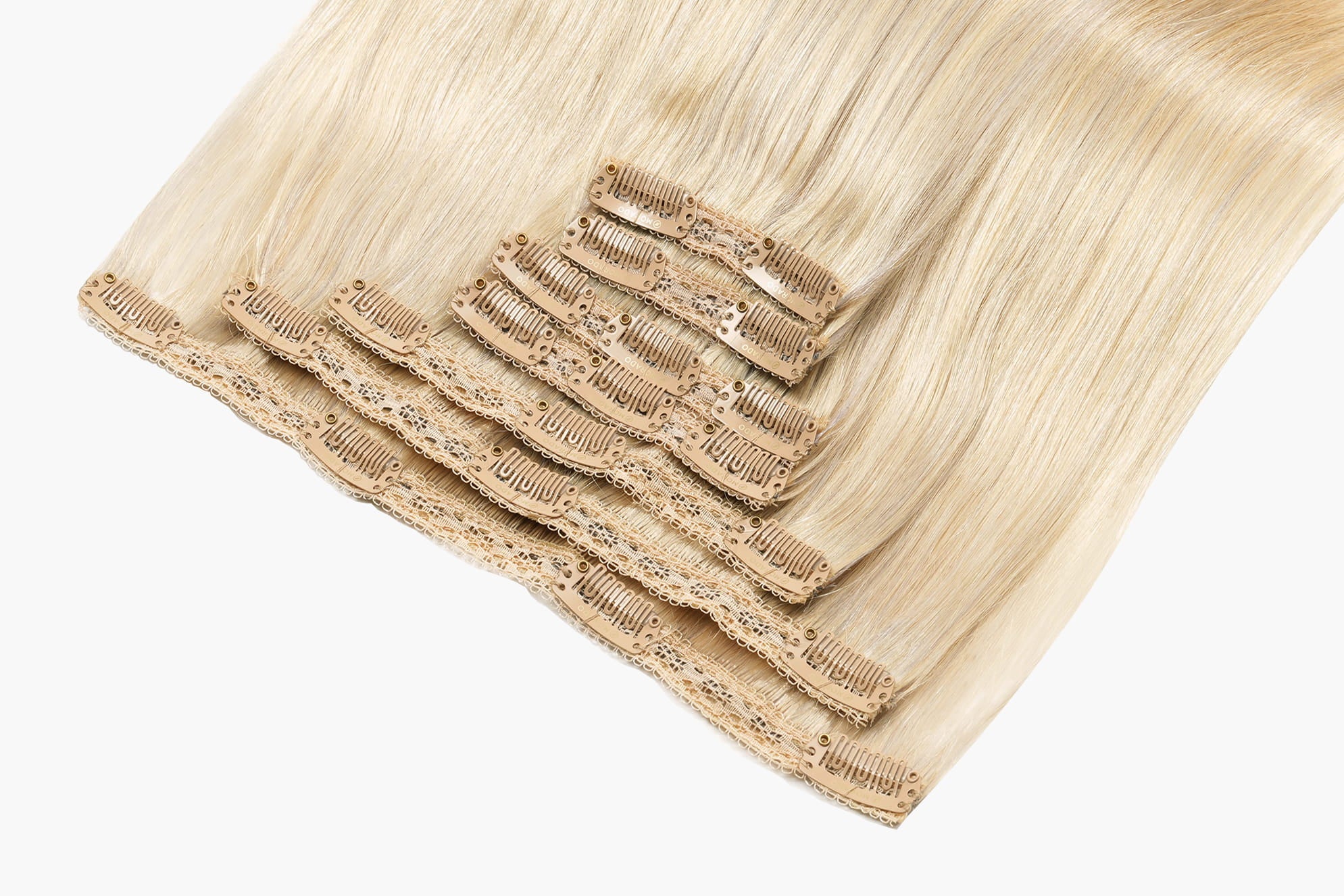
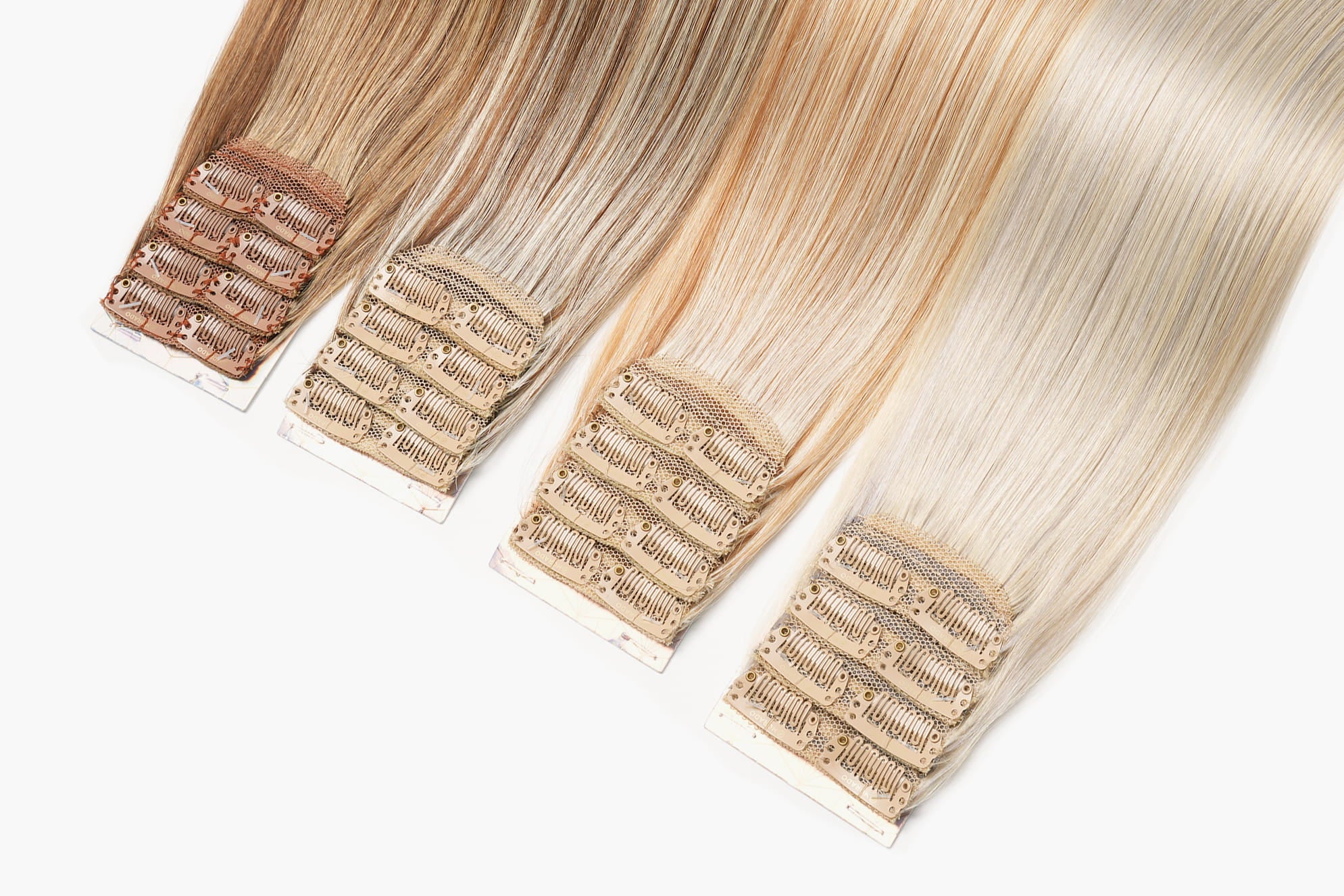
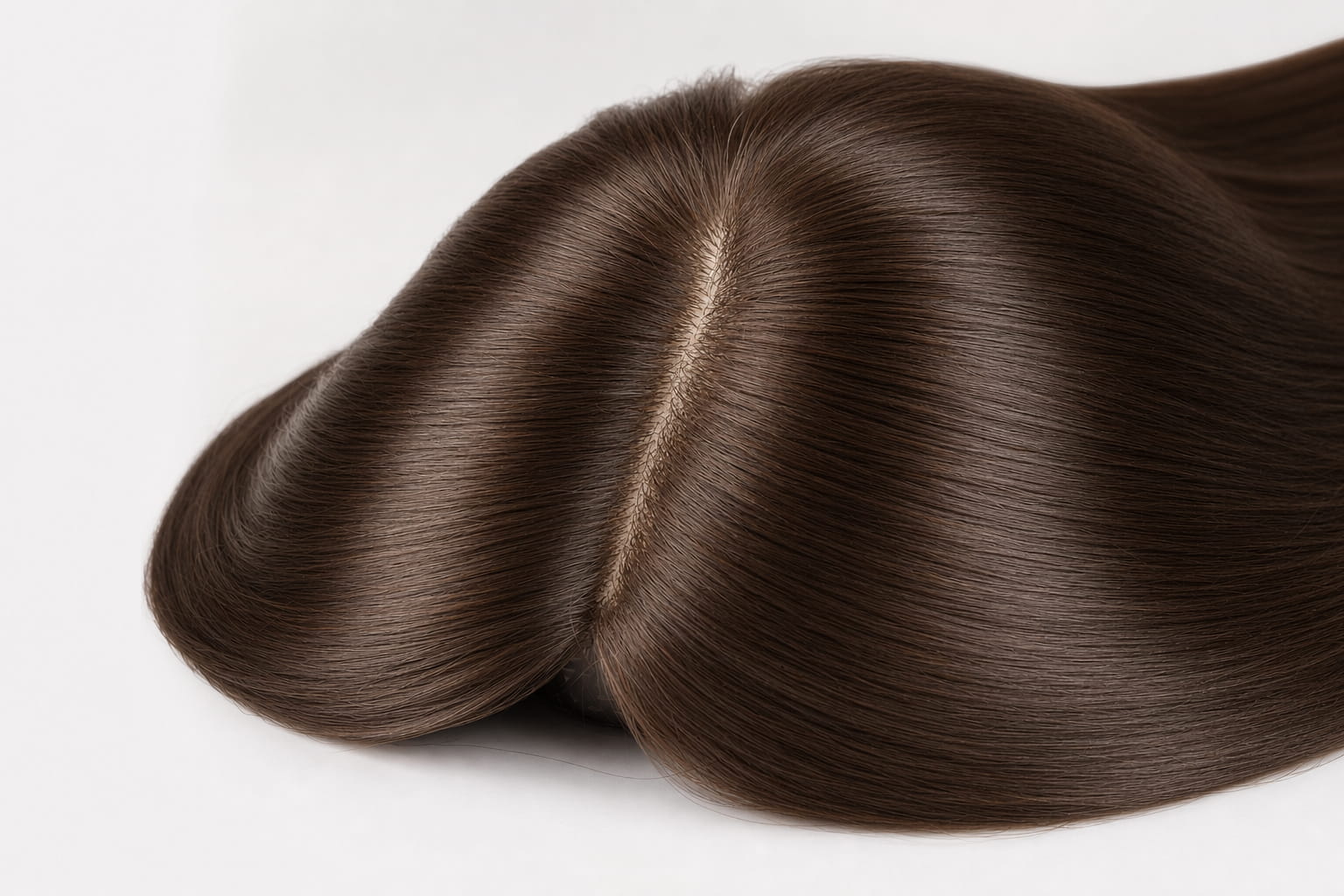
A topper is a partial hairpiece that sits on top of your head, covering the crown and part area while your own hair stays out and blends around it. Morado toppers are 100% Remy human hair on breathable bases, attaching in seconds with pressure-sensitive clips—no glue, no salon, off at night in one motion.
They come in three footprints: discreet 3"×5" and 5"×5" silk-base pieces from $69.99, whose hand-tied tops create a scalp-realistic part line for early and moderate thinning, and the full-coverage 8"×8" Aura volume topper from $85.50, with a free-part lace area, six clips, and a halo wire for extensive thinning, alopecia, or postpartum loss. Lengths run 10"–16" across 20 shades, and each piece lasts 4–6 months of regular wear with gentle care.
A topper is your tool when: the thinning you want covered lives on top—a widening part, a sparse crown, or that swirl at the back that photographs brighter than it used to.
Scalp Fill-Ins: Small Pieces, Precise Placement
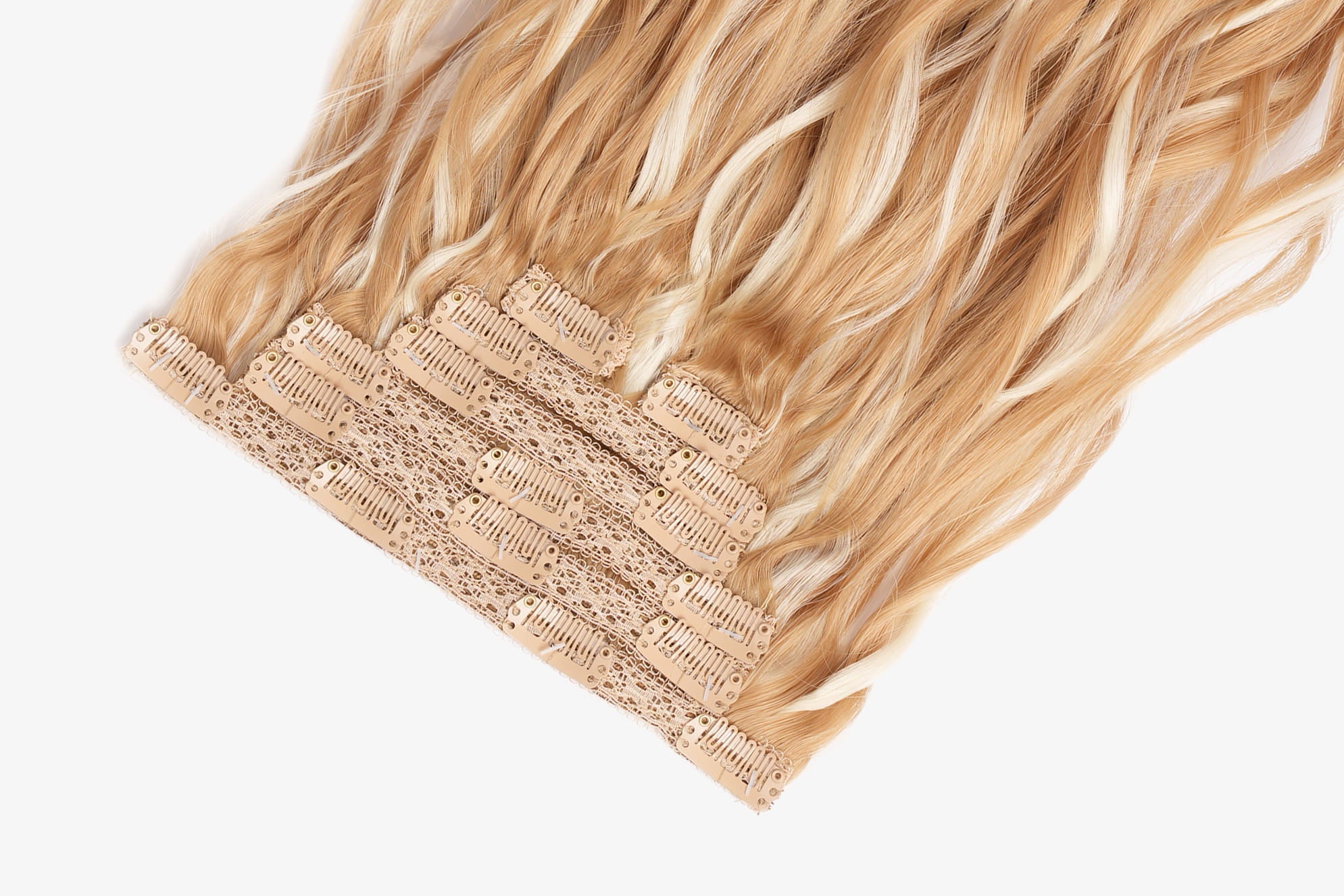
Scalp fill-ins are the newest arrival in the coverage family, and they solve the problems toppers can’t reach. Morado’s set contains four slim 2.3-inch wefts, each with two damage-free clips, in 16"–20" lengths at just $31.50—40–50 grams for the whole set.
Instead of one piece covering one zone, you place individual wefts exactly where density dips: along the sides of a widening part, about a quarter-inch to an inch and a half from the part line, at thinning temples, behind the ears, or scattered through the crown region.
Because each weft is small and sits flat under your natural hair, fill-ins are practically weightless and invisible—your own hair lays over the weft, and the added strands rise through it. The multi-tonal coloring, with built-in highlights and lowlights, blends dimensionally rather than reading as one flat shade.
Fill-ins are your tool when: thinning is localized and scattered—temples, part edges, small gaps—or when you want a subtle density boost without wearing a full piece. They’re also the gentlest, lowest-commitment first step for anyone nervous about hairpieces: beginner-friendly, sensitive-scalp-friendly, and under $35.
Topper or Fill-Ins? Match the Tool to the Pattern
|
|
Topper |
Scalp Fill-Ins |
|
What It Is |
One piece covering crown/part |
Four slim 2.3" wefts, placed individually |
|
Coverage Style |
Continuous, from above |
Targeted, from within your hair |
|
Best For |
Widening part, thinning crown, diffuse top loss |
Temples, part edges, scattered gaps, subtle overall boost |
|
Weight |
31–105g depending on size |
40–50g total per set |
|
Realism Secret |
Silk/lace base mimics scalp at part |
Your own hair lays over the wefts |
|
Price |
From $69.99 |
$31.50 per set |
|
Commitment Feel |
A piece you wear |
Barely-there boosters |
Using Them Together
Plenty of Morado customers wear both, because thinning rarely respects one zone. A common pairing: a silk-base topper handling the part and crown, with fill-in wefts at the temples where a topper can’t reach.
Everything clips in within minutes, everything comes off at night, and because toppers, fill-ins, and Morado extensions all share the same Remy quality and shade system, mixing pieces never breaks the blend.
Wearing Coverage Confidently: The Ground Rules
- Clip to healthy hair: Both tools anchor to stable hair near—never inside—the sparsest zones. This protects fragile strands and keeps everything comfortable.
- Remove before sleeping: Nighttime friction is the fastest way to shorten any piece’s life and stress your own hair. Off at night, always.
- Wash gently, rarely: Wash every 15–20 wears with sulfate-free products, then air-dry—flat for fill-ins and on a stand for toppers.
- Reassess seasonally: Thinning patterns change. The piece that fit perfectly last year deserves a five-minute mirror check twice a year so your coverage keeps matching your head.
And one rule above the rest: if your shedding started suddenly, is patchy, or comes with scalp irritation, see a dermatologist alongside any cosmetic solution. Coverage should restore your confidence while you address causes—never instead of it.
Start Where You Are
You don’t need to solve your whole hair story today. Many women start with a $31.50 fill-in set, discover how good targeted density feels, and graduate to a topper when they’re ready—or never, because the fill-ins were enough.
Whichever door you walk through, it’s covered by the Morado Promise: 100% Remy human hair, honest pricing, and 90-day returns and exchanges while you find your exact fit. Natural coverage, right where you need it—that’s the whole idea.
Frequently Asked Questions
Q. Will fill-ins or toppers show when the wind blows or I bend over?
Placed correctly, no. Topper edges sit under your blended natural hair and its base mimics scalp even when hair moves; fill-in wefts sit flat against your head below a covering layer of your own hair. The key is correct placement—a quarter-inch to an inch and a half from part lines for fill-ins, and a properly sized base for toppers.
Q. Which should I try first if I’m not sure how much coverage I need?
Start small. The $31.50 fill-in set answers the question with almost no commitment: if four targeted wefts give you the density you wanted, you’re done. If you find yourself wishing the coverage were continuous across your part or crown, that’s your sign a topper is the right next step.
Q. Can I heat-style and color these pieces?
Yes—both toppers and fill-ins are 100% Remy human hair, so hot tools work at normal temperatures and a professional can tone or dye them darker (deposit-only; never bleach a piece). The fill-ins’ multi-tonal coloring is designed to blend with dimensional hair as-is.
Q. How long do toppers and fill-ins last?
Both last 4–6 months of regular wear with proper care: gentle washing every 15–20 wears, air-drying, nightly removal, and storage away from sunlight. Worn occasionally rather than daily, they last considerably longer.
Q. I’m experiencing postpartum shedding—which is right for me?
It depends on the pattern. Postpartum loss concentrated at the temples responds beautifully to fill-ins; more diffuse crown thinning may call for a topper for a season. Either way, choose clip-in coverage rather than semi-permanent extensions while shedding is active—your hair will thank you as it recovers.
Read more
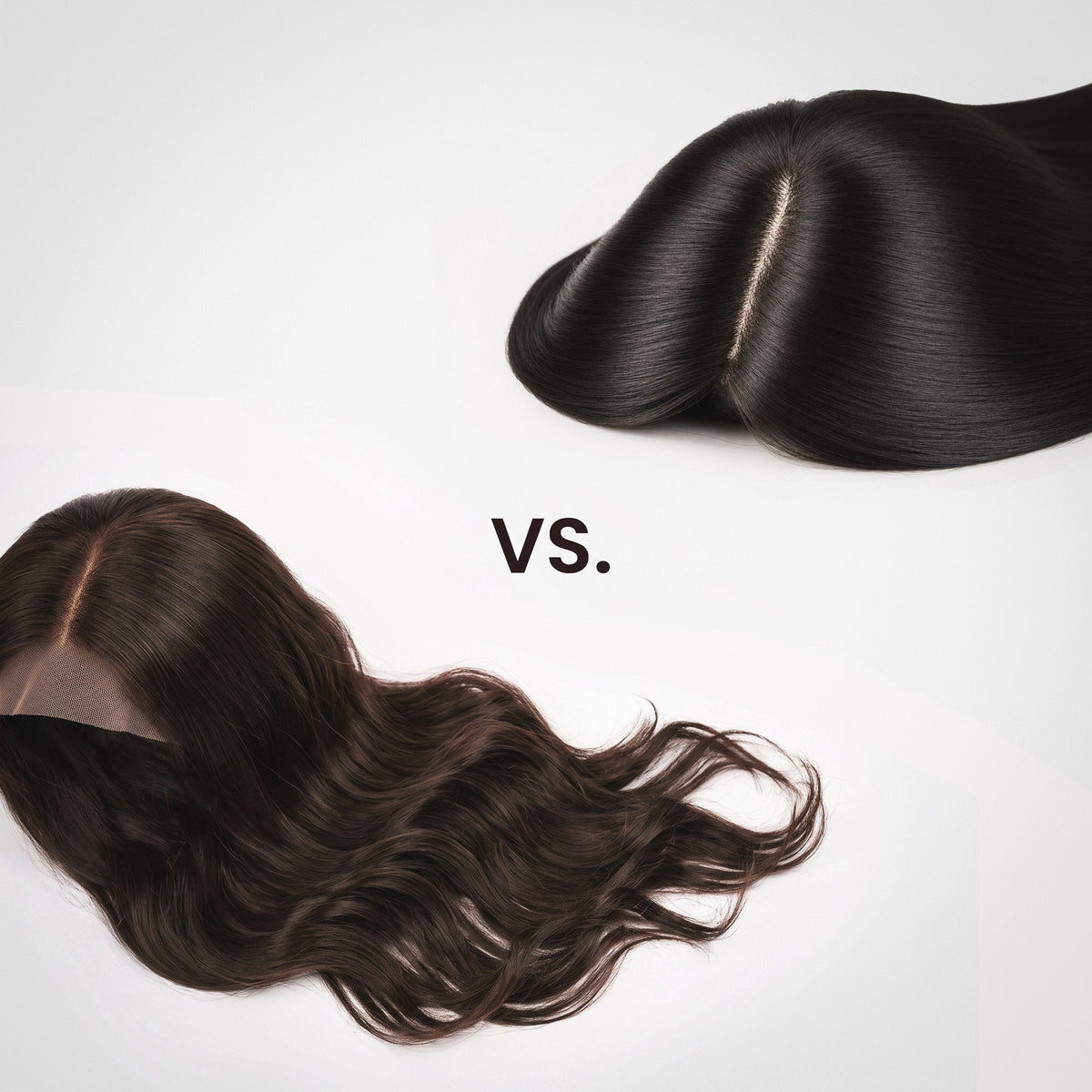
Topper or wig? Compare coverage, comfort, cost, and daily wear to find out which is right for your stage of thinning — with honest guidance for in-between cases.
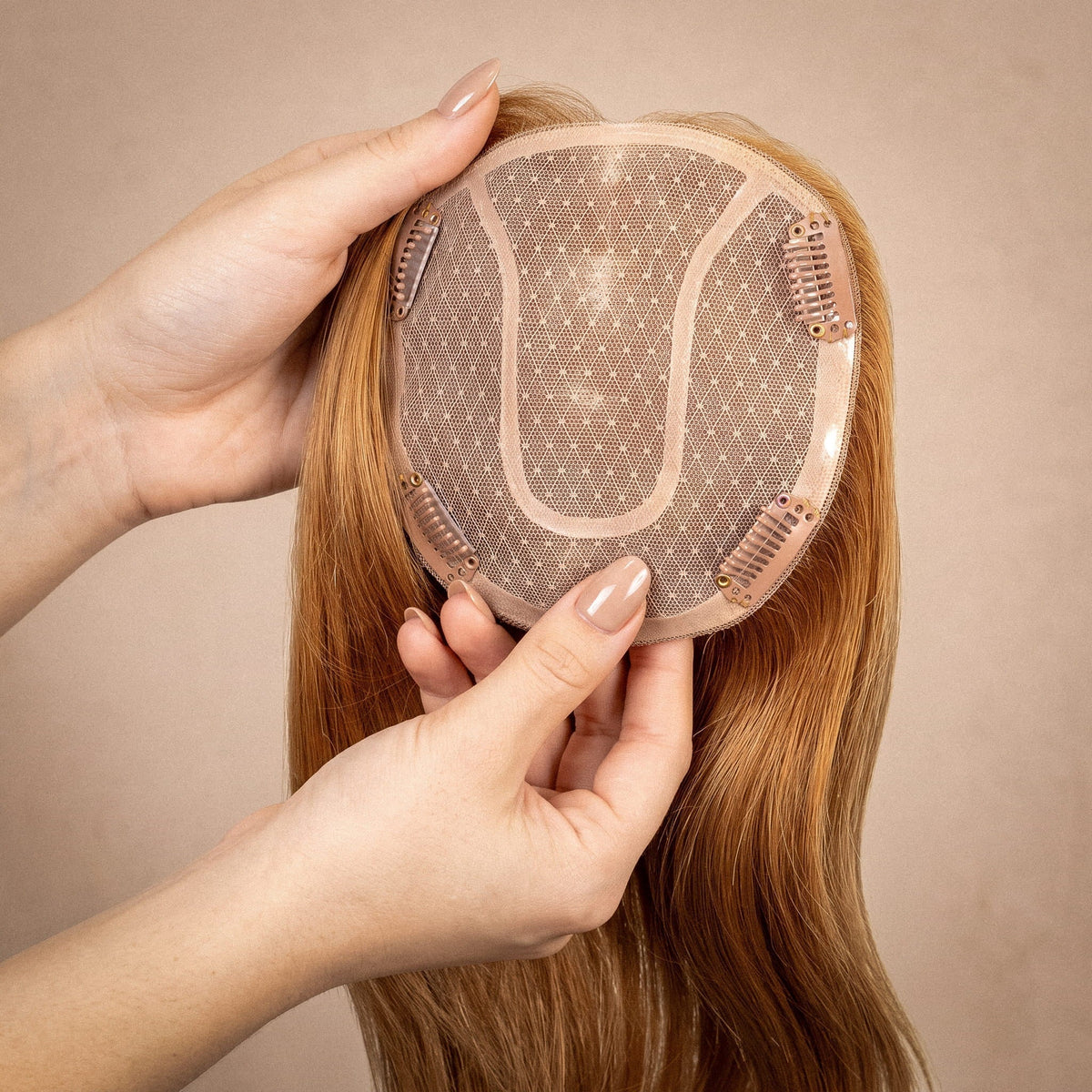
Get the perfect topper fit in five minutes. Step-by-step measuring instructions, a base size chart, and the mistakes to avoid before you order.