
Balayage vs. Ombre: Which Dimensional Shade Is You?
Scroll any hair inspiration feed and the color you keep saving probably isn’t one color at all. It’s dimension — darkness melting into light, ribbons of brightness moving through depth, that expensive, sunlit, “I woke up like this in Santorini” effect. Two techniques dominate that look: balayage and ombre. They’re cousins, they’re constantly confused, and if you’re choosing dimensional extensions, knowing which one is you is the difference between hair that flows and hair that looks color-blocked.
Let’s sort them out — what each actually is, how they behave in real life, and how to match extensions to the dimension you have (or the dimension you want).
The Difference in One Look
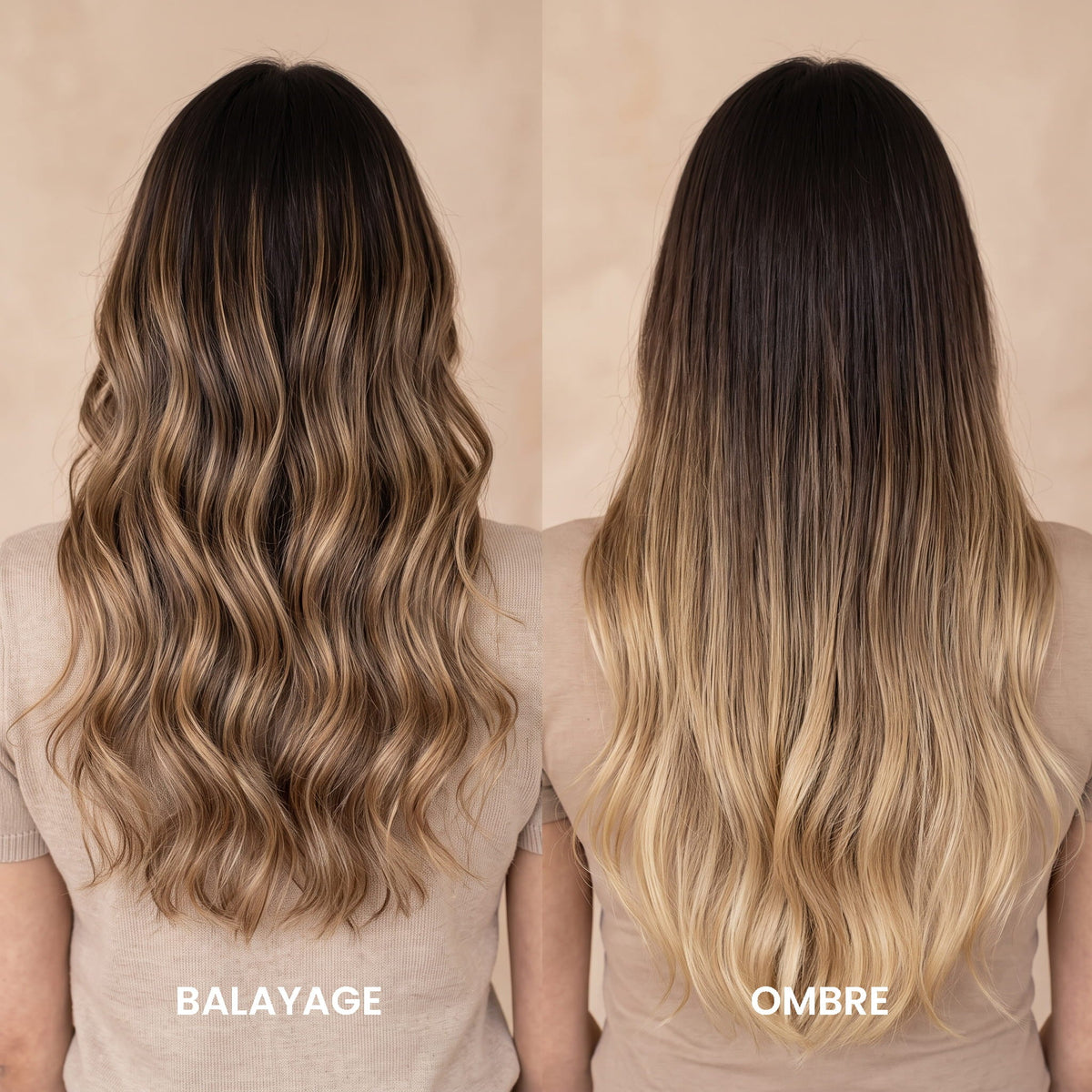
Ombre is a vertical gradient: darker at the roots, lighter at the ends, with the transition happening at roughly the same height all the way around your head. Picture dip-dyed silk — a horizontal band where dark hands over to light. It’s bold, graphic, and unmistakably intentional.
Balayage is painted dimension: lightness swept onto selected strands in soft, irregular ribbons — brighter toward the ends, yes, but woven through the mid-lengths unevenly, with darker pieces still threading all the way down. The word is French for “sweeping,” and that’s exactly how it reads: sun-lightened, organic, no visible start line.
The shortcut: ombre is a gradient; balayage is a scatter. Ombre announces itself; balayage pretends it grew that way.
Which Dimensional Personality Are You?
Neither is “more tasteful” — they’re different volumes of the same song. Ombre is dimension at full voice; balayage is dimension humming. Choose by how loudly you want your color to speak.
| Ombre | Balayage | |
The effect | Bold, graphic, high-contrast | Soft, sunlit, lived-in |
Transition | One clear dark-to-light shift | Irregular ribbons, no clear line |
Reads as | A statement color choice | “Naturally expensive” hair |
Regrowth honesty | Dark roots are part of the design | Dark roots are part of the design |
Contrast level | Highest at the ends | Distributed, gentler |
Best when | You want drama and don’t mind it showing | You want dimension nobody can quite name |
Matching Extensions to Dimensional Hair
If your hair is already balayaged or ombred
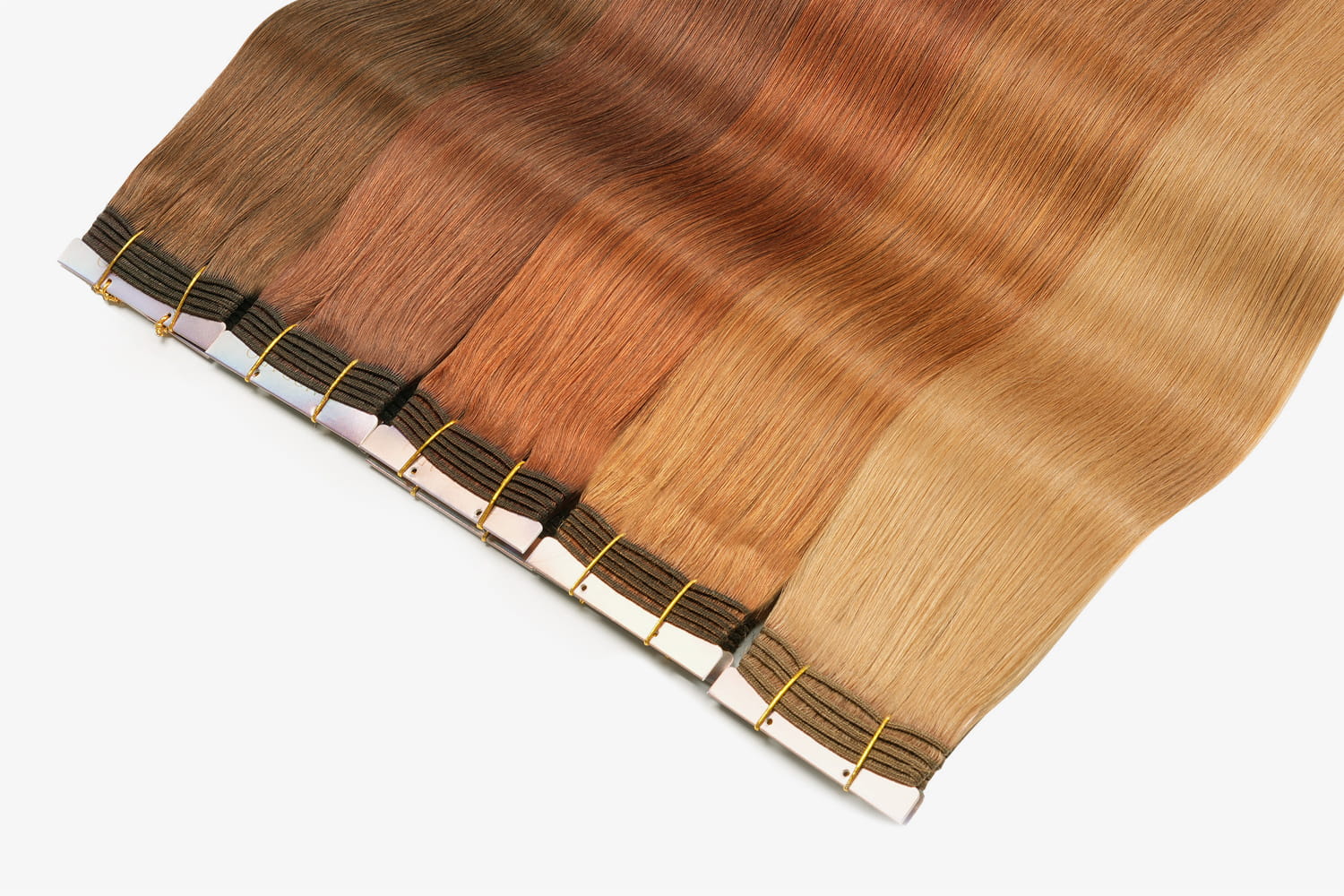
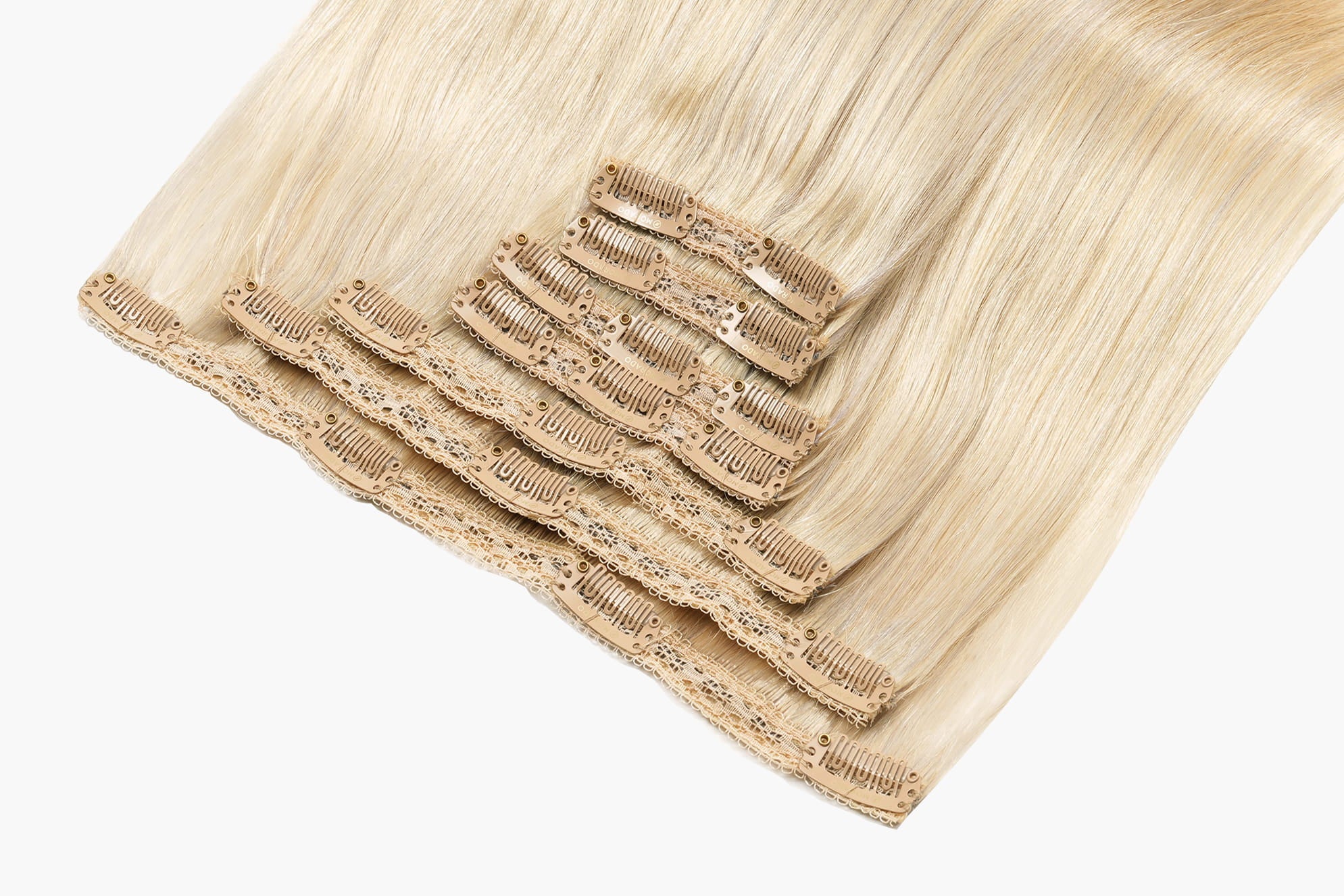
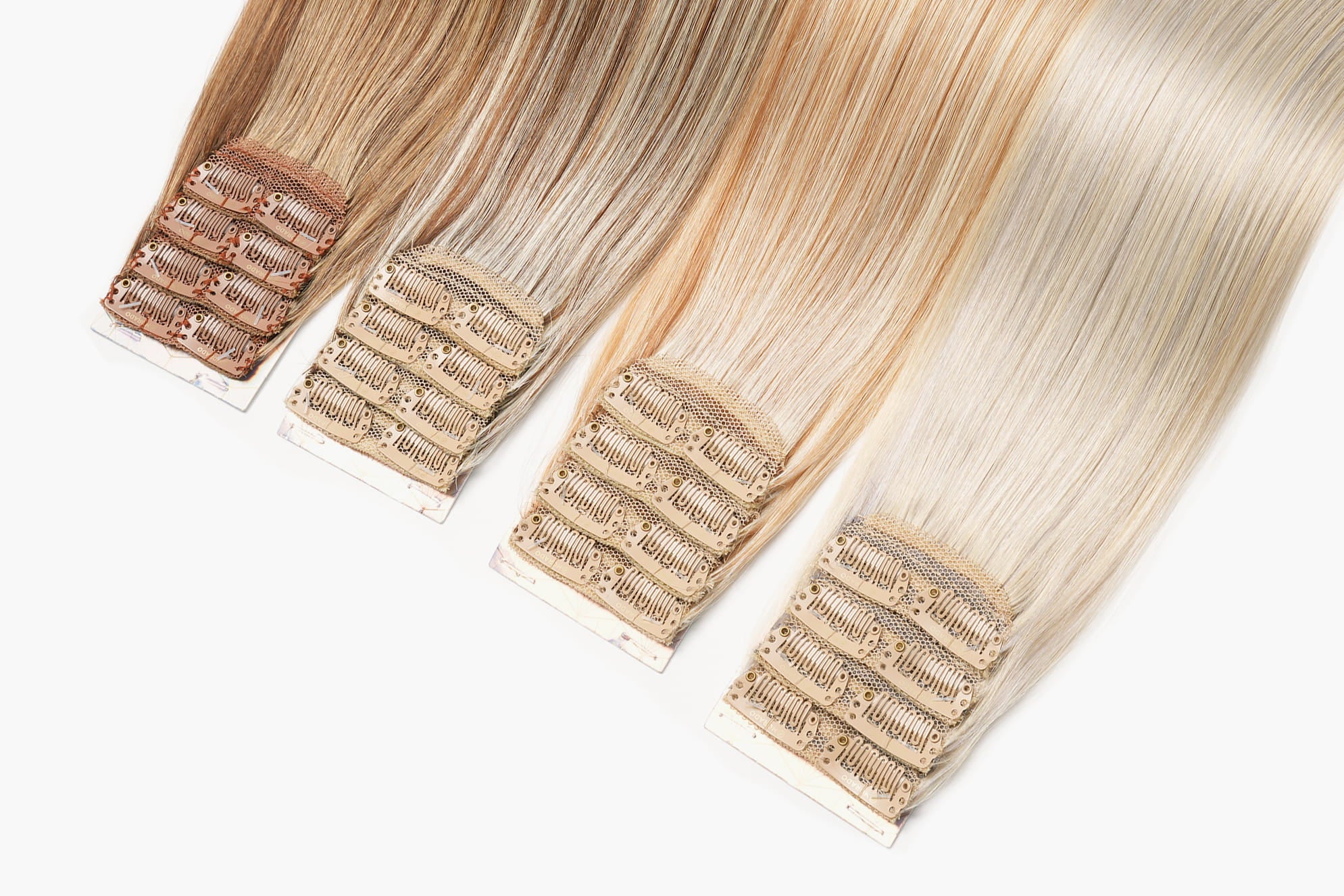
Never match dimensional hair to a solid shade — a flat weft against painted hair is the fastest way to make beautiful color look striped. Instead, match the architecture. Morado’s balayage shades are built exactly like the salon technique: Warm Rooted Blonde Balayage #T4/613 melts a dark root into bright blonde lengths, and Chestnut Base Blonde Balayage #T4-P6/613 weaves a chestnut base through bronze into platinum ribbons. Match the root depth to your root, and the ribbon brightness to your brightest pieces, and the weft joins your dimension instead of interrupting it.
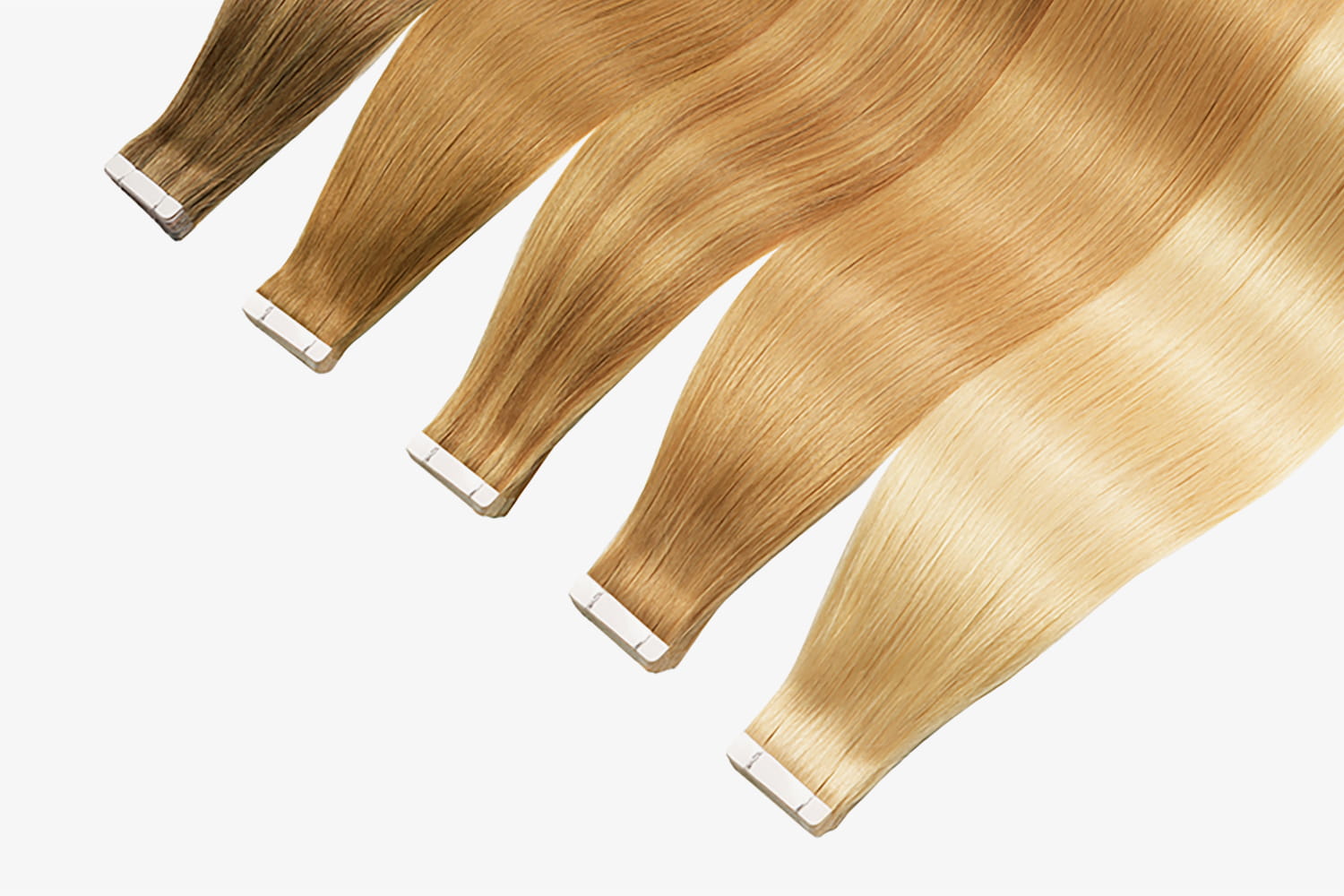
For subtler salon dimension — highlights rather than full balayage — the two-tone blends often blend best: Medium Brown with Honey Blonde #4/27, Bronze Blonde with Platinum Blonde #6/613, Honey Blonde with Platinum Blonde #27/613, and friends. (Our companion article on rooted and multi-tonal shades goes deeper here.)
If you want dimension without the salon
Here’s the quiet superpower of dimensional extensions: they add balayage to uncolored hair — no bleach, no appointments, no regrowth upkeep, no commitment. Clip or install rooted balayage wefts through solid brown hair and the painted ribbons appear, already blended to a dark root that matches yours. When you tire of it, it unclips. Your natural hair never met a chemical. For anyone bleach-shy, breakage-wary, or simply commitment-averse, this is the whole dimensional look with none of the tax.
Three Honest Fit Checks Before You Choose
-
Check your root reality.
Both Morado balayage shades are rooted — designed to blend from a dark base. If your hair is very light at the root, a rooted shade will show its dark shoulder; you want the blends (#27/613, #12/613) instead, which run bright top to bottom. -
Check your contrast tolerance.
In photos you love, is the light much lighter than the dark, or just a few steps? High contrast lives in ombre-leaning shades; low contrast lives in balayage and blends. Buy the contrast you actually wear, not the one the model wears. -
Check your tone, always.
Dimension doesn’t exempt you from undertones — golden ribbons in an ashy head clash exactly like solid shades do. Both Morado balayage shades run warm; if your hair is decidedly cool, build your dimension from cool solids and ash blends instead.
Dimension, Minus the Guesswork
Balayage and ombre look complicated to match because they’re several colors at once — but that’s precisely why the engineered shades exist. Match the root, match the ribbon, respect your tone, and dimensional wefts disappear into dimensional hair more forgivingly than any solid ever could; all those colors give the eye somewhere to agree. And if your particular paint job is one of a kind (the best ones are), send our team a daylight photo — matching real dimension to the right shade is a puzzle we genuinely enjoy, and the 90-day Morado Promise backs whichever answer we land on together.
Frequently Asked Questions
Q. What’s the actual difference between balayage and ombre?
Ombre is a uniform vertical gradient — dark roots transitioning to light ends at about the same height all around. Balayage is hand-painted ribbons of light scattered irregularly through the lengths, with dark strands still weaving to the ends. Ombre reads as a bold statement; balayage reads as natural, sunlit dimension.
Q. Can I wear balayage extensions if my hair is one solid color?
Yes — that’s one of their best uses. Rooted balayage wefts blend into a solid base at the root and introduce painted dimension through the lengths, giving you the full salon effect with zero bleach and zero commitment. Match the shade’s root to your solid color and you’re done.
Q. How do I match extensions to my existing balayage?
Match two points: the shade’s root depth to your root area, and its brightest ribbon to your lightest pieces. Morado’s #T4/613 and #T4-P6/613 cover warm blonde balayage on dark bases; subtler highlight work often matches better to two-tone blends. When in doubt, send us a daylight photo — dimensional matching by photo is the reliable route.
Q. Will dimensional extensions look striped in a ponytail?
Not if the architecture matches. Because balayage shades carry dark and light together in one weft, they scatter naturally through an updo just like painted hair does. Stripes come from solid-shade wefts in dimensional hair — the exact mistake dimensional shades exist to prevent.
Q. Balayage grows on me and off me — can I change my mind?
With extensions, always. Clip-ins come out in seconds; semi-permanent installs swap shades at any move-up appointment. And within 90 days, the Morado Promise lets you exchange a dimensional shade that turned out louder or quieter than you wanted.
Read more
What do rooted, highlighted, and multi-tonal extension shades actually mean? Decode the shade names, learn who each blend flatters, and pick with confidence.
Find the extension shade that disappears into your hair. Step-by-step matching: where to match, how to use lighting, and what to do when you’re between shades.