
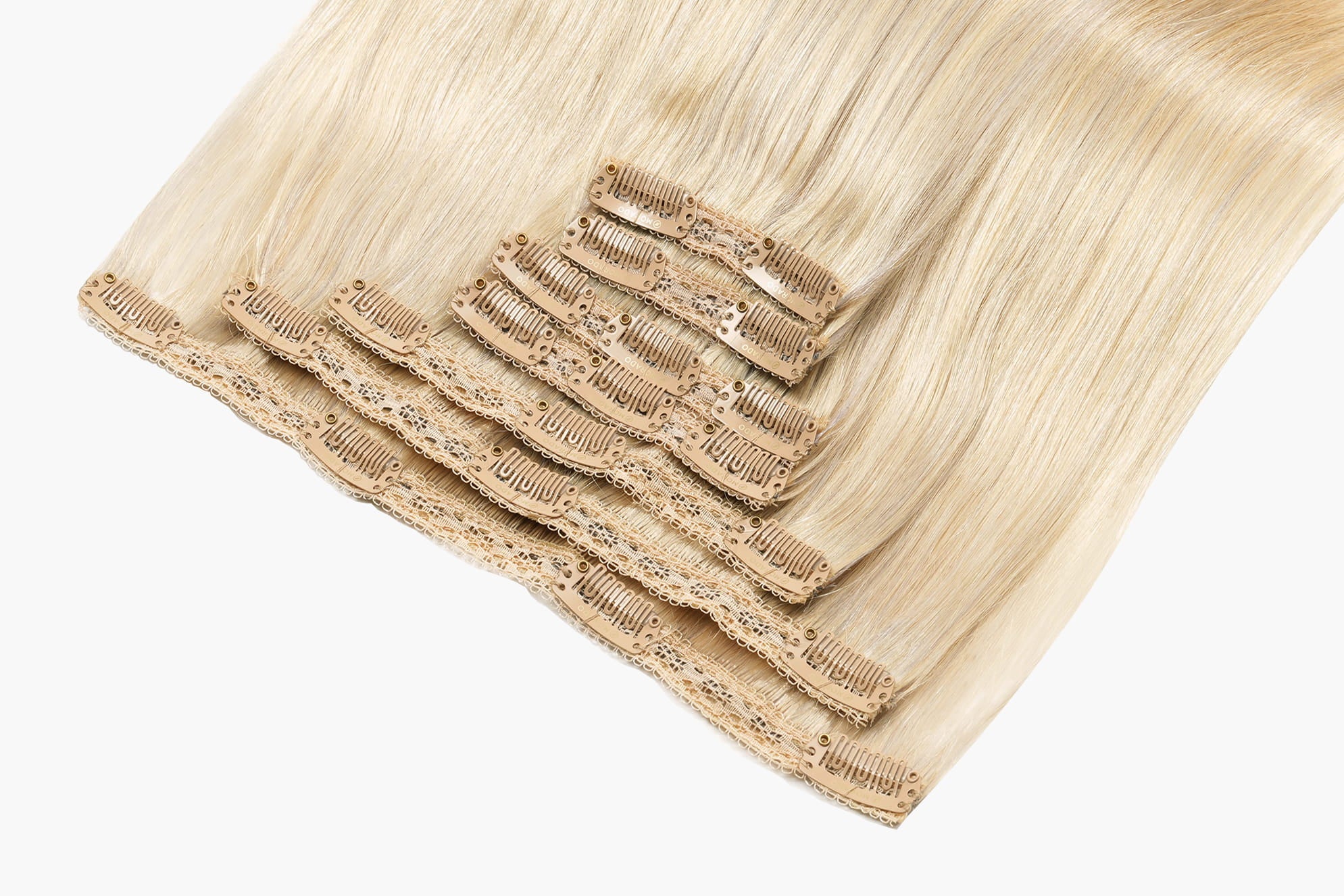
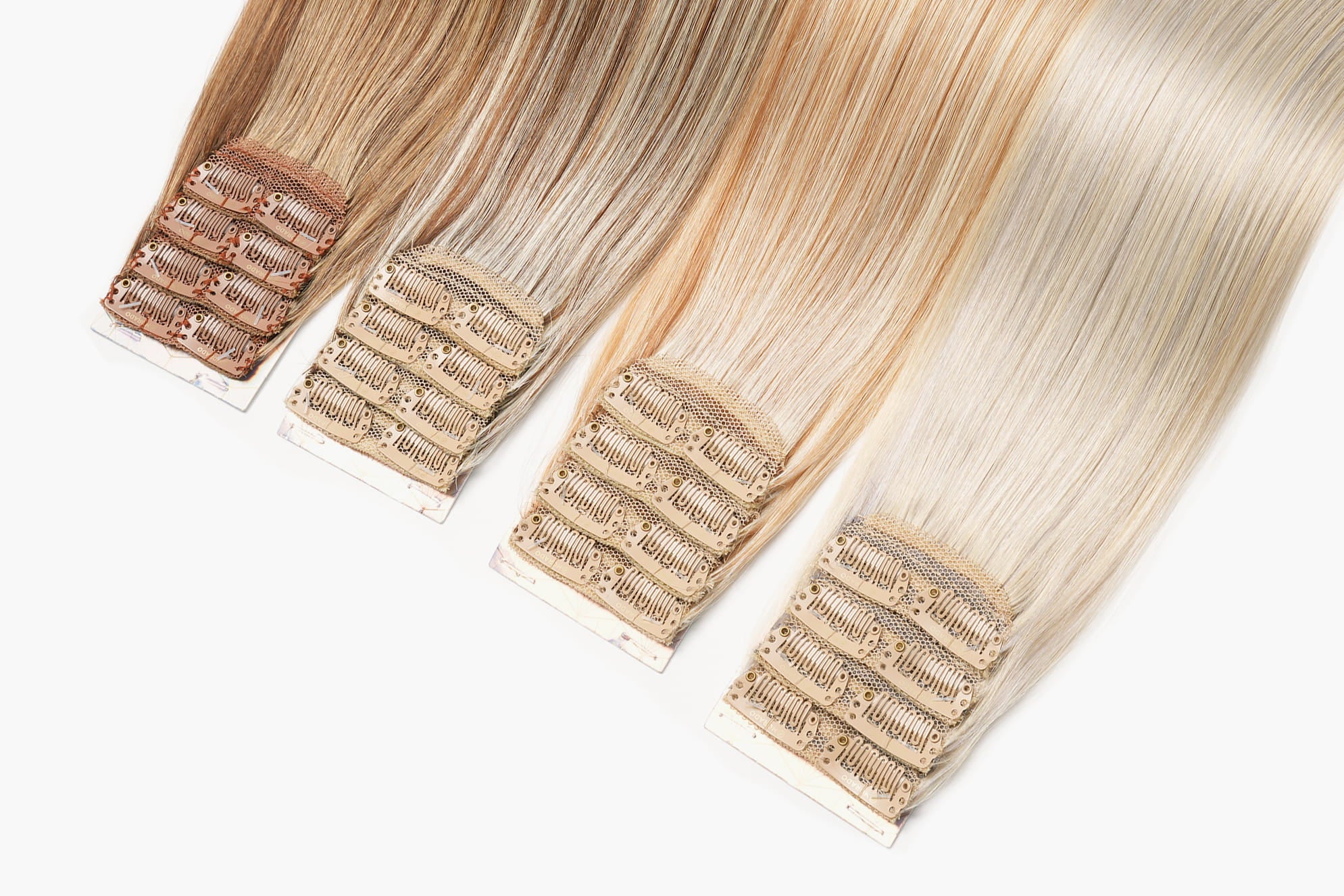
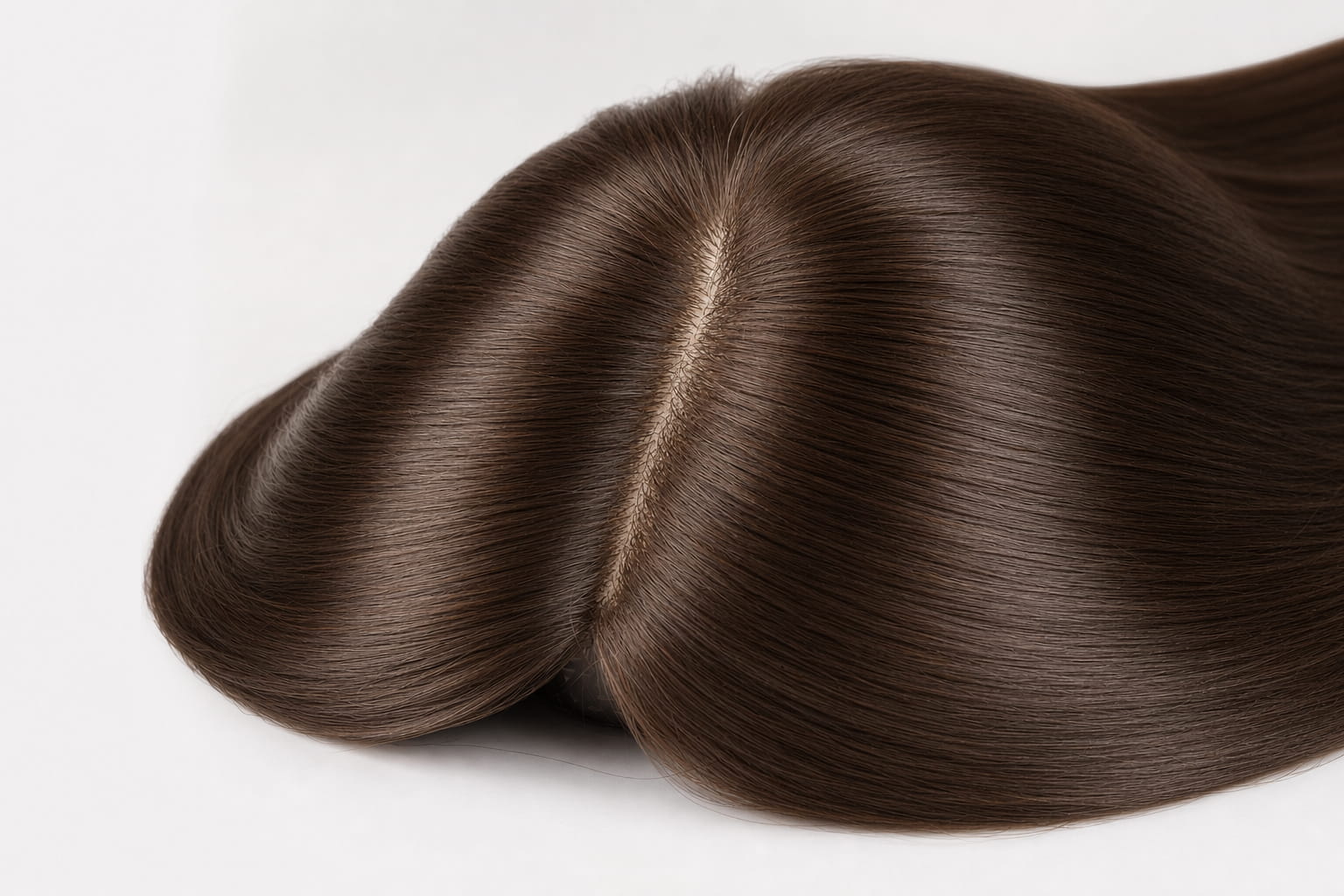
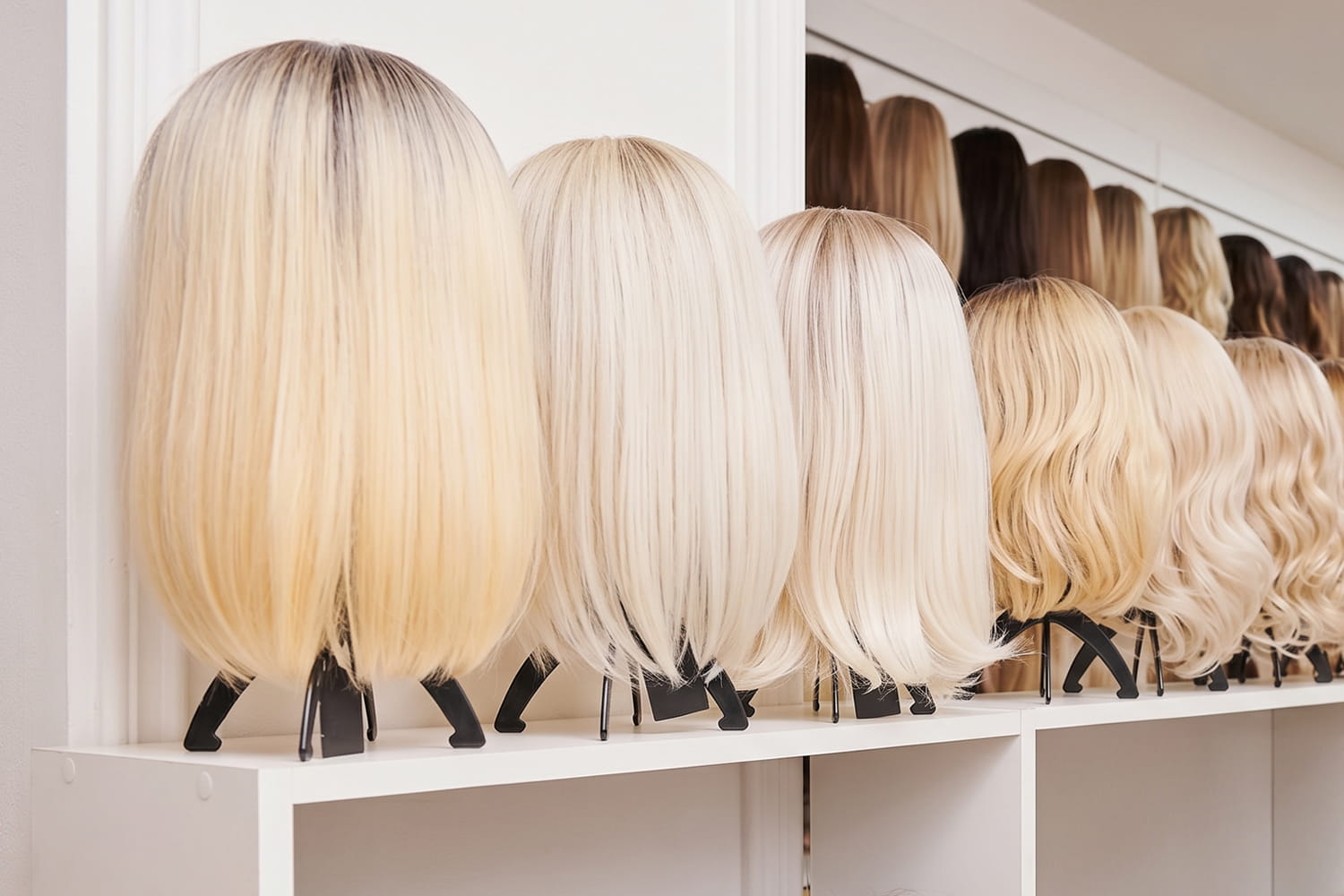
Rooted, Highlighted & Multi-Tonal Shades Explained
You’ve found the extension type you want, you’ve read up on matching — and then you open the shade menu and meet the codes: #4/27, #P6/27, #T4/613, #R4S76. It looks like algebra. It’s actually a language, and a short one: those slashes, T’s, P’s and R’s describe exactly how colors are combined inside each weft. Learn the handful of terms below and every shade name on our site becomes self-explanatory — and more importantly, you’ll know which construction of color your hair needs, which matters as much as the colors themselves.
Why Multi-Tonal Shades Exist at All
Pull one strand from your head and look at it against its neighbors: they don’t match. Natural hair is a crowd of slightly different colors — deeper underneath, brighter on top, warmer at the ends — and the eye reads that variation as realness. A single flat color has no such crowd, which is why solid-shade extensions demand a very precise match to disappear, while multi-tonal shades bring their own variation and forgive. If your hair has any dimension — salon-made or sun-made — a multi-tonal shade isn’t a style choice; it’s the correct architecture.
The Shade-Name Decoder
|
You See |
It Means |
Example |
|
#4/27 (a slash) |
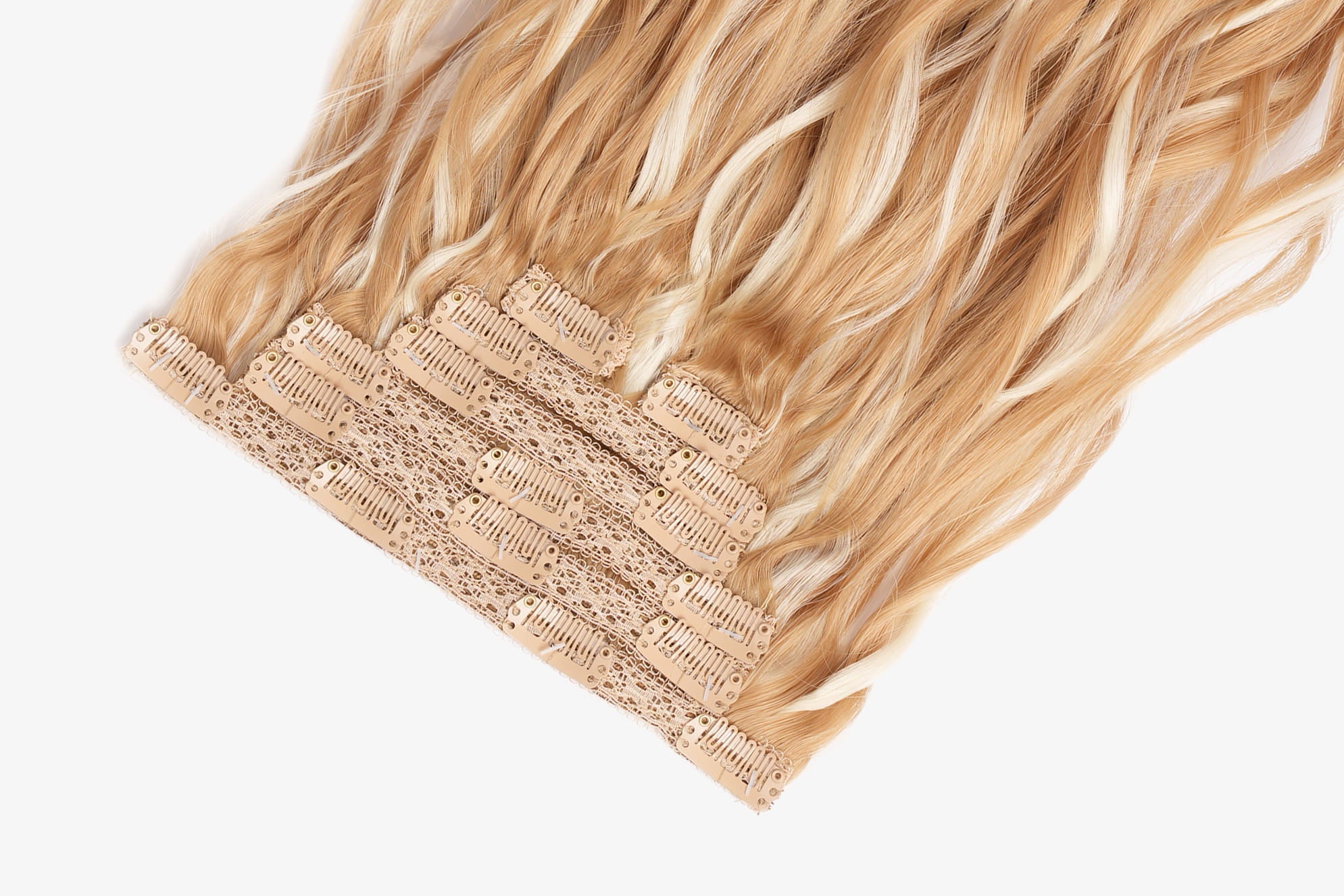
Two shades woven evenly top to bottom — a “piano” blend of both |
Medium Brown with Honey Blonde #4/27 |
|
P (piano) |
Explicitly marks that alternating-strand weave |
Bronze Blonde with Honey Blonde #P6/27 |
|
T (tipped/rooted) |
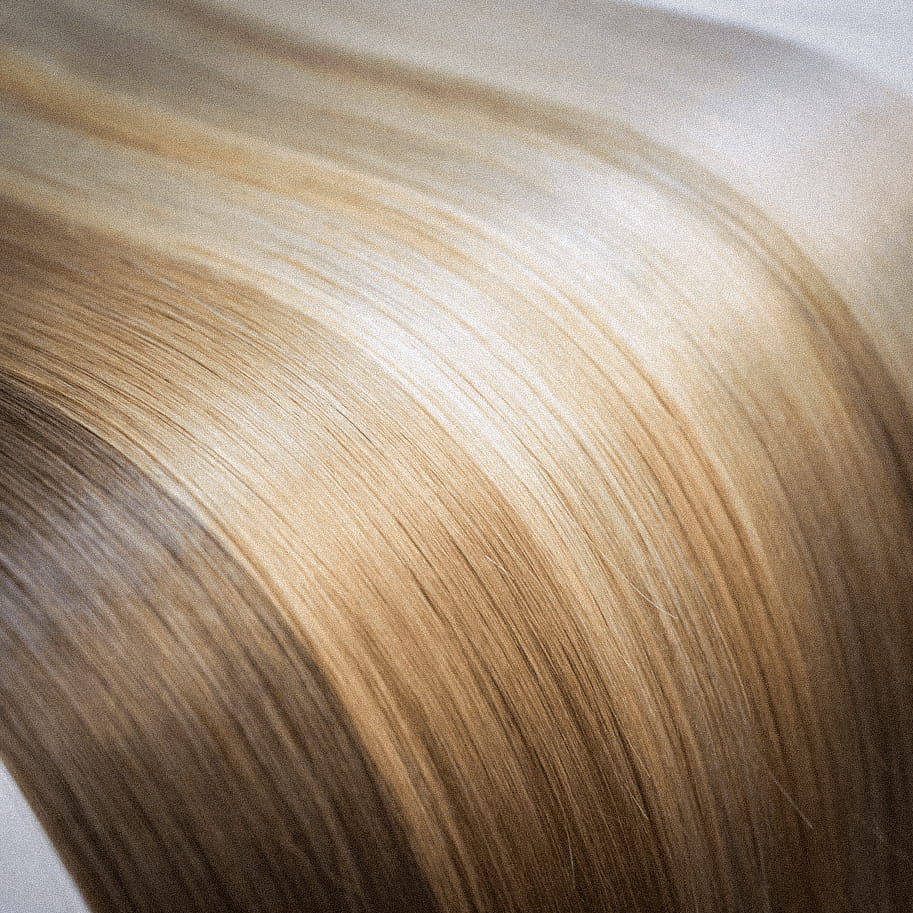
Vertical melt: first color at the root, transitioning down into the second |
Warm Rooted Blonde Balayage #T4/613 |
|
T + P combined |
Rooted top melting into a woven blend below |
Chestnut Base Blonde Balayage #T4-P6/613 |
|
R (rooted) |
A shadow root over the main shade |
Brown Rooted Rose Honey Blonde #R4S76 |
|
Solid number |
One uniform color throughout |
Dark Brown #2, Platinum Blonde #613 |
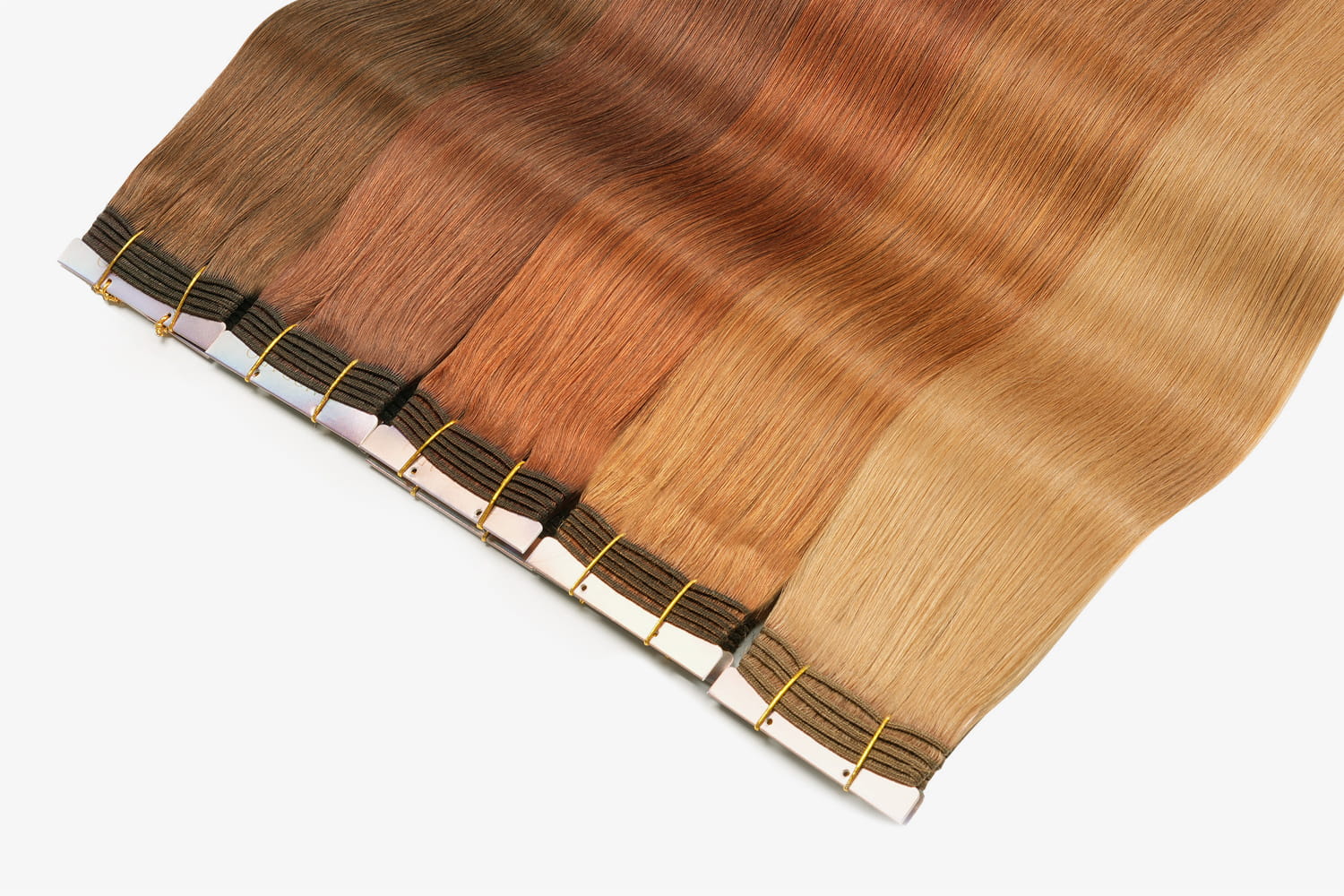
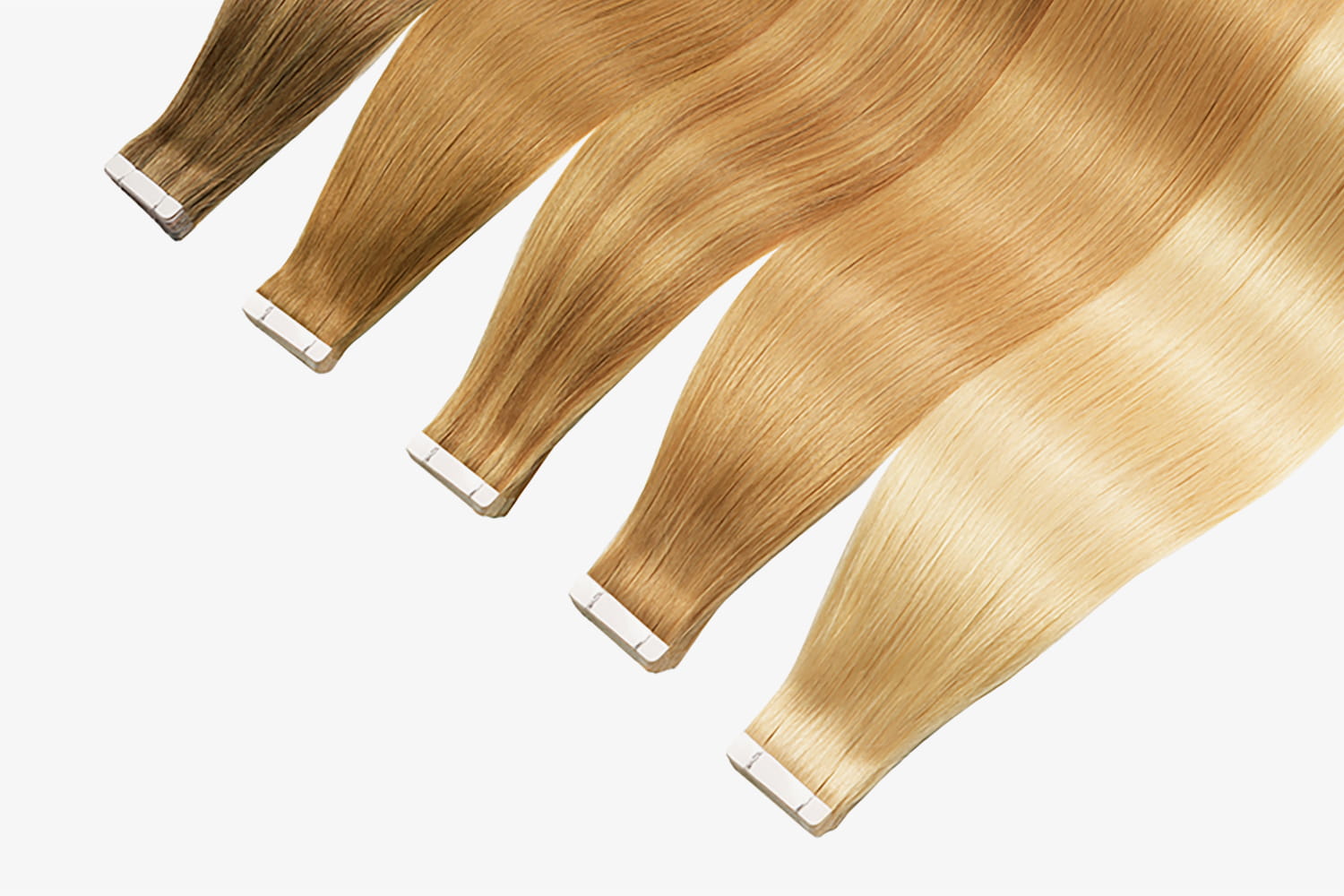
Two families emerge from the codes. Woven blends (slash and P shades) mix their colors horizontally — both tones present at every length. Rooted shades (T and R) organize color vertically — darker up top, brighter below. Everything on the menu is one, the other, or both.
Which Construction Matches Which Hair
Woven blends: for highlighted and in-between hair
If your hair has highlights, lowlights, or that natural sun-mixed quality — or if you’re stuck between two solid shades — woven blends are your answer. Because both tones run full length, a #4/27 weft placed in highlighted brown hair offers the eye matching evidence at every level. Blends are the most forgiving shades in the catalog: the built-in variation absorbs small mismatches that would expose a solid. When customers send us photos and we genuinely hesitate between two solids, a blend between them is almost always the recommendation.
Rooted shades: for grown-in, balayaged, and shadow-root hair
If your color story runs vertical — dark at the crown melting lighter through the lengths, whether from balayage, ombre, or simply grown-out color you’ve made peace with — rooted shades mirror that structure. The T-shades’ dark shoulder tucks up near your own roots and the melt does the rest; a bright-to-the-top blend in that same hair would sit like a lightning strike against your crown. Rooted shades are also the secret to low-maintenance believability: as your own roots grow, the weft’s shadow root keeps agreeing with them.
Adaptive multi-tonals: built-in highlights and lowlights
Some Morado pieces — our scalp fill-ins among them — use a multi-tonal adaptive coloring with fine highlights and lowlights milled through the shade. These are engineered for maximum forgiveness in the hardest matching zone of all (right at your part and temples, where hair meets scalp in full view), and they’re why fill-ins blend across a wider range of heads than their shade count suggests.
Choosing Well: A Short Decision Path
-
Solid-colored hair, confident match → a solid shade. Cleanest result when the match is true.
-
Solid-colored hair, between shades → the woven blend spanning your two candidates, or the lighter solid.
-
Highlighted or dimensional hair → a woven blend matched to your dominant mix. See our balayage article for full-dimension matching.
-
Dark roots with light lengths — by design or by growth → a rooted T-shade. Match the root to your root and the melt to your lengths.
-
Matching at the part or temples (fill-ins, toppers) → adaptive multi-tonals or the blend nearest your crown color. Judge the match in daylight.
The Shade That Disappears
The extensions people compliment are never the ones they can identify — the goal, always, is the shade that disappears into your hair. Multi-tonal construction is how that happens for the majority of real-world heads, because most real-world heads aren’t one color. So read the codes, pick the architecture that matches your color’s architecture, and let daylight make the final call.
And as with every shade decision at Morado: our team reads photos happily, the catalog spans solids to full balayage melts, and the 90-day Promise means the shade that almost disappeared is one exchange from the one that truly does.
Frequently Asked Questions
Q. What does the slash in shade names like #4/27 mean?
It marks a woven two-tone blend: strands of shade #4 (medium brown) and #27 (honey blonde) alternating evenly from top to bottom. Both colors are present at every length, which is what makes blends so forgiving in highlighted or in-between hair.
Q. What’s the difference between rooted and ombre-style shades?
They’re relatives on the same vertical axis. “Rooted” (T and R shades) means a darker upper section melting into lighter lengths — the depth of that root and the softness of the melt determine whether it reads as a subtle shadow root or a full balayage effect, like Morado’s #T4/613.
Q. Will a blend look stripey in fine, flat-colored hair?
Blends are woven at the strand level, not in chunks, so they read as dimension rather than stripes — even in fine hair. Stripiness comes from the opposite mistake: a solid weft that mismatches its surroundings. If your hair is truly one flat color and you have a confident match, a solid is ideal; if not, the blend is the safer buy.
Q. How do I match a rooted shade to my hair?
Match two anchor points: the shade’s root color to your own root area, and its lightest lengths to your mid-and-end brightness. If both agree in daylight, the melt between them will take care of itself. A rooted shade whose root is far darker than yours will show a shoulder — in that case, step to a woven blend instead.
Q. Do multi-tonal shades cost more than solids?
Sometimes modestly — highlighted and balayage constructions involve more color work, and Morado pricing reflects that honestly (for example, clip-ins from $99.99 solid and from $135 highlighted). Weigh it against what the blend buys: a wider forgiveness zone, and for dimensional hair, the only construction that can truly vanish.
Read more
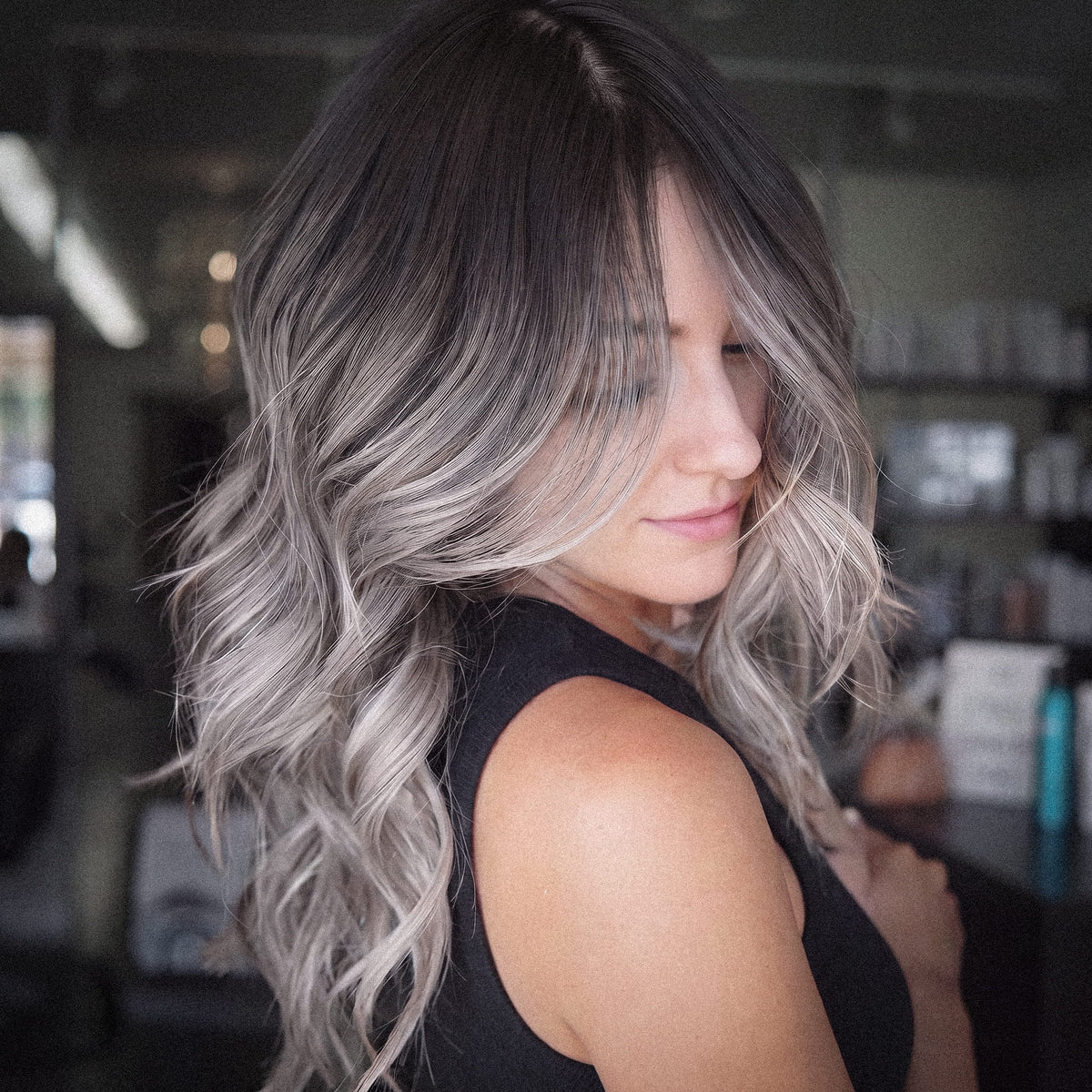
Gray, silver, or salt-and-pepper hair? Learn how to match and blend extensions, toppers, and fill-ins with graying hair — at every stage of the transition.
Find the extension shade that disappears into your hair. Step-by-step matching: where to match, how to use lighting, and what to do when you’re between shades.