

Blending Extensions with Gray & Silver Hair
Somewhere along the way, the hair conversation quietly stopped including you. Extension guides talk brunettes and blondes; shade charts end at platinum; and the world seems to assume that going gray means going without options. We’d like to correct the record: gray and silver hair can absolutely wear extensions, toppers, and fill-ins — beautifully — and the matching logic, while different from pigmented hair, is completely learnable. Whether you’re fully silver, salt-and-pepper, or mid-transition and wondering what on earth to match, this guide is yours.
Why Gray Matching Follows Different Rules
Gray isn’t a color your hair turned — it’s pigment your hair released. Each strand goes silver individually, which means “gray hair” is almost never uniform: it’s a live blend of white, steel, and your remaining original color, mixed in percentages that shift year by year and zone by zone (temples usually lead; the nape usually holds color longest). That’s why gray matching is really blend matching: the question isn’t “what color is my hair?” but “what’s my current mix, and where?”
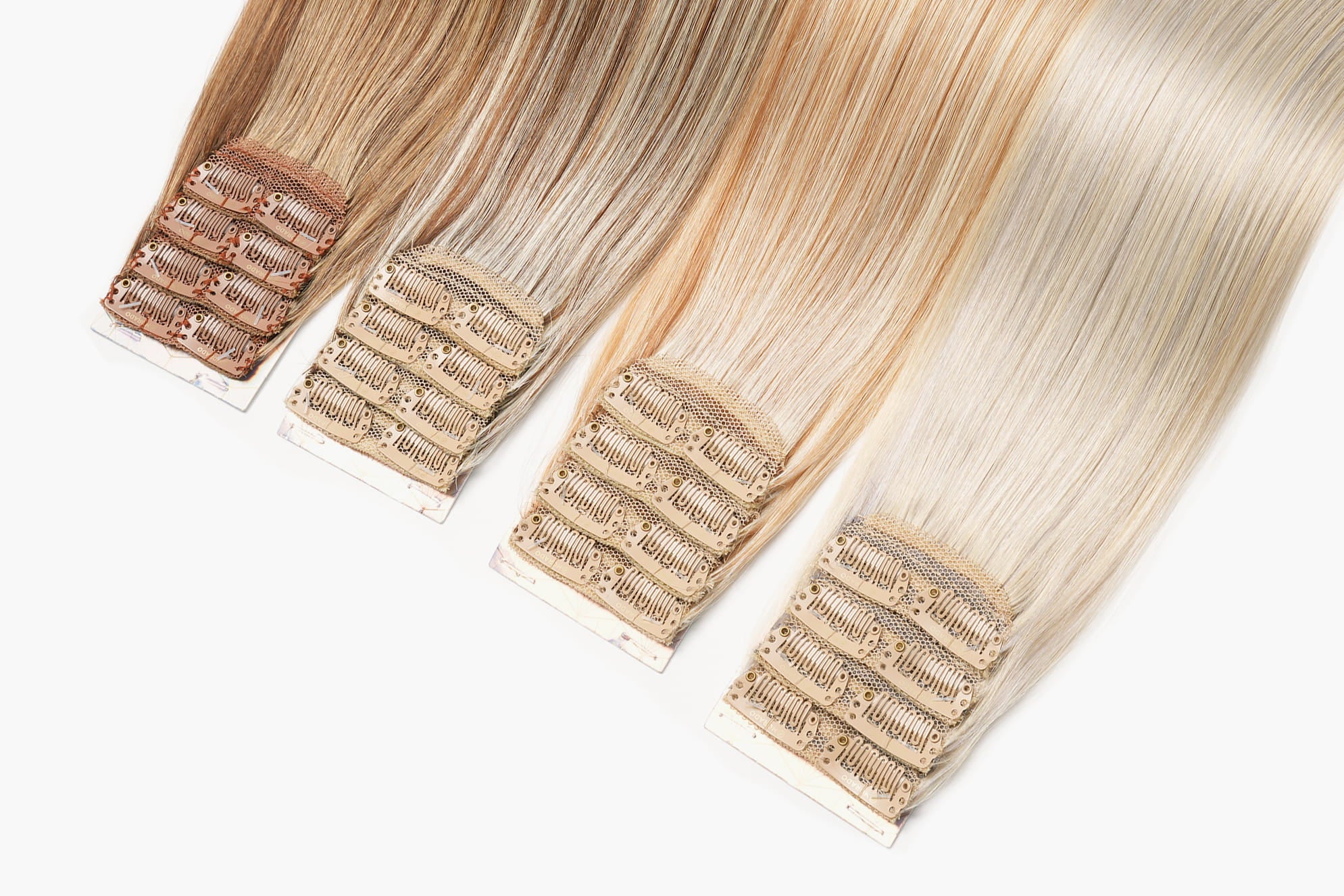
The other difference is tone. Silver hair is inherently cool — and it’s unforgiving of warmth. A weft with golden undertones that would flatter a brunette reads distinctly yellow against true silver. Cool and ash shades are your shade-chart neighborhood: Morado’s Cool Silver Gray #IG, Icy Platinum Blonde #60, and Light Ash Blonde #16 do the heavy lifting here.
Matching by Stage of Gray
|
Your Mix |
What Blends Best |
Why |
|
Scattered silvers (under ~25%) |
Your original shade, or a blend one step lighter |
Base color still dominates; scattered strands read as dimension against it |
|
True salt-and-pepper (~25–60%) |
Cool Silver Gray #IG layered with your base shade, or an ash blend between the two |
Two-tone reality needs two-tone hair; mixing wefts mirrors your mix |
|
Silver-dominant (60%+) |
Cool Silver Gray #IG or Icy Platinum Blonde #60 |
Cool silvers match the new canvas; any warmth now shows |
|
Fully silver/white |
Cool Silver Gray #IG |
Match tone precisely — steel vs. bright white — in daylight |
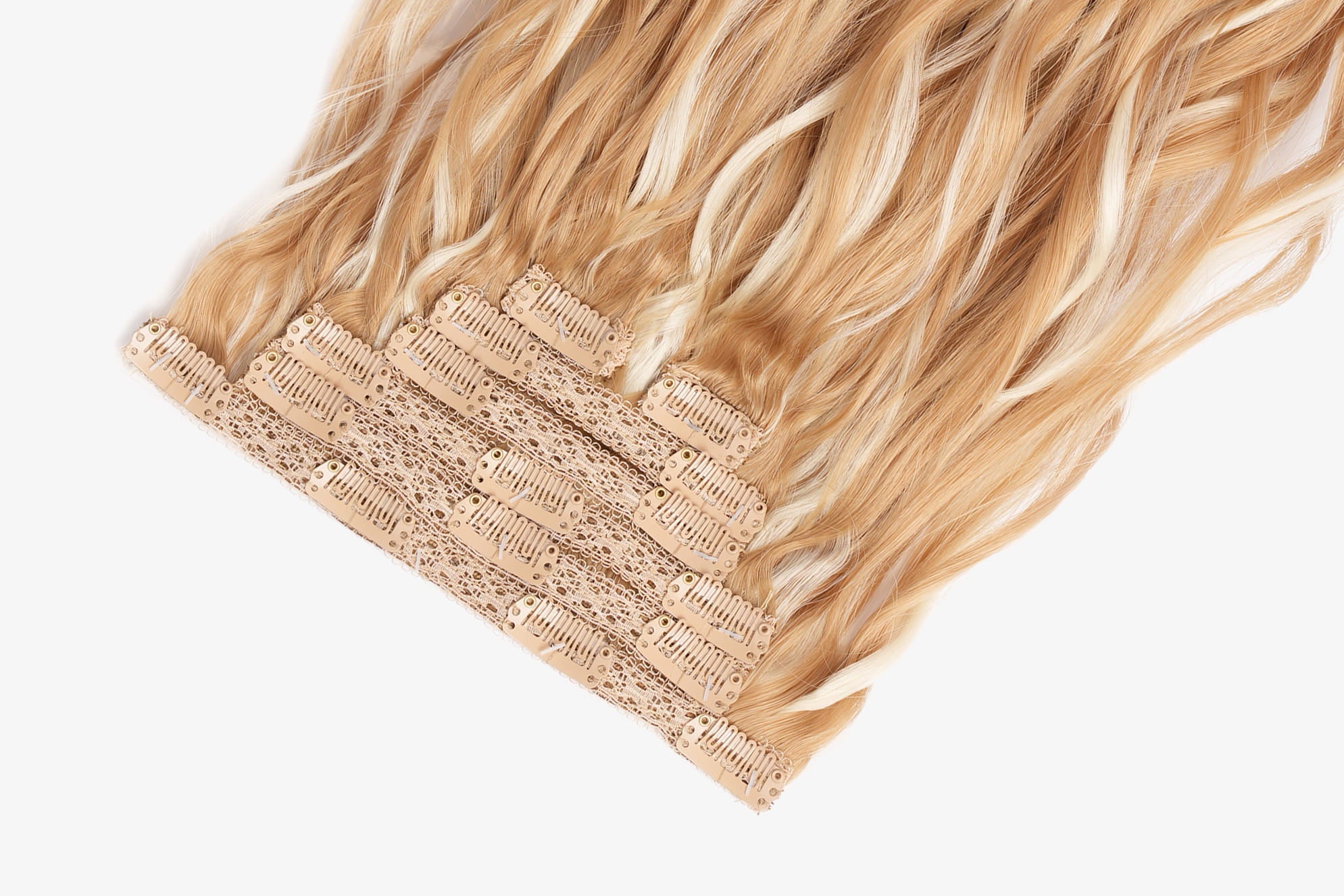
The salt-and-pepper row deserves a highlight, because it holds the technique stylists use: mix wefts. Alternating silver and pigmented wefts through your hair recreates your natural pepper-and-salt scatter far more convincingly than any single shade can — the same “architecture matching” logic we use for balayage, applied to nature’s own dimensional color.
The Transition Season: Extensions as a Bridge
Growing out dye to embrace your silver is a famously awkward journey — that hard line between colored lengths and silver roots can take two years to grow past. Hair pieces are quietly one of the best bridge tools there is. A topper in a silver or salt-and-pepper mix covers the demarcation line at the part and crown — exactly where it shows most — letting your silver come in underneath with dignity. Clip-in wefts in your target silver shade, worn through the lengths, pull the eye toward where you’re going instead of where you’ve been. And because everything clips out, you can meet each occasion however you feel that day: full silver confidence at brunch, bridged blend at the reunion.
A gentle note for this crowd especially: choose removable options (clip-ins, toppers, fill-ins) over semi-permanent installs if your gray percentage is climbing quickly — your canvas is changing, and you’ll want to re-match seasonally rather than commit an install to last year’s mix.
Density: The Other Half of the Gray Story
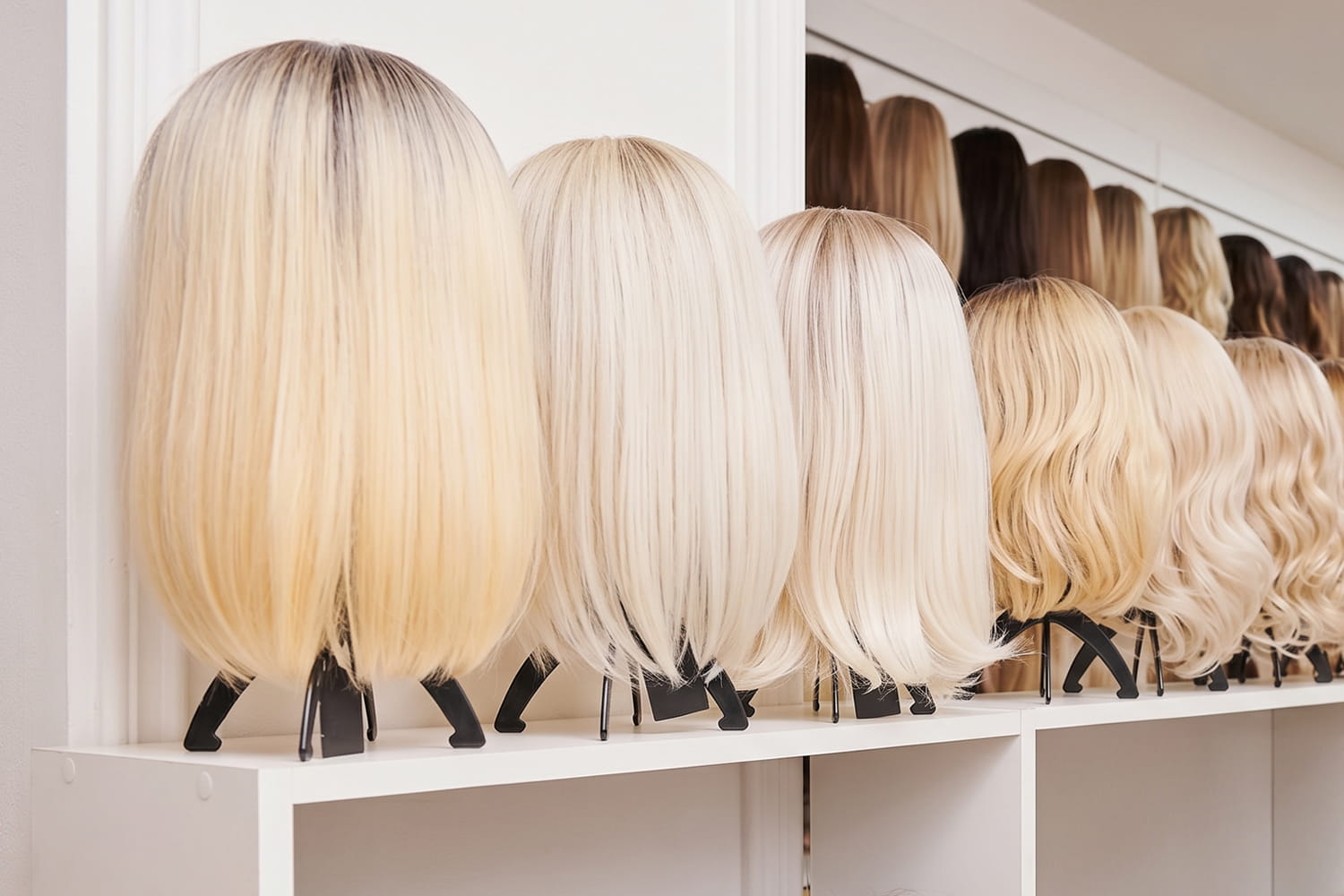
For many women, gray arrives holding hands with thinning — strands finer, part wider, crown quieter. If that’s part of your story, the coverage family may serve you before the length family does: scalp fill-ins tucked along a widening part, or a silk-base topper restoring the crown, both matched with the same cool-tone logic above. (Our natural coverage guides walk through fit and sizing.) Density first, length second is the order that makes silver hair look its most luxurious.
Care Notes for Silver Extensions
-
Purple shampoo, occasionally — not obsessively. Silver human hair, like silver natural hair, can yellow from sun, minerals, and product. A violet-toning wash every few weeks keeps it icy; overuse leaves a lilac cast. Sulfate-free always.
-
Guard against warmth everywhere. Chlorine, hard water, and high heat all push silver toward yellow. Use heat protectant, moderate temperatures, and rinse after swimming.
-
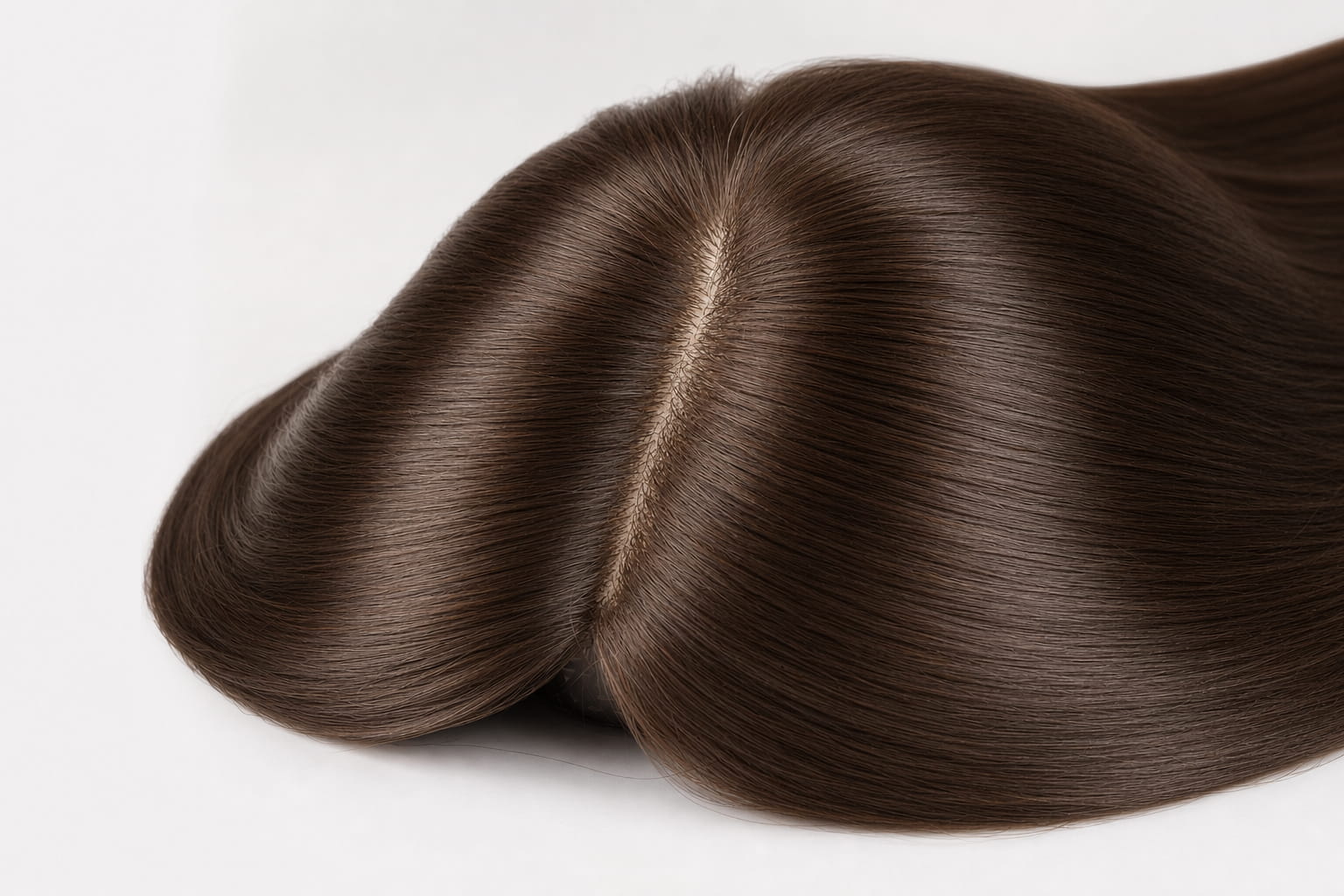
Shine is your finishing move. What reads as “gorgeous silver” versus “gray” is mostly light reflection. A drop of lightweight serum through the mid-lengths of Remy silver hair delivers the gleam that makes the whole blend look intentional.
Silver, Fully Resourced
Going gray shouldn’t mean exiting the good-hair conversation — it means your matching rules changed, and now you know the new ones: match the mix, stay cool in tone, mix wefts for pepper-and-salt, bridge transitions with removable pieces, and mind density alongside length.
Every piece of it is backed by the same Morado Promise as every other shade — 100% Remy human hair, honest prices, 90-day returns and exchanges — and our team matches silver blends by daylight photo every week. Your silver era deserves great hair days too. Come get them.
Frequently Asked Questions
Q. Do silver hair extensions exist in real human hair?
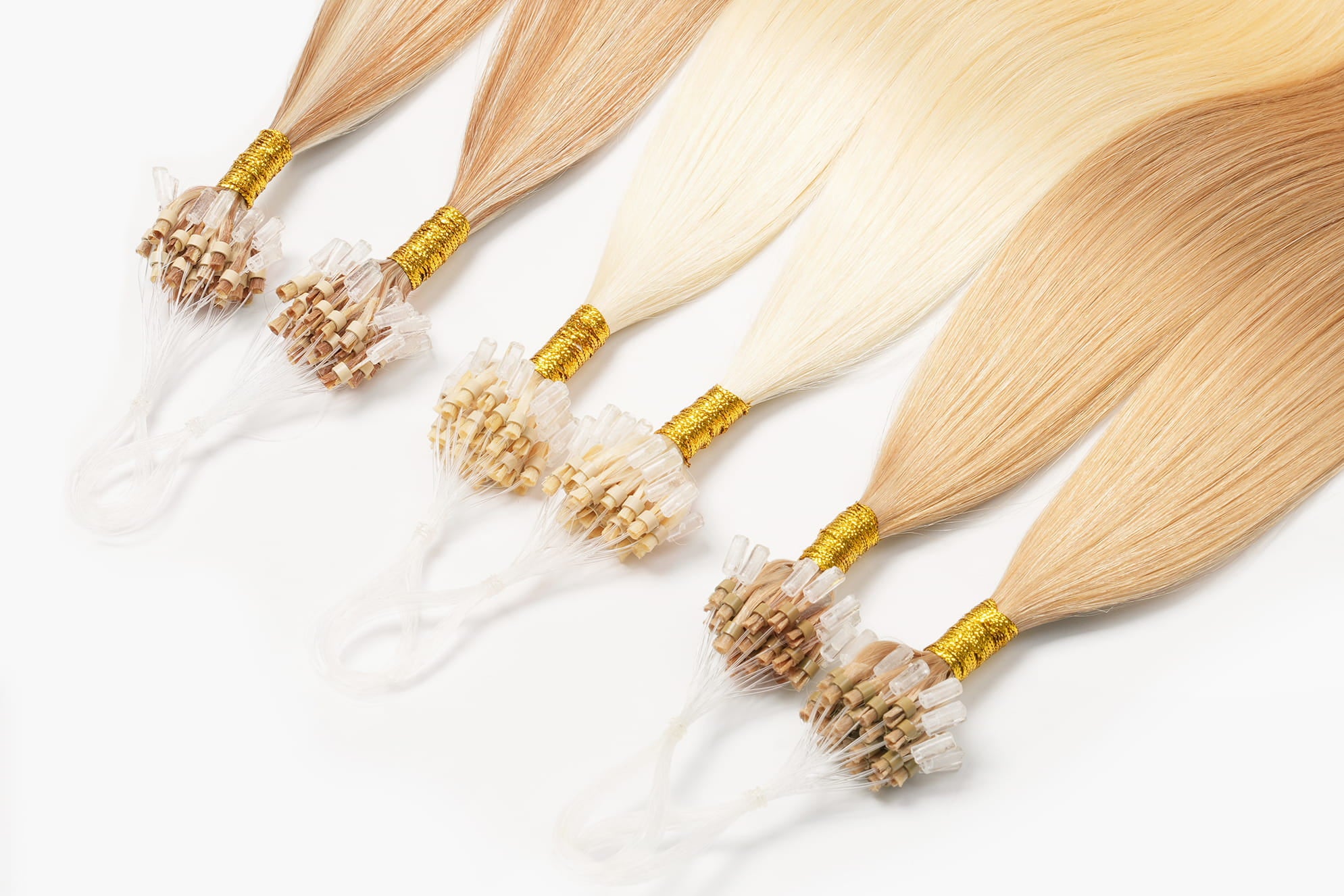
Yes — Morado’s Cool Silver Gray #IG is 100% Remy human hair, available across tape-ins, micro loops, and other formats. Silver Remy hair behaves like any other: heat-styleable, silky, and long-lasting with sulfate-free care.
Q. My hair is salt-and-pepper. Won’t solid silver extensions look fake?
A solid silver weft alone can — which is why the technique is to alternate silver wefts with wefts in your remaining base color, recreating your natural scatter. Your stylist can fine-tune the ratio to your actual mix; the result blends better than most pigmented matches do.
Q. Can I use extensions to help grow out my dyed hair to gray?
It’s one of their best uses. A salt-and-pepper or silver topper hides the demarcation line at the part while your silver grows in, and silver clip-ins through the lengths shift the overall impression toward your destination color. Everything removes cleanly, so the bridge adjusts as your grow-out progresses.
Q. Why do my silver extensions look yellowish?
Silver hair picks up warmth from sun, heat styling, mineral-heavy water, and product residue. An occasional violet-toning (purple) shampoo restores the icy tone, and heat protectant plus post-swim rinsing prevents most yellowing. If a new set arrives warmer than your silver, that’s a tone mismatch — exchange it within the 90-day window rather than fighting it.
Q. Is gray hair too fragile for extensions?
Gray hair is often finer, not inherently fragile — but if thinning accompanies your silver, follow fine-hair rules: lightweight methods (tape-ins, fill-ins, toppers), conservative amounts, removable over semi-permanent, and clips anchored to your strongest hair. Matched to those rules, silver heads wear added hair for years without trouble.
Read more
What do rooted, highlighted, and multi-tonal extension shades actually mean? Decode the shade names, learn who each blend flatters, and pick with confidence.
Find the extension shade that disappears into your hair. Step-by-step matching: where to match, how to use lighting, and what to do when you’re between shades.